Has the desperation (and consequent sigh of relief) that comes with the struggle of trying to hail a cab in the middle of a busy city during rush hour, or on a night out, finally come to an end? Ride-sharing mobile applications, such as "Uber" and "Lyft" have certainly changed the city transportation landscape, for better or for worse.
For those who are not yet familiar, mobile ride-sharing apps allow users to plug their locations into a GPS; request a ride; find a driver in the area; and finally, pay instantly - without the stress of trying to hail a cab or dig around in one's bag for small cash to tip the driver.
Such apps may be the ultimate creative merger of capitalism and technology. Anyone, anywhere, who owns a car and has some initiative, can become an Uber driver. As a rather chatty late-night rider, I've encountered quite a few drivers who, after picking up ridesharing as a side job, decided to quit their day jobs, finding that they could make more money with Uber, if they had the "drive" to do so.
There's no argument against the simple ingenuity of such applications. Uber brings the chaos of planning transportation from point A to point B down to the simple manuever of a few smartphone swipes. There's no rushing to the bus station, scanning through maps, missing your subway at the last minute, or standing outside in the pouring rain without an umbrella whilst desperately flailing your arms in hopes that a cabbie will take pity on you and stop. Getting a personal ride, from anywhere, to anywhere, has become STUPIDLY EASY.
There may be an external cost to having such a convenient system of instantaneous personal transportation. It may be worth considering the actual necessity of having all these extra cars on the roads. Cities have subsidised public transportation systems. New York has the subway, Baltimore has the famous "Charm City Circultator". These programs are so heavily subsidized to discourage car use - and for a good reason.
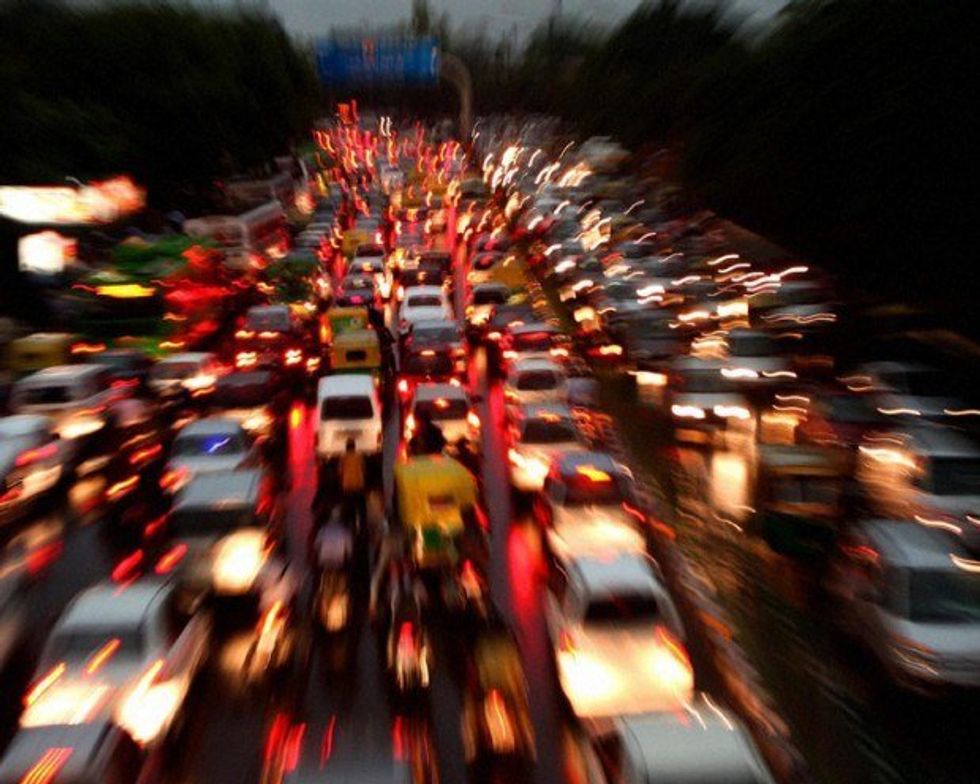
Increased accessibility to personal rides leads to more cars on the roads, leading to increased traffic congestion. If more people opt for personal car rides, instead of utilizing the continuously operating, heavily subsidised public transportation systems, there's more total gas burning in engines. More burning gas? More fossil fuels, such as carbon dioxide, released into our atmosphere.
Mobile ride-sharing seems fantastic. It's easy, stress-free, and convinient: in the moment. Looking forward, is it something we really need?