


For many, innovation takes place at an early age, typically in school. "Creating Innovators," written by Tony Wagner, covers just that: how to excite youth from an early age to succeed and create new ideas. He writes his stories by interviewing innovators, which gives the reader an in-depth look at what it takes to utilize one's potential and what programs may help lead the way.
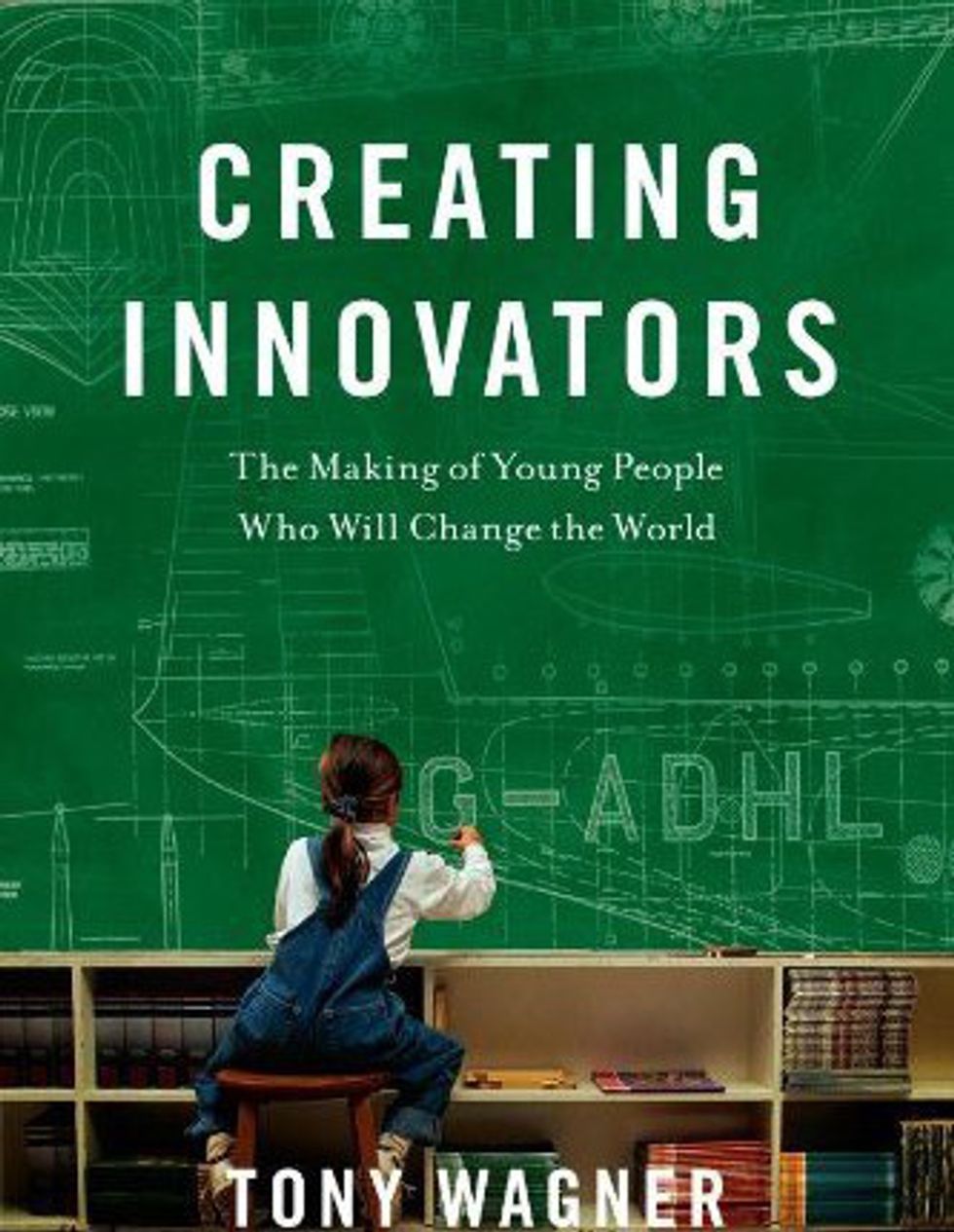
Most education platforms teach based on lecture speeches, which the book has showcased that this is not the best fit for students to stay engaged. We see the three main points Wagner focuses on from the first chapter, where he brings his three main points for creating an innovator into action: play, passion, purpose. What is most compelling about the book is how each and every interview is conducted, and it can surely relate to the reader. Whether you are heavily interested in S.T.E.M. learning practices, or just as an artist, the excerpts inside these pages are sure to hit home with you. Parents, teachers and coaches are all taken into account and they share their philosophy on how they have helped progress the future of youthful entrepreneurs.

Parents are huge resources that are looked at in the book, which is great for young readers such as myself because it gives us a foundation of how we should respond to our children and provides ways to make their future brighter. Take Apple’s first iPhone product design, for example. The insights from his parents on how they raised him from elementary school up until college is what accounts for his success today. The school system has taken on a different character as of lately, as mentioned by Wagner. “School is a game the innovation generation knows they have to play to get credentialed, but they do it with as little effort as possible,” Wagner said. He goes a step further mentioning that students these days do not have the desire to work for a company for 20 years and reap the benefits of healthcare and retirement. Our culture today wants to be a part of something larger -- start-ups, philanthropists, cyber security developers, etc.

The issue is not that these students think outside of the box, the issue is that our educators of today do not know how to reach this generation. As mentioned above, this generation is motivated by the idea of play, passion and purpose. "Play" is the single most important aspect of a child’s life, and is the reason for there being Montessori schools popping up all over the world, in hopes of getting this curriculum style out. Next, Wagner looks at passion. "Passion" seems overused as a word today, and some frankly do not understand how to use it. In this novel, passion is looked at as mastering something difficult. Passion is not something that you just work on here and there and hope to master it, passion is a framework of time and putting in the hours to be great. The idea is that there has got to be an answer to the problem you have and that perseverance is what is going to push you to work harder to find the answer. The last of the three building blocks of this book is "purpose." This is the evolution of play and passion that leads one to find out their calling, also know as purpose.

For the generation today, creating a difference or leaving the world a better place is what many would describe as a life filled with purpose. It is an exciting time period, and Wagner highlights the ways we can create education systems for the future, to give students the strength they need to succeed. It does not start with the university, it starts before. Parents, teachers and coaches play a major role in the steps to creating innovators to drive this nation and its education to a new level.















