I enjoy mythos. The fantastic variety of legends and stories which are used to entertain, explain phenomena, or teach moral lessons is astounding to say the least. With each region of the world developing its own unique taste in tales, there is so much to look into for even just base knowledge of a particular kind. Granted, some collections of myths are similar to others, such as the Greek and Roman pantheons. Yet this does not mean that once you know one, you know the other in just as much detail. Slight changes can be major ones.
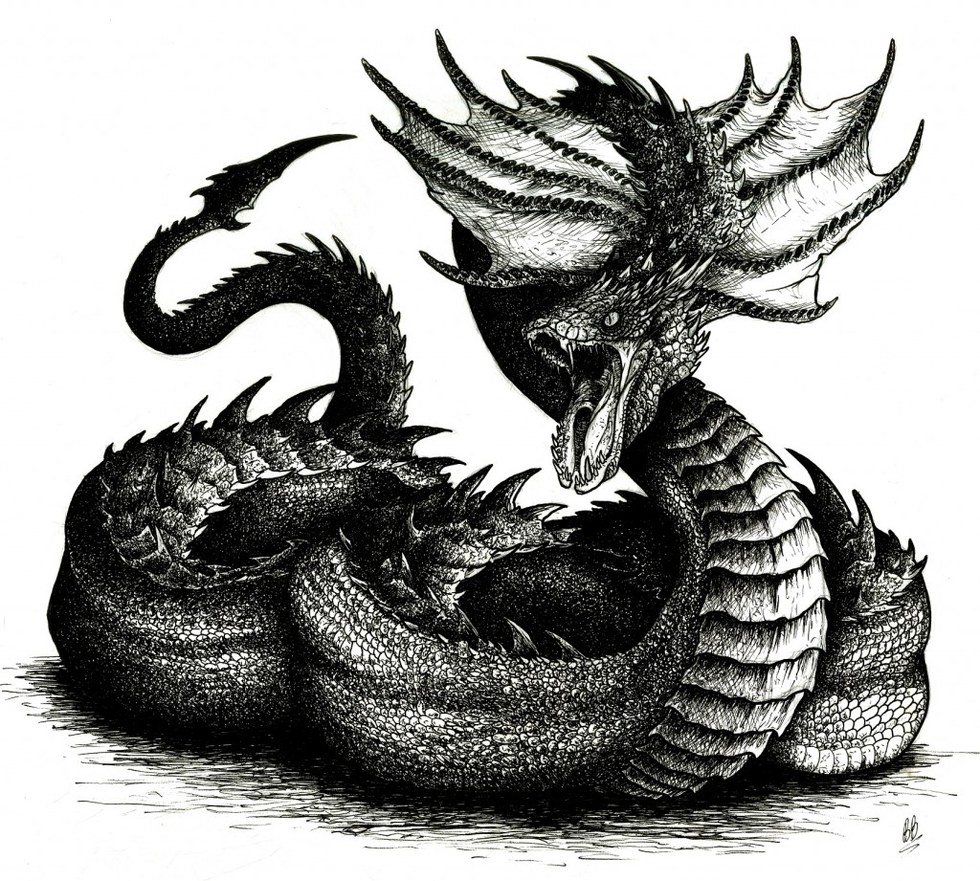
Take for example the cockatrice and the basilisk. Both are a combination of reptilian and avian body parts and both have a gaze which turns their victims to stone. And in some cases, the two terms are seen as interchangeable. However, the cockatrice is a type of dragon, meaning it can fly with its wings and breathe fire, making it quite formidable. The basilisk, on the other hand, is serpentine in nature and cannot do either of these things. Instead, it has venomous fangs which it may use to hunt down its quarry as compared to petrification. Finally, a cockatrice is the result of a cockerel egg being incubated by a toad or serpent of some kind. Its cousin the basilisk is conceived in the reverse order; a serpent or toad egg incubated and hatched by a cockerel. These are two mythological creatures with similar natures and base descriptions, yet different enough to require separation from one another.
Another interesting thing about certain kinds of mythology is how they may stem from the time period’s equivalent of popular culture. Faustian legends are stories about a man who makes a deal with the devil, for one reason or another, and then attempts to secure his soul and evade damnation. In the original story, an Elizabethan play written by Christopher Marlowe called Doctor Faustus, Faustus is condemned for his choices despite all his claims of repentance from his actions. In other versions, he is redeemed at the final moment. The Polish version of the story is about a man named Twardowsky. Twardowsky seems to be a more clever character than Faustus as he places a condition in his contract when he signs it. This condition involved him traveling somewhere he never intended to go: Rome. Unfortunately for him, the devil is equally clever and stole his soul away when Twardowsky went to a hotel called “Rome” in Polish. There is also a version of this story written in the Americas. In that version, the man involved carried a Bible wherever he went to avoid being stolen to Hell. Until one day, when he forgot it. This went about as well as you imagine. A far more recent variation would be seen in a performance by the Trans-Siberian Orchestra, in which there are several musical numbers where the arch-demon Mephistopheles (the same arch-demon from the original Doctor Faustus) tries to convince Beethoven to sacrifice his most recent symphony in exchange for his life. Fascinating to think these would not exist had it not been for one clever playwright.
All of these stories out there in the world. Who knows how many had such humble beginnings as the Faustian legend? Just think, all you storytellers out there: you may have such an impact as to shape an entire genre for centuries to come.