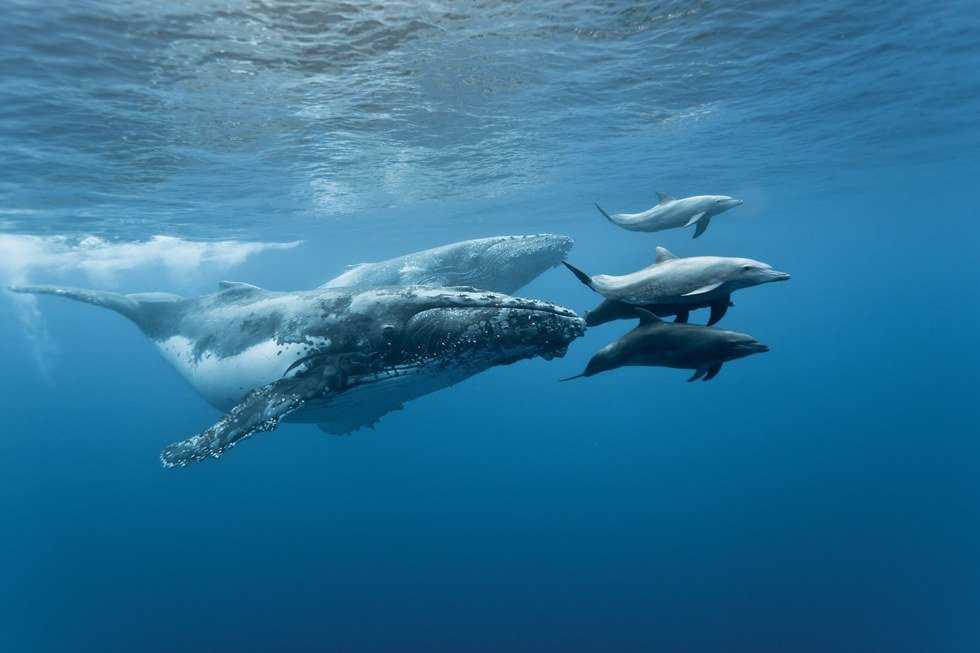
For years we have wondered whether there could be others like us in the universe, intelligent life on some planet out in the vastness of space. But it seems that in this search we have forgotten to check up on a pretty worthy planet: our own. As great and special as we think we primates are, the truth is we may not be the only "intelligent" creatures on the planet. It is quite possible that creautures like dolphins and whales (cetaceans as they are known in the animal kingdom), possess a level of intelligence that is comparable to our own.
As absolutely insane as this sounds, there is little doubt that if we ever came across creatures with such sophistication on another planet we would be trying ceaselessly to communicate and understand them more fully. But instead these great wonders of our world are harpooned or captured into glorified bathtubs and made to do flips for food.
Now there are some animals for whom captivity is not the evil many might paint it out to be. This often pertains to animals that cannot survive in the wild and real zoo facilities that treat animals appropriately. They allow them to live a comfortable life so that if one was to try and open their cage and entice them out into the world toward freedom they would most likely look at you the same way normal people would if you barged through their houses front door and told them to leave. But this is not the case for animals as advanced as dolphins and whales whose home is the miles deep blue of the entire ocean.
Many people are aware that these animals are intelligent creatures, but how intelligent seems to get lost on most people. The evidence for the sheer sophistication and human-like qualities of these animals keeps mounting. The latest example this month comes from a study which concluded that humpback whales appear to have altruistic characteristics.
They have been observed to inexplicably save the lives of other species like seals and sea lions when these animals are attacked and preyed upon by killer whales. There have been instances of whole groups surrounding a creature for hours to keep orcas at bay. Humanitarian behavior like this has no reasoning or apparent survival need to it since the whales do not appear to gain anything out of it and often put themselves at serious risk.
But this seemingly humanistic behavior doesn't even scratch the surface. Some cetaceans have brains nearly bigger than our own, which in many ways may actually be more effective than ours at things like communicating. Humans have to communicate using several steps: first hearing what someone is trying to say, then translating it in our mind into an image or symbol that the word represents.
But the clicks and whistles of sonar carry both auditory and visual information to them, allowing dolphins and whales to in a sense "hear" visual information. This form of communication allows for symbols and even ideas to be transferred far quicker and makes dolphins and whales extremely social creatures.
But what separates these creatures above the rest is the fact that they may have a culture. The clicks of the same species of dolphins can vary depending on the location and population group, suggesting different dialects. In different places their strategies for catching prey are vastly different and, more importantly, get passed down from one generation to the next, suggesting a sense of tradition.
One interesting concept is the way in which humpback whales have strange vocalizations that for all intents and purposes is a cetacean's equivalent of song. The songs remain different in different populations but also often change into something new almost all at once, suddenly catching on with all the whales in that population. This suggests that they may go through cultural fads and trends the way we do. Dolphins have even been spotted using tools, ripping off pieces of sponge and wrapping it around their noses to prevent cuts when foraging.
They also have extremely advanced emotions even more complex than those of humans and contain a sense of personality and identity. In aquariums, dolphins have repeatedly been able to recognize themselves in a mirror. This is extended even further by the fact that different dolphins are given different whistles to identify each other with, essentially naming each other.
The sophistication is most evident with those who must live and perform in captivity together. They are often encouraged to improvise and innovate during shows but somehow synchronize routines with other dolphins by seemingly clicking back and forth under the water with each other, actually discussing and planning moves out in a complex manner.
All of this leads to something remarkable: the realization that dolphins and whales aren't just another example of a cool animal but quite possibly a marine counterpart to our own species. Perhaps their culture and intelligence isn't the same thing as ours, but the fact that we still know so little about what their vocalizations mean and how their minds work in comparison with our own shows us that clearly not enough attention is being given towards a group of animals that can think differently but possibly, in many ways, better than we do.
In the end, the fact that the existence of a second humanity just beyond our shores is often approached by being harpooned, endangered, held captive for forced entertainment and desecrated when its home environment, the ocean, is slowly polluted rather than these creatures being approached with intrigue and study suggests that we humans may not be quite so clever as we think we are.
It might be a wise idea to let go of all the "Shamoos" and "Flippers" stuck in tanks across the world if it might mean instead studying the first traces of a strange, totally unique civilization forming just underneath the waves.