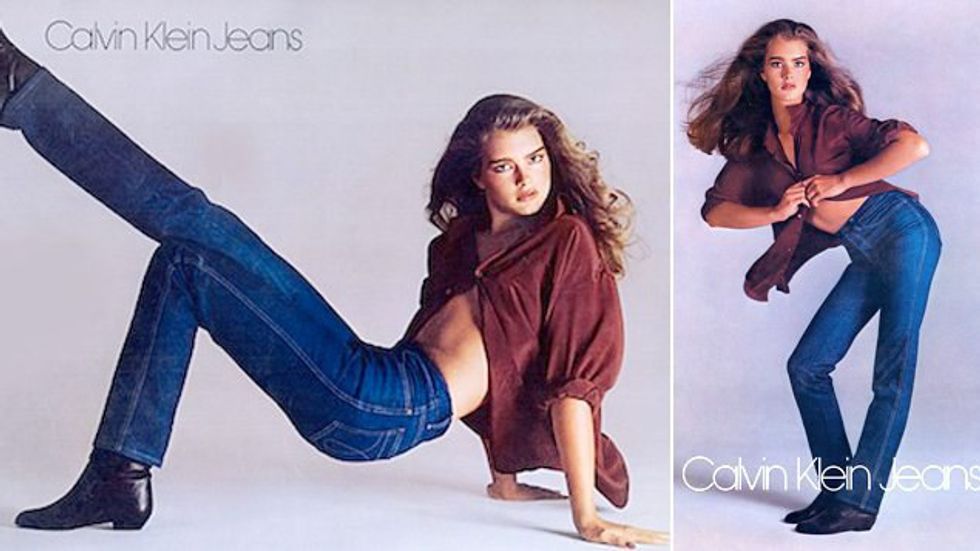
Mega casual-wear brand Calvin Klein has been no stranger to controversy in their advertising campaigns. In 1980, the brand caused a stir with their commercials starring a then 15-year-old Brooke Shields sporting the über-tight denim. The commercials played into Shields' growing, hyper-sexualized image, with her speaking the would-be famous tagline: "What comes between me and my Calvins? Nothing." The implication that the young Shields wasn't wearing underwear under her jeans seemed to set the world on fire, and this only fed into the CK craze.
Flash forward to today, and Calvin Klein has made it through the Heroin Chic 90s, gender-bended in their CK One perfume ads of the 2000s, and managed to stay hyper-relevant as a go-to brand for all casual kings and queens of the athleisure look. Now there's no question as to what everyone may be wearing under their Calvin Klein jeans, because it's their Calvin Klein underwear, which both the models in their campaigns and the regular customer are happy to show off. Just look at online CK-hubs such as chicksincalvinkleinunderwear.tumblr.com. Calvin Klein's ongoing current campaign is the "I _____ in #mycalvins," in which known celebrities--models, singers, actors, and otherwise--pose in CK jeans, underwear, and more, showing the wide range of the brand's possibilities.
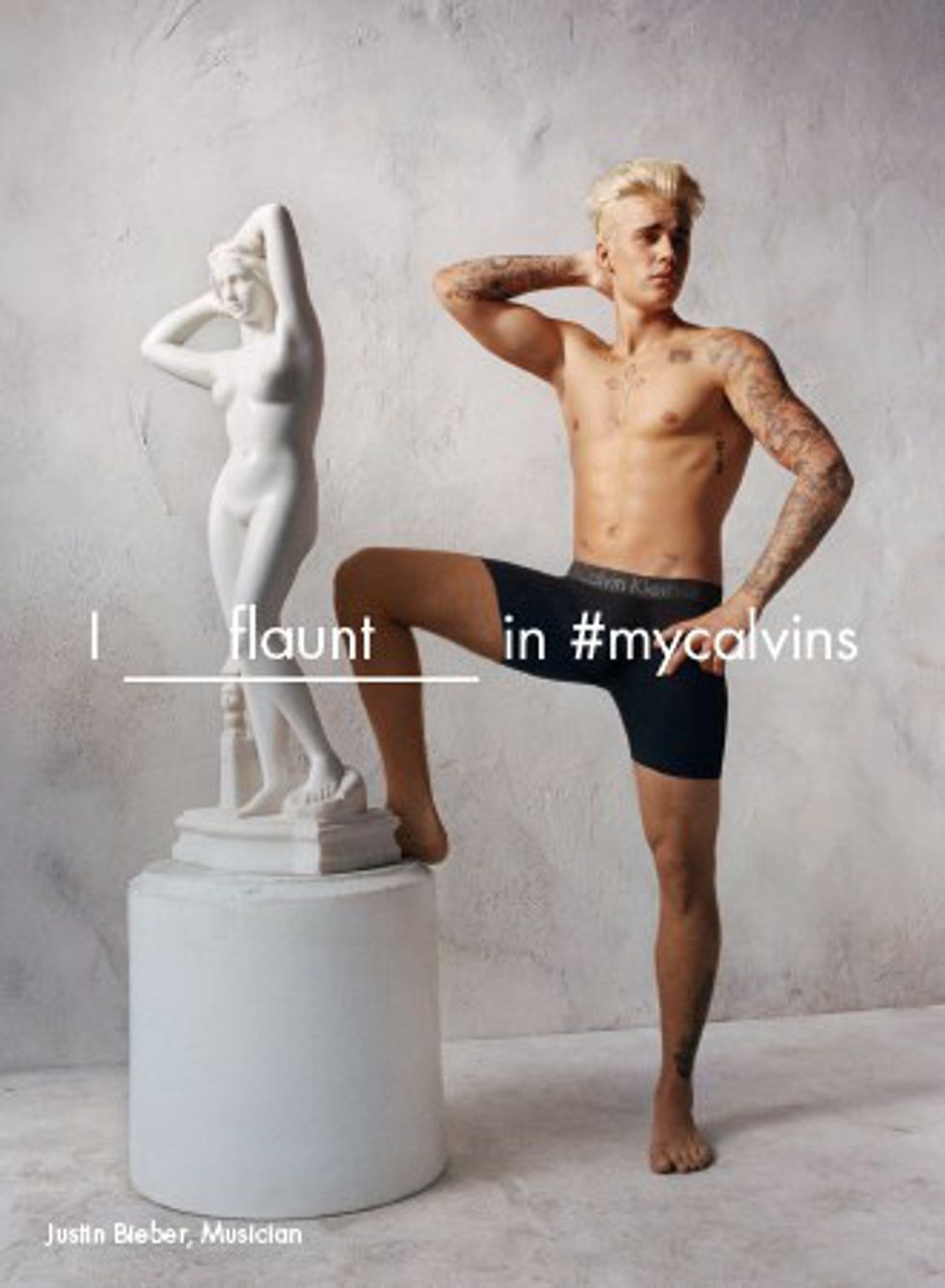
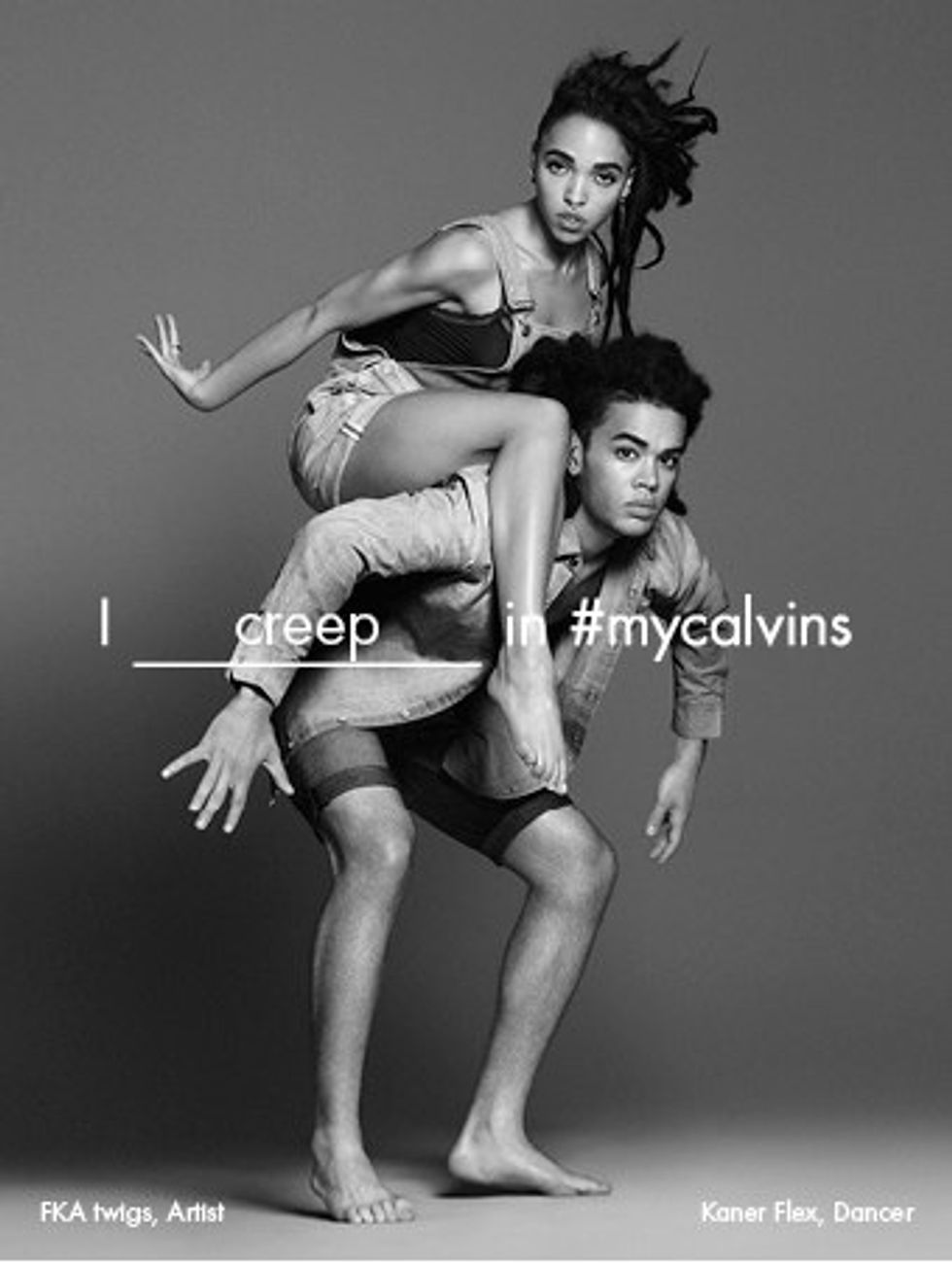
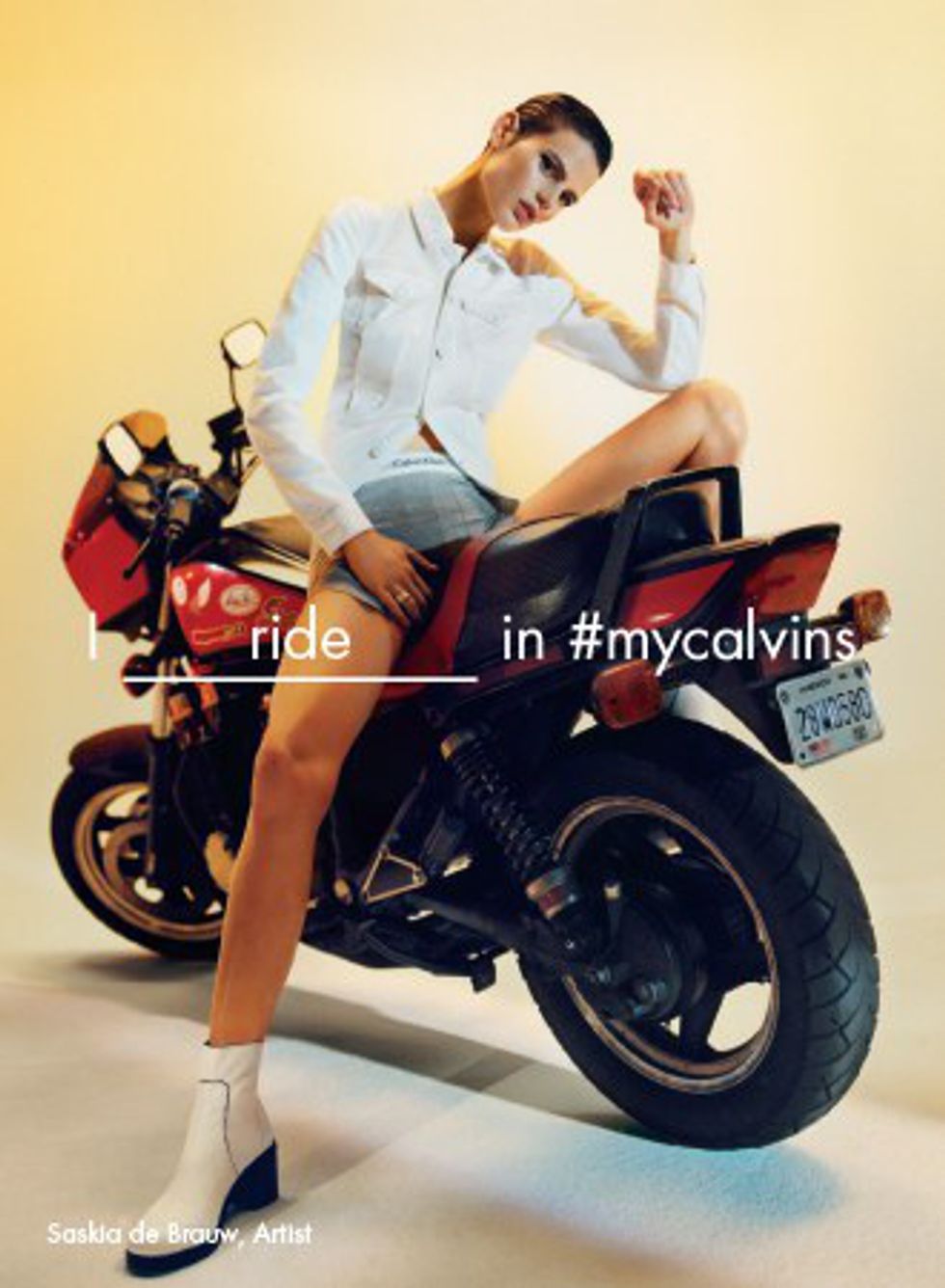
These ads have been plastered all over billboards, magazines, and social media, and have already dipped their toes into the realm of controversy twice. First, when the online community pointed out the gender disparity between the ads on one of CK's New York City billboards, wherein actress Kara Klarin was featured for "seducing," but rapper Fetty Wap for "making money." The original team to point this out, ThirdLove, then launched a counter hashtag campaign, #MoreThanMyUnderwear.
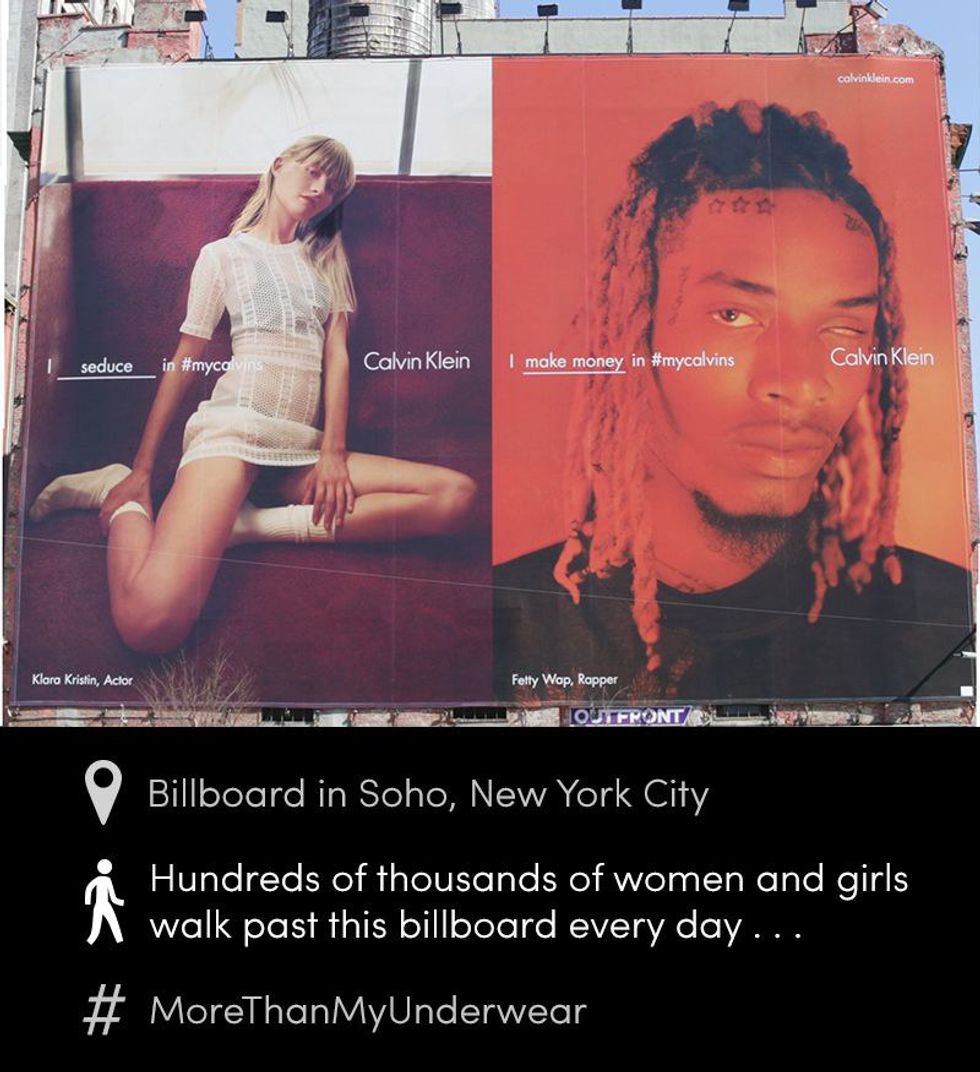
And the brand's campaign again caused headlines recently when Mr. Klein himself announced publicly that he was unimpressed with CK spokesmodel Kendall Jenner being chosen as a major face of the brand. However, Klein sold his eponymous brand years ago, and so his opinion doesn't have an effect on the actual business.

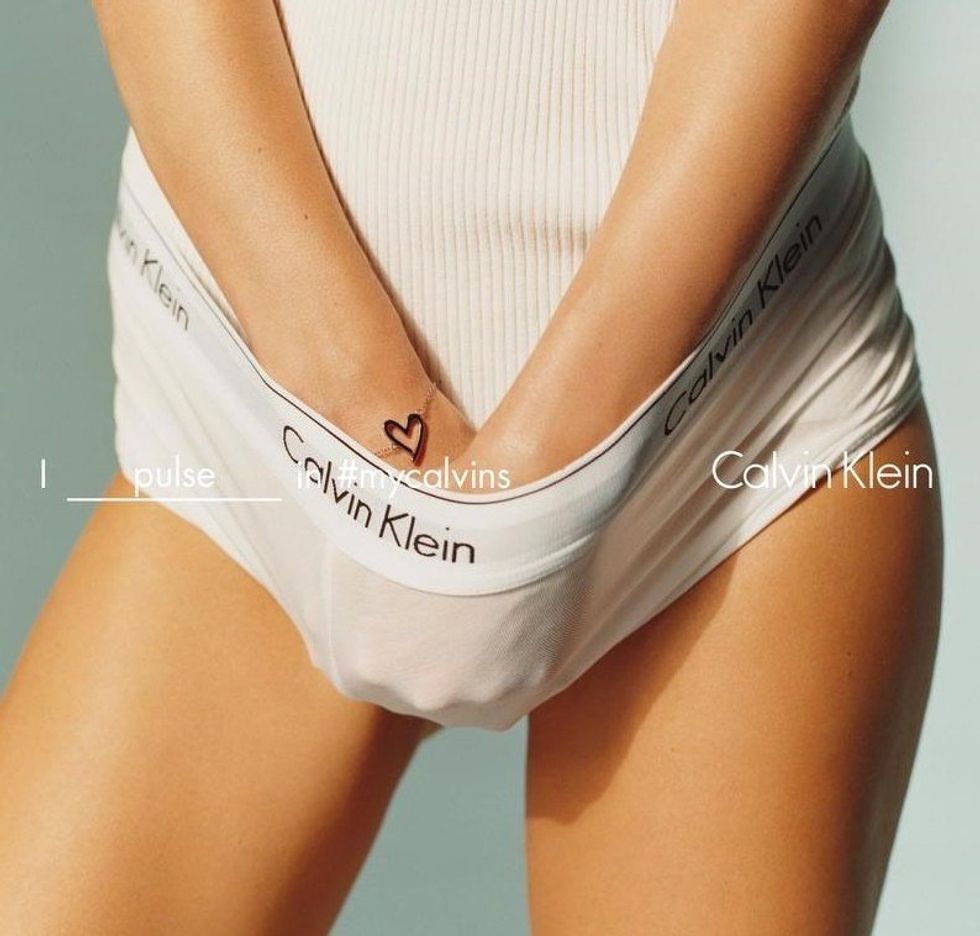
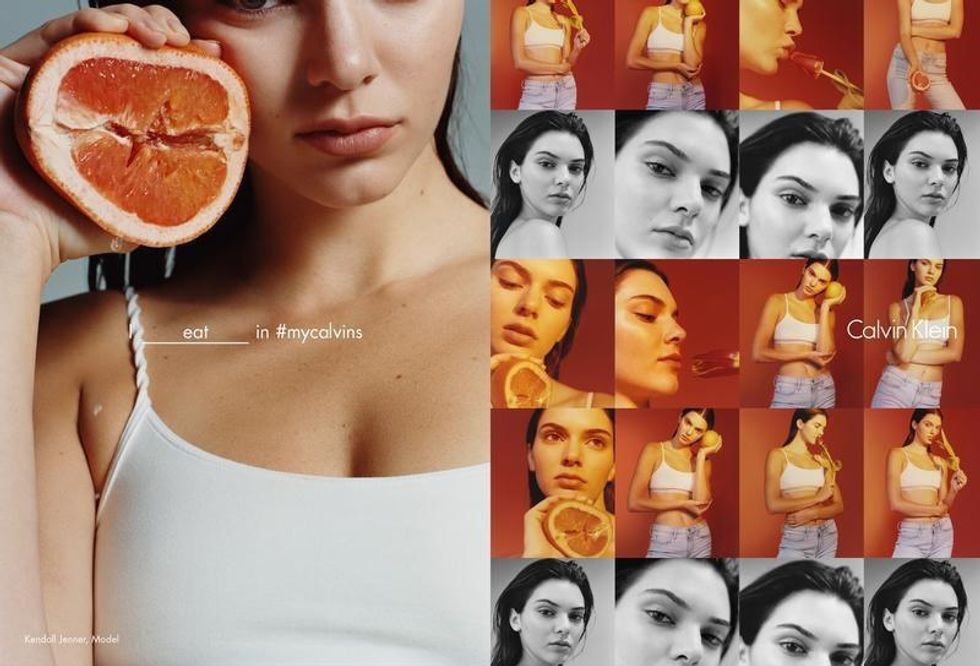
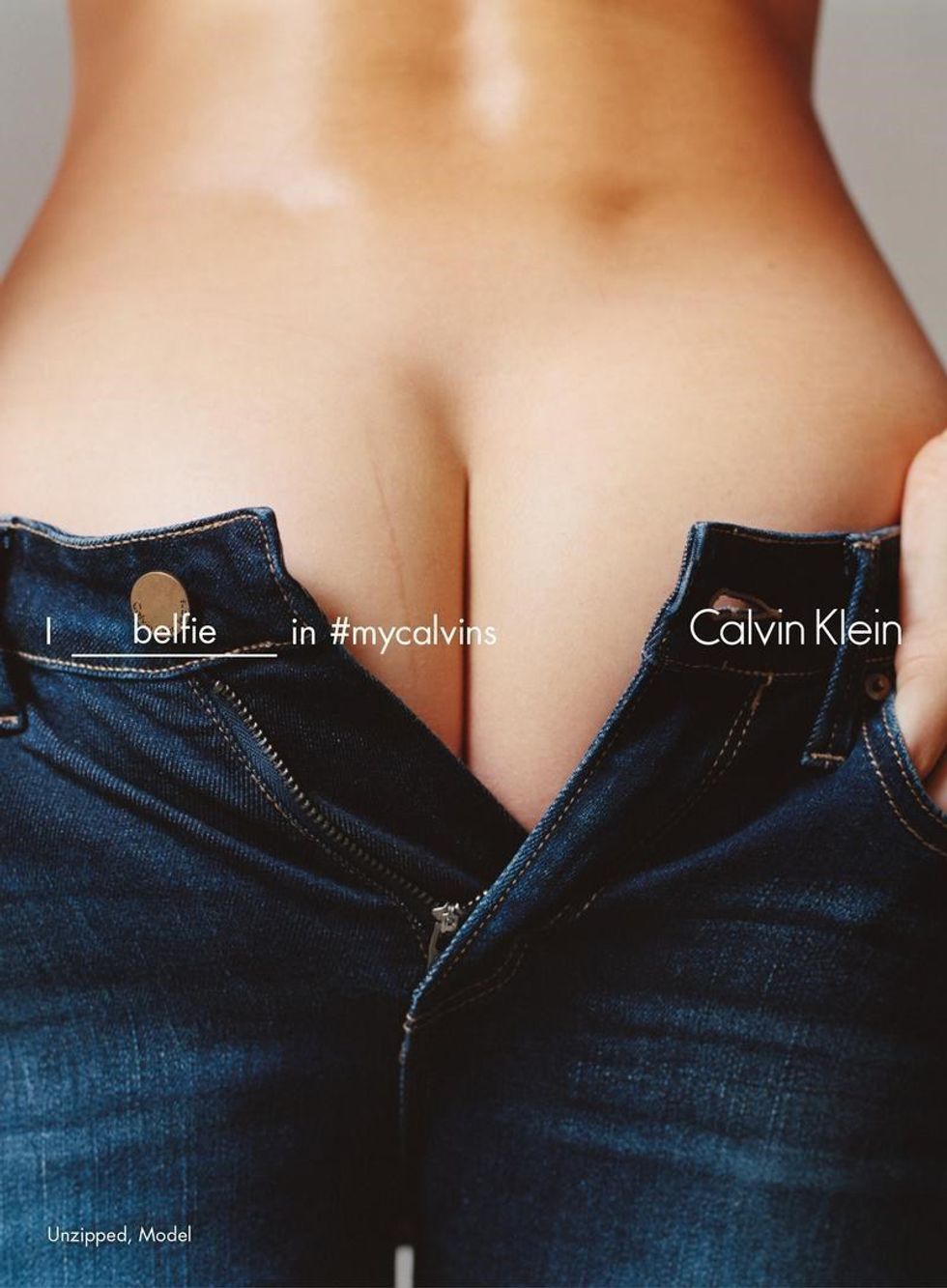
But now the #mycalvins campaign is back in the news, this time for their latest rotation of Spring 2016 ads. Always at least a bit explicit, this newest crop of photos, shot by Harley Weir, come with distinct sexual connotations. Featuring female artists and models, in ways the ads seem to be a celebration of female sexuality. Abbey Lee Kershaw "pulses" in her Calvins, implying self-pleasuring. Kendall Jenner plays into the longstanding combination of food and sex by "eating" in hers. And an unnamed model takes a "belfie," which, like it's facial counterpart the selfie, is a move of self-appreciation.
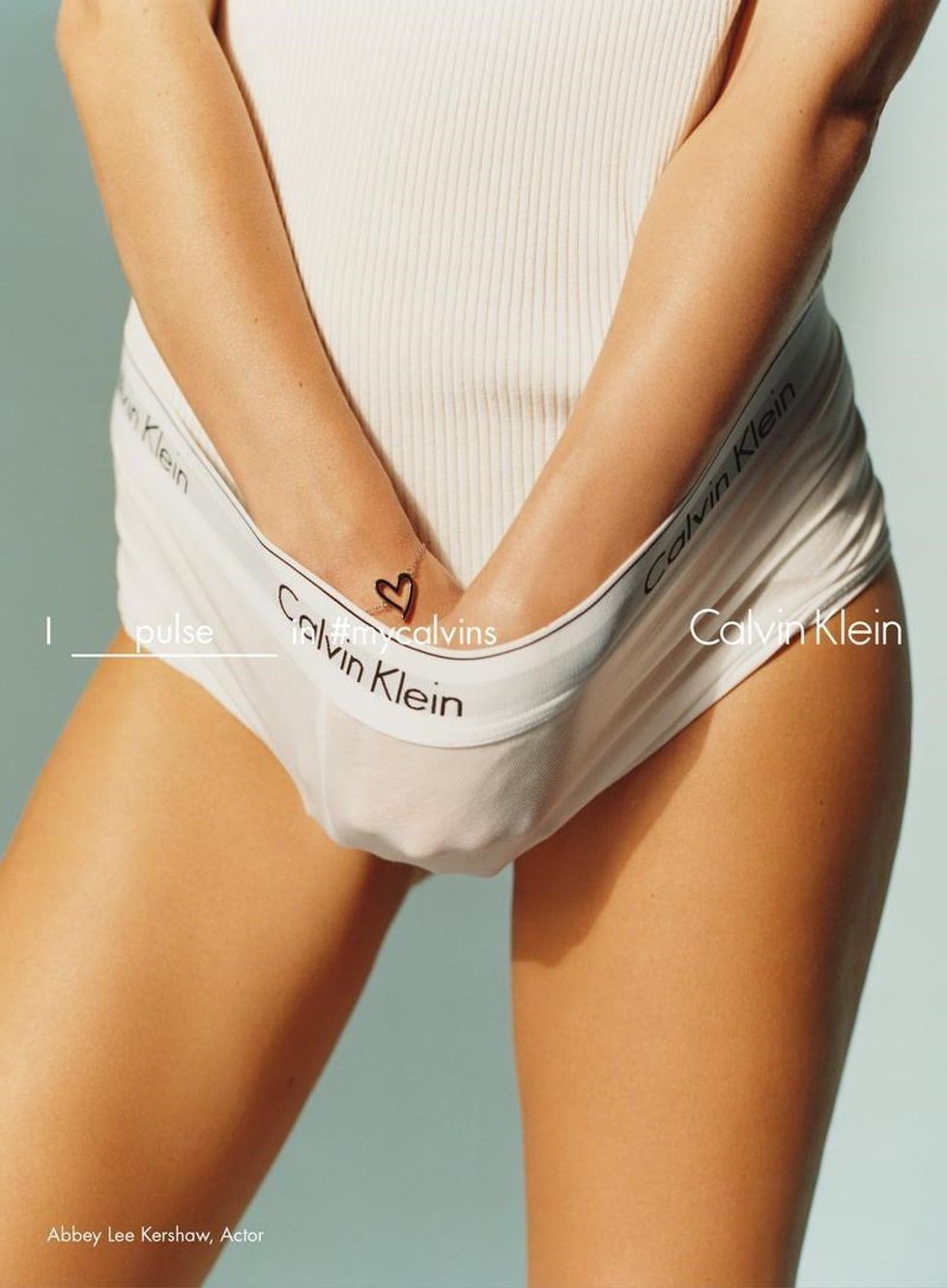
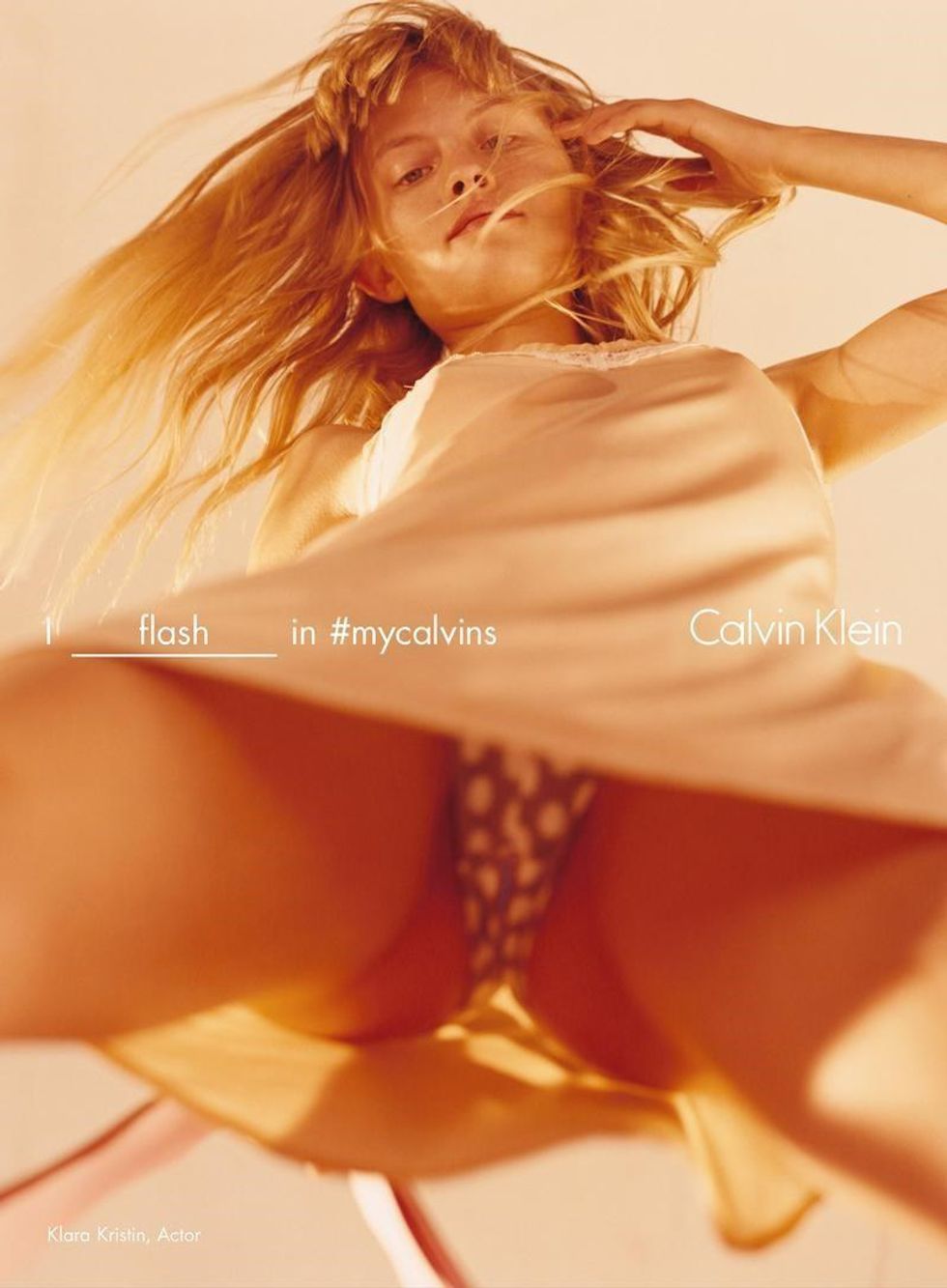
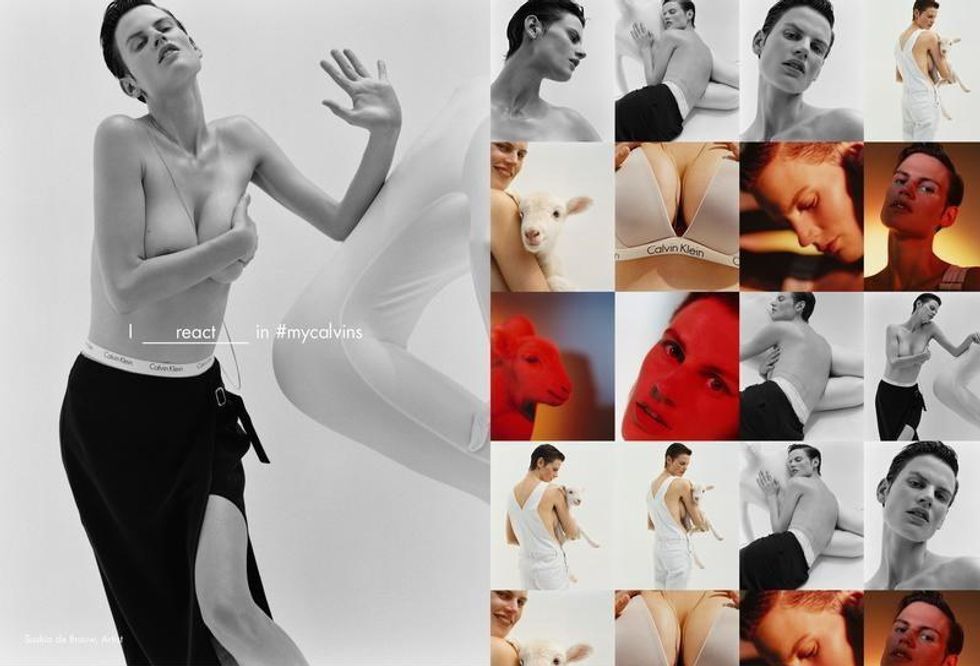
However, all this seeming-empowerment is done away when looking at some of the other new ads. Another of Klara Kristin's ads seems to be the problematic one, with a picture taken up her skirt stating that she "flashes" in her Calvins. But Kristin is not flashing -- she is only standing. Instead, we the spectator, through the camera's lens, look up her dress at her underwear, like nasty boys underneath a school stairwell. Unlike Kershaw with her own hands in her panties, this time it's our eyes performing the act. The up-the-skirt imagery is featured many times in the new ads, as is a slightly unsettling set of photos in which artist Saskia de Brauw "reacts" in her Calvins, with a look of discomfort foreign from the other so-relaxed images.

So, where should we draw the line? The basis of the campaign stems from the idea that these models are telling us what they like to do in their Calvin Klein clothes--what the brand means to them specifically. When we continually critique the in #mycalvins, particularly the more sexual images, are we policing these artists' sexuality? After all, Kristin looks down at us in her "flash" ad knowingly. Or, is this just another example of a marketing team trying to create provocative images by feeding us the same, hyper-sexualized and overall dangerous types of images of women in sexual positions? By no means should we all stop taking underwear selfies in our matching Calvin Klein sets, but it's also our job to make sure we're constantly looking at how sexuality is portrayed to us by the media, and how these images both reflect and effect us as a society. So what do you think of the latest latest Spring 2016 campaign? Empowering or worrisome?