

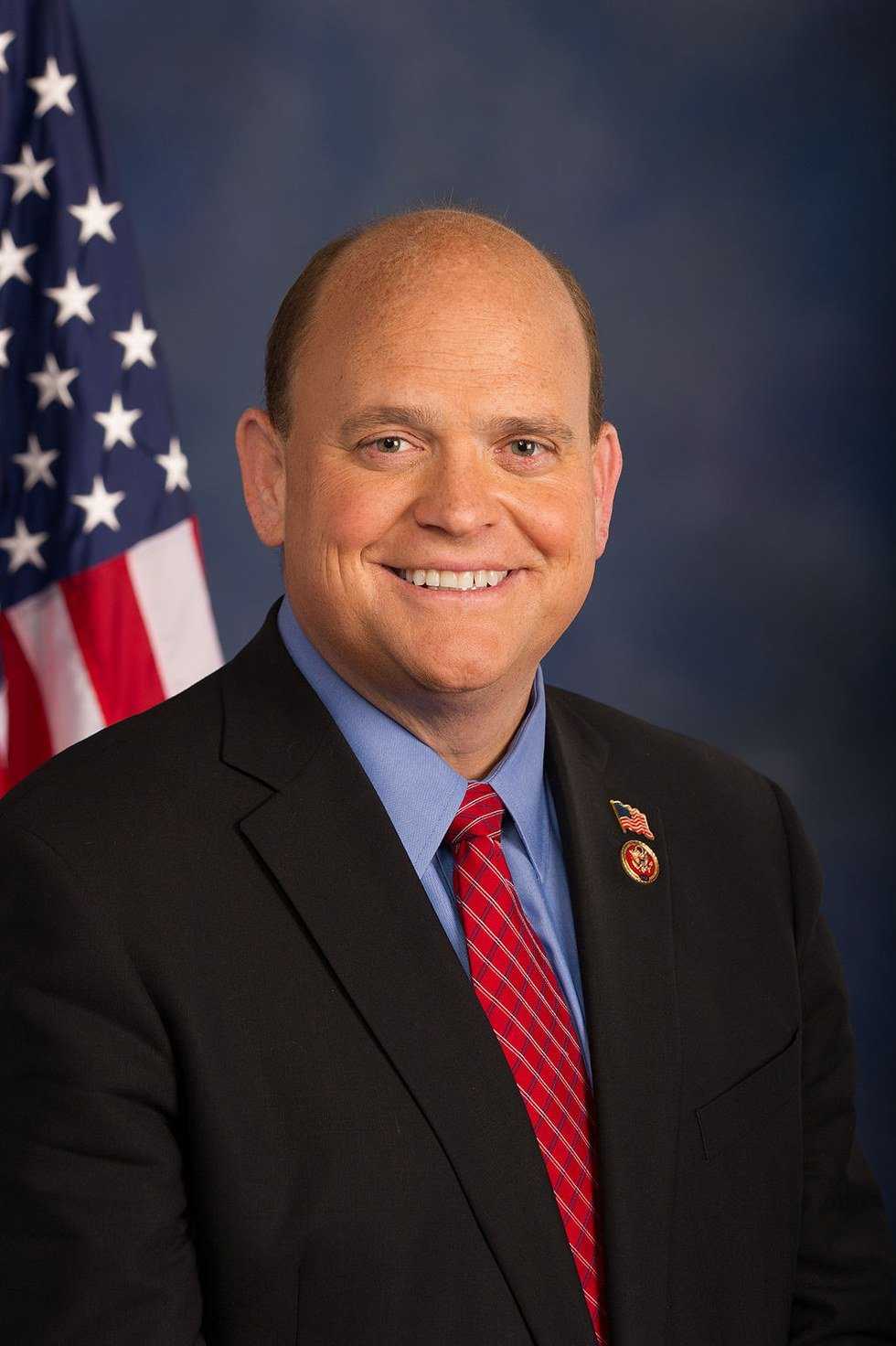
This interview was conducted via phone in the fall of 2015, but the questions and responses remain relevant, and will be so for the foreseeable future.
The Representative: Tom Reed has served New York's 23rd congressional district since 2013, and was previously the representative for New York's 29th from 2010 to 2013. Rep. Reed's district contains parts of the Finger Lakes region, including the town of Corning, where he served as mayor. A Republican, Reed serves on the powerful Ways and Means Committee.
The interviewer: Kaleb Cabisca is a History major at Ithaca College where he is a member of the Model United Nations and Model European Union teams. He is known as "the history guy" because that's what he talks about.
Odyssey: What actions have you taken in congress or causes have you championed to improve the lives of students at and recent college graduates in your district?
Rep. Tom Reed: Well, I’ll tell you, as a student myself, coming out of school with over a hundred thousand dollars worth of student debt for my law school and undergraduate degree at University of Ohio Northern, I empathize with kids coming out of school today with that type of debt load. So we’ve advocated for these work-op programs in various situations where kids can go to under-utilized areas of the country for example, different programs have been health care, or elsewhere, where they can work off their student debt in exchange for providing those services.
Also, we’re advocating for reforms when it comes to making sure that student debt can be refinanced at historically low interest rates. I was in that situation, where I locked in my loans and they were at a high rate of about eight percent and you can only do it once. I believe having the flexibility for the students to take advantage of these historical rates is the smart thing to do. And you know, we’ve continued to put a spotlight on the fundamental question of, Why are college costs going through the roof? We’ve asked university presidents and college leaders, as they come in the office, "Tell me why that’s occurring." And I’ll tell you, it is something that we’re very concerned about and we want to get the bottom of.
Odyssey: Increases in college tuition have been outpacing inflation for a few decades and now the amount of student loan debt has surpassed the credit card debt held by all Americans. What specifically can Congress do to rein in these costs?
Rep. Reed: Yes, some of the ideas is a reform that we have on this is really to put a spotlight on this issue. And ask the question and allow students and parents as they’re putting their kids into college to be able to ask us this simple information of, Where is the money going? Where are the salaries? What are the salaries of these administrators and the employees of the college where these kids are going to? We have a reform coming down the pipeline for example where all employees of federally funded colleges and universities that receive federal funds that have to disclose those employee salaries that are over $200,000 just so questions can start to be asked. That is a move in the right direction, if you start asking these questions for accountability I think we can hopefully get to a situation to drive these costs down.
And I think also we need to have a conversation across the nation. One of the conversations we engage in, you know, is it fair that some of our highest paid employees in these institutions and colleges are football coaches or sport coaches, also our endowment managers, we find in particular are heavily compensated. Is that the right use of the money that these colleges are pulling in by way of tuition and grants and other revenues that’s coming to them? So those are the questions we’ve been asking and I think those are the start of reforms to put a spotlight on this issue so we can hold these cost escalators accountable.
Odyssey: Question number three is: Beyond these, which three political issues affecting 18 to 30-year-olds aren’t being talked about enough?
Rep. Reed: A couple things, we could always talk more and develop policy and promote opportunity for kids coming out of college because I hear and I agree. We need job growth across the country in here in our backyard, I’d love to see students coming out of Ithaca College for example and planting their roots right in the most beautiful area of the entire world, which I believe is our congressional district. Our part of the Finger Lakes, our part of Western New York, and call this home for generations to come. So we’ve been trying to promote U.S. manufacturing, for example, we have stood firm in securing this advance manufacturing site for Plantronics technology, for example, and try to support those emerging technologies, as well as existing, so we can build the products of today and tomorrow right here in our backyard.
On top of that, we definitely have to have a conversation across this country about the national debt load. The kids that are coming out of colleges today, and not only them, but their kids and grandkids are gonna have to pay this debt back. And I don’t think people realize that as much. Especially as this generation comes out into the workforce for the first time that they’re the ones who are gonna get saddled with this bill. That means higher taxes, higher cost to them in order to meet the obligations of the federal government, and that burden is gonna be put on their back so from that perspective, I think we need to talk much more about those two issues as we go forward.
Obviously, it’s all related to job growth and making sure that we continue to create those jobs, that the skills necessary for us to compete at the world-competitive stage, we don’t talk as much about matching up the demand in order to be competitive in the 21st century with the skills that are coming out of our universities and colleges. So that kids are, young men and women are aware, of the opportunities that are out there and the skill sets that are available to be taught to that next generation are there to match up with what I see is a projected demand in U.S. manufacturing is when it comes to science technology, engineering mathematics, as well as in the vocational trade areas. That all needs to be part of the portfolio of that workforce development going forward. And I don’t think we speak enough about that not only at the college level, but also high school and elementary level.
Odyssey: Congress has a notoriously low approval rating among Americans, regardless of the party in control. Why is it that the branch that is supposed to represent the people thought of so poorly by them?
Rep. Reed: You know, I totally share that frustration with the American people. Because obviously there’s a lot of publicity out there and I think the 24/7 news cycle feeds off of it and promotes it....
And so as we begin to continue building a critical mass, as we were talking earlier today, there is about I think it’s 60 to 65 percent of the members of Congress -- House and Senate combined, have never served under a different administration than this administration. That’s a good step in the right direction, in cleaning out the institution and getting fresh blood, fresh perspective, and into a position where that critical mass of leadership will develop to finally say, "Enough is enough we need to get things done.”
So as we can demonstrate, that we are gonna get some things done, I’m happy that the American people are gonna get solutions then I think that impression will improve. But I think we’re starting in the right direction recently with the Doc Fix for example that no one speaks of back home or around the country but knowing that that’s a 15 year problem that was taken care of permanently for the doctors getting reimbursed for the Medicare, it’s a sign to me that we can do this. We can get these things done. And we will get it done, because it needs to be done.
Odyssey: What is one specific policy issue on which you’ve bucked your party’s position?
Rep. Reed: You know I’ve stood firm when it comes to discrimination. I have supported the reauthorization of the Voting Rights Act. I went to Selma myself, stood with Republicans and Democrats at that historical place at that historical 50-year, I think it was, anniversary where we celebrated my good friend [Georgia congressman] John Lewis, standing there on the front line of the civil rights movement. And we’ve stood firm on that. And I know a lot of [people] in the Republican Party are not supporting that effort, but what we look at it, we look at it as a fundamental fairness question. And it’s something that needs to be done and we’ll continue to be a voice even if our party doesn’t wanna move forward with that as fast as I would like them to do. We’re going to put pressure on them to do that.
And that’s just one example, you know, we’ve dealt with No Child Left Behind, we were out in front of those issues on elementary education and really trying to get away from the one size fits all education policies that some in our party, even our party, are trying to advocate for.
Odyssey: In your current position, which vote do you most regret making and why?
Rep. Reed: You know, I don’t look at life from a perspective of regrets. So, I’m not aware of any vote that stands out as something we would regret. We obviously continue to learn, continue to move forward, so I don’t look at it from that perspective. Obviously, as issues come before us I always would love to see a crystal ball to see what’s around the corner. But, you can’t. You do the best you can with the information that’s provided to us. And I’ll tell you that’s what we do in as many town halls as we do. And listen to the people of the district, so we try to get their comments and perspective on the issues. So moving forward, that’s all we can do. We learn from our past experiences and get stronger but I’m not aware of any vote that would stand out to me as something I regret.
Odyssey: Now this one I’m interested in the answer, but since 1965 who is the best president not named Ronald Reagan? And why? [The question was asked this way to remove the most likely choice for the Republican congressman. Democrats Odyssey interviewed were asked the same question, excepting Bill Clinton and Barack Obama.]
Reed: [Laughs] Well that’s an interesting question. Well, looking back, historically I think there have been some great leaders. I’ll even tip my hat to JFK. John Kennedy had a way to communicate with the world and to the country in a very optimistic and positive fashion. I’m an eternal optimist and I’m always attracted to that sense, that attitude, that presentation, I would say other than Ronald Reagan who is my favorite president on top of Abraham Lincoln, I would say JFK of the sixties was the president I think best led the country in the sense of delivering that positive moon-shot kind of attitude, that “yes we can” kind of attitude that we need so much of going forward in America.
Odyssey: If you had to choose one after 1965, who would you select?
Reed: Huh, well you know, I think I’ll let history be the judge of the presidents after that point in time. Obviously you’ve taken Ronald Reagan off the table but again I just have to reiterate my support for the positivity and the ability to set a vision for America’s future and go forward. You know I think when President Obama has the rhetorical skills that when he first came into office, not so much anymore, but when he first came into office he was able to deliver that message from a communications point of view. You know obviously I seriously disagree with his policies and how he’s led since that point in time, but even I, listening to those speeches, have appreciated the sense of vision, positive vision, that he was setting forth for the country. But actually I’ve been disappointed in those efforts since.
Odyssey: Which interest group or lobby has the most undue influence on capitol hill and why?
Rep. Reed: I really don’t look at it from that perspective. We have an open door policy.... Really what I try to do, being the youngest of 12, having eight older sisters and three older brothers and a single mother who raised us, we just try to ask the questions. I don’t see one group per say having more influence than others in our office because we have that open door policy. People know we’re going to be looking for the other side of the equation, the other side of the coin, and they make their pitch and advocate for their issue be it thinks like Parkinson’s disease, Alzheimer’s, to industrial manufacturing representatives; that we’re going to be looking at the other side, the other argument, get informed and make an informed decision. Obviously you touch upon on the issue indirectly to the question by raising the issue. Who does money support or create influence? There’s a lot of money obviously in these campaigns and I think the best antidote to that issue is more transparency, sunlight, and we’re fully supportive of those requirements and think that’s a step in the right direction when we’re talking about campaign reform.
Odyssey: The gap between rich and poor continues to get bigger and is on many people’s minds, what statistical indicators do you use to analyze this and what is your solution?
Rep. Reed: I recognize the different ways reports and the different studies that have come down over the last year or two, confirming that there is this disparity. I’ve watched the stock market with the easy monetary policy coming out of the Federal Reserve kind of run counter to my intuition where I believe the market is not based on fundamentals. And it’s like being in an easy money bubble type phase and that’s generated a lot of money for the higher end earners just off the duration of wealth from the market being in that induced stage if you would.
What I think we need to do is get back to the fundamentals of our American economy that has made us strong for 200-plus years. That’s why I’m firm believer in U.S. manufacturing and U.S. innovation and making sure we are positioning America to be on a world stage. Fixing the tax code for example, making sure we protect our intellectual property base. Making sure that we promote the energy development and fuel in U.S. manufacturing rebirth and renaissance. And from my perspective, if we can commit to those fundamentals, if we could commit to those old adage of making it in America again and really making the environment where it can be done then we can then we’re really gonna go a long way to moving this income and inequality issue to providing opportunity to people to succeed and that's one of the things we need to overcome.
Odyssey: What does the word equality mean to you and how do we achieve it as a country?
Reed: It’s rooted in the founding principles of our nation where all men are created equal. That means it doesn’t matter in America, the color of your skin, your gender, or who you are or who you know, we are all equal. And that is deeply rooted, founding in our Constitution and in our society and I firmly believe in that. So when it comes to equality, have a fundamental commitment to fairness, to justice, and making sure that when there’s...and this is where I think there’s a role for government... is when people abuse that notion.
When that injustice is occurring, again another reason why I support the reauthorization of the Voting Rights Act is because we always have to be diligent and stand up to anyone found violating those standards of fairness and justice are held accountable by the government in all fields, not just from a gender, race, social perspective but also from marketplaces. If we adhere to those principles, we’d be much stronger as a nation for generations to come.
Odyssey: If you could have drink with any non-politician, dead or alive, who would it be with? And what would you drink?
Reed: [Laughs] Hm, non-politician. Non-politician. There are so many people out there. I just finished Steve Jobs’ biography. The innovators, the Henry Fords, the great creators, Thomas Edison. I would put them on the list and just have a nice cold beer and sit down and have a conversation about how they came up with their ideas, what about their, how they tick. Guys like Albert Einstein, I read his biography and found him fascinating. How they tick would just be something I would be interested in hearing, you know, their mind. Just having their ability to just really try to probe them to know what made them do what they did, how they went about taking those risks that obviously they took and did amazing things with over our history.
Odyssey: Thank you for the interview and answering that question.
And before I’ll let you go, I’d like to...I live right across the border when I’m not at school, in Pennsylvania, across from New York. So I’ve been in your district a lot, and I very much appreciate your focus on bringing back U.S. manufacturing, so I would just like to thank you for that, for talking about that because I realize that has great implications for job creation in the region and I think that's something that needs a lot of focus, so I very much appreciate that you do that.
Reed: I appreciate that, I’m all in on it. I’ll tell you, and there’s some exciting things happening there, no doubt about it. We just need that leadership and get the policies right and let you do what you do, as well as all your colleagues coming out of school and older folks. We’re all in this together, so I am firmly committed.