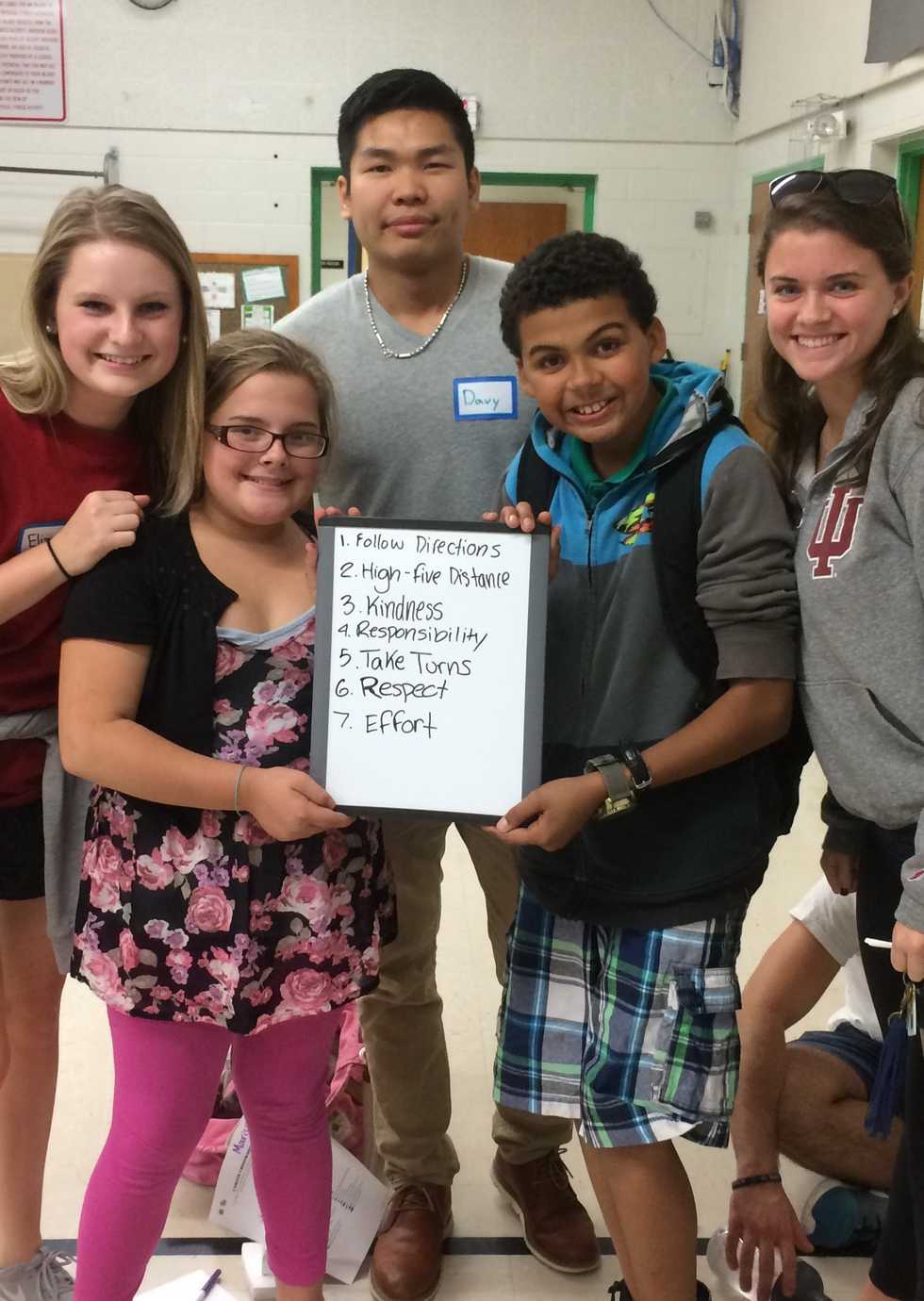
College Mentors for Kids is a nonprofit organization where college students mentor first through sixth grade students in their communities. I have been involved with the program for almost two years - as a mentor in my first year and a general manager for a buddy family in my second. College Mentors for Kids pairs up each mentor with one little buddy for the school year. A group of multiple buddy pairings do activities together in what we call “buddy families."
The program began at Indiana University 21 years ago with the goal of improving children’s lives by encouraging education. Today, there are 32 chapters serving over 2,000 kids in nine states. College Mentors for Kids’ vision is that “we want all school children to look forward sooner and be able to give back later." These chapters are working to actualize this vision by participating in weekly after-school activities on college campuses, which focus on higher education and career, culture and diversity, and community service. The kids we work with have been selected as students who can benefit most from a positive mentoring relationship: 73 percent of our little buddies' parents have an education of high school or less, and 52 percent live in families who make $17,655 or less a year.
Being a mentor in the Indiana University chapter last year gave me an invaluable experience. When I met my sixth grade little buddy during the first activity, I knew I had a challenge ahead of me. Ashunta was a handful from the start. We did an activity to get to know each other where we answered a few questions about ourselves. Here is what I learned: Ashunta likes “having all of the attention all of the time”, and she is good at “fighting and being right." She proved all of these to be true. I had to constantly tell her to be quiet, be more respectful and not argue with other little buddies. For weeks, I thought she hated me and was getting nothing out of the program. Towards the end of the first semester, we did an activity about heroes with the intention of them thinking about what values and traits they should be focusing on in their own lives. At the end of every activity we have them answer a few questions in their journals about the activity. That week they were to write about someone they consider a hero and why. Ashunta was weirdly secretive about her entry and was reluctant to show me what she had written. I still have a picture of what it said. She wrote, “Caroline is my hero because she listens to me and cares about me."
After a year with Ashunta, she graduated out of the program, and I couldn’t imagine having another little buddy. Also, I wanted to do more with the program that had been the best part of each week for me. So I applied to join my chapter’s staff as a general manager of a buddy family. Now I get to work with nine fifth and sixth grade buddies and their mentors. By being on staff, I’ve gained a whole new level of appreciation for the program and awareness of the impact it has. I can see in each of the buddy pairs how the mentoring relationships are inspiring and motivating these kids. They love having what they see as a super cool college kid wanting to hang out with them every week. The results are amazing: 80 percent of former little buddies graduated high school (the national average for low-income students is 73.3 percent), and 75 percent of former little buddies followed a path to post-secondary education (the national average for low-income students was 50.9 percent in 2012). Ninety-five percent of former little buddies avoided the justice system (the US Department of Health and Human Services reports that 20 percent of youth from low-income families are charged with adult crimes by the age of 24).
The program benefits the mentors and staff as well. Mentors learn about the resources their campus offers, leadership skills and the need for positive role models in their communities. A general manager, Zoe Slaughter, said this about an experience with a little buddy: “it reminded me how fortunate I am and how much of an impact this organization has a chance to make.” All (100 percent) of surveyed former little buddies said their mentor was a role model for them, and 98 percent of former little buddies said their mentors inspired them to succeed. The reward of being that person for a kid is invaluable.
Carly Moffie, a mentor for a fifth-grader told me, “The most important thing that College Mentors for Kids has brought me is my little buddy, Lilly. She reminds me so much of myself when I was her age. She is such a tomboy, and probably tougher than all the boys in her fifth grade class. She has become a little sister to me, which is awesome for me, considering I'm so far from home and my family. Lilly brings out my silly side, and when I'm with her and our other little buddies, I feel like a kid again.”
Indiana University’s chapter president, Collin Campbell, explained, “All children dream; our goal is not to hand them a dream and say 'here, run with it.' The goal is to teach them to dream differently. By accumulating new perspectives through our program, they will be able to pursue the dream that's best for them, not just the one they've always been given. You get a kid a dog, he's going to be a dog person. You show him a dog and show him a cat, whether he becomes a dog person or a cat person, that's now in his hands.”
College Mentors for Kids is a growing organization that has already helped so many kids choose their dreams and actualize them. You can go to the College Mentors for Kids website to learn more about the organization, donate or get involved.