

I was scrolling through my Facebook newsfeed when I happened upon an Odyssey article entitled “I’m A College Student Who Is Against Free Tuition” by a student at the University of Arkansas at Little Rock. I was intrigued at the seemingly contradictory headline. It was my understanding that college students, as in those who are given the privilege to attend college, can typically be found speaking out against the outrageous cost of attendance in a place of higher education, not advocating for it. It was saddening to realize that the article was filled with blanket statements, perspectives from an obvious place of privilege, and a lack of insight on what an unequal and difficult journey the path to college can be for some students more than others.
A central theme of this student’s argument was that by asking for free tuition, students were in effect asking to be handed their college degree on a silver platter. Ignoring the fact that the article fails to actually understand what the movement for free college tuition stems from, I want to focus on this idea that all students have a choice in life: they can work hard and choose to go to college (being successful), or they can not work hard and choose not to go to college (being unsuccessful).
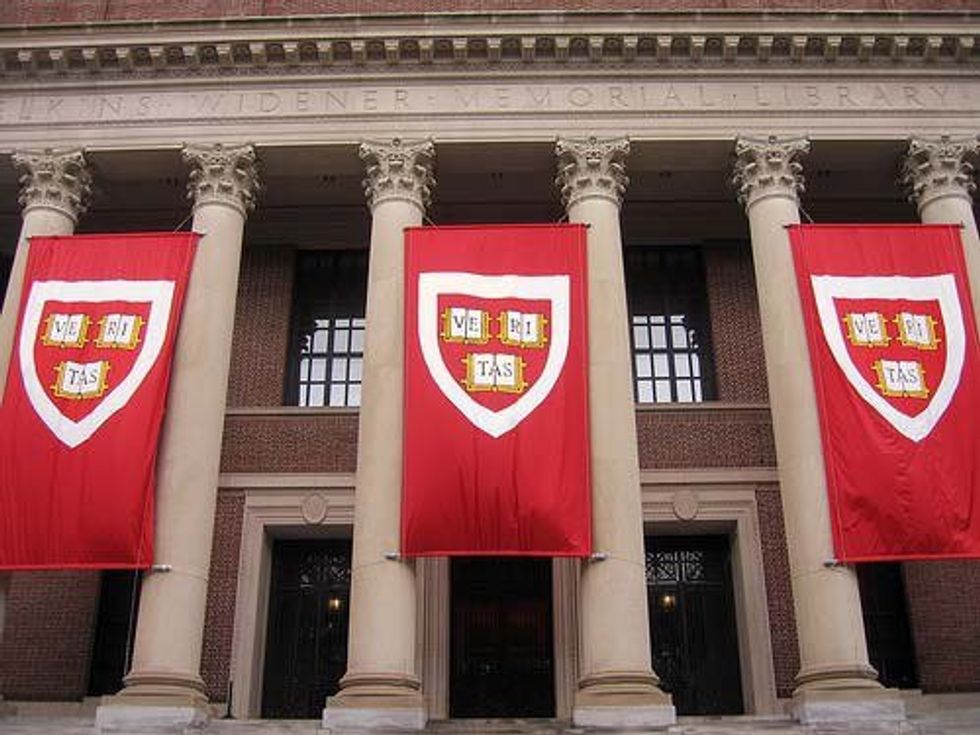
Perhaps some would classify me as being unqualified to talk about privilege, considering I go to one of the most prestigious universities in the world and, just as this young woman, will graduate debt free at the end of those four years as a result of said prestigious university’s amazing financial aid policy. However, I’d like to point out that I am not the stereotypical Harvard student. I went to public schools my entire life, come from a low income family, I am a minority, and I am a first generation college student. I am not the norm, I was just privileged enough to be the exception.
Just as she did, I worked hard throughout high school to receive the grades, the SAT scores, and do everything else it took to be a competitive applicant for college. But this is where our perspectives differ. While my hard work paid a large part of where I ended up, a great deal of it also came from other circumstances that my peers weren't lucky enough to receive. If we say that “college is a privilege” that you must work hard to achieve then you must recognize the other privileges at play.
For example, I had the privilege to have a mother that understood the public schools of Houston were not all equal and those on the more affluent side of town had better resources that could provide me with a more hands on, advanced education. I had the privilege of going to a school that never questioned whether their students would go to college and ensured I had the resources in order to get there. I had the privilege of, despite being low-income, not having to work at a job throughout high school to support my family. I had the privilege of being a citizen and having more access to scholarships and funding opportunities for college.
I had the privilege of being the youngest and not having to take care of other members of my family when I wasn’t in school. I had the privilege of not having to do anything more than study and participate in extracurriculars with a mom and teachers that supported me every step of the way. This meant that when it came time for me to apply to competitive universities and scholarships, I had the privilege to be accepted to them, because of all the other aforementioned privileges. To now not have to pay for school in any capacity means that I have the privilege of not having to work full-time while being a student full-time. It also means when I graduate there is a good chance I will be able to find some type of well-paying job, because all these privileges that I had prior to college.
It is important to be aware that we all have had certain privileges awarded to us, regardless of our ethnic background, our economic status, or a multitude of other factors. So many of my peers did everything that they were capable of, but had to deal with circumstances like when you are forced to place others in front of yourself at such a young age or forced to sacrifice your education so that your family can afford to keep a roof over their head and food in their belly. I write this article in solidarity with every student who, as a result of citizenship status making them ineligible for the vast majority of financial aid or being placed in a school system with a lack of resources and overworked teachers, has deemed college as being too expensive for them. Does the fact that they were born into circumstances, a by-product of an unequal system in society, mean that they don’t deserve to receive a college education? Does it mean that they were simply not hard enough workers? That when it came down to survival of the fittest they simply didn't make the cut? You see these students weren’t any different than, they were just, unfortunately, less privileged than I was.
The fight for free tuition stems from the rising cost of college and it is this system which disproportionately affects marginalized groups (minorities, undocumented students, low-income families, etc.), ultimately making it harder for students to succeed by barring them at the most basic of levels, cost. Obviously, in a fairytale, just, equal world, hard work would automatically equal success, but too often I have seen people work as hard as they can and still never make it to the place they strive to be. A college degree is certainly earned through working hard; it is only you making the grades and studying for the classes, unless of course you weren't able to attend college in the first place or unless you have to work full-time to not only support your family back home, but also pay off your bills and the student loans you were forced to take out as a result of the expensive cost of college.
The fight for free tuition may not be a fight I wholly agree with, but it speaks to the fact that in a work environment which demands bachelor degrees as they once demanded high school diplomas fifty years ago, college should no longer be a privilege. It is a right that should be afforded to anyone that receives an acceptance letter, regardless of their lack of privilege in life. Because when so many factors are working against students, it isn’t that much of a stretch to take away one of the many barriers, cost of attendance. Is it so wrong to allow students to have access to an education that they work towards? College is only one step of many necessary for there to be equality in not only education, but in society as a whole.
“By the end of this decade, two in three job openings will require some higher education. Two in three. And yet, we still live in a country where too many bright, striving Americans are priced out of the education they need. It’s not fair to them, and it’s not smart for our future.” – Barack Obama