
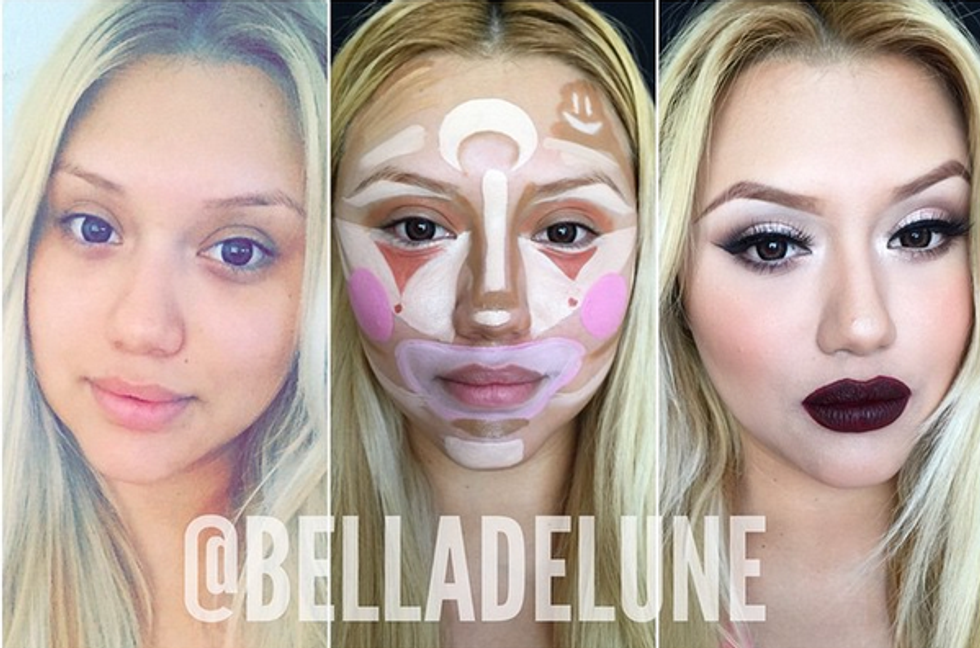
Over the past few weeks in the beauty world, Bella DeLune has been making waves with something she refers to as “clown contouring.” In her various YouTube tutorial and Instagram posts, DeLune transforms herself from natural, to clown-faced, to flawless. By showing how she uses green, orange, and purple concealers, plus cream blushes and regular highlight and contour shades, DeLune’s videos are just as informative as they are entertaining to watch.
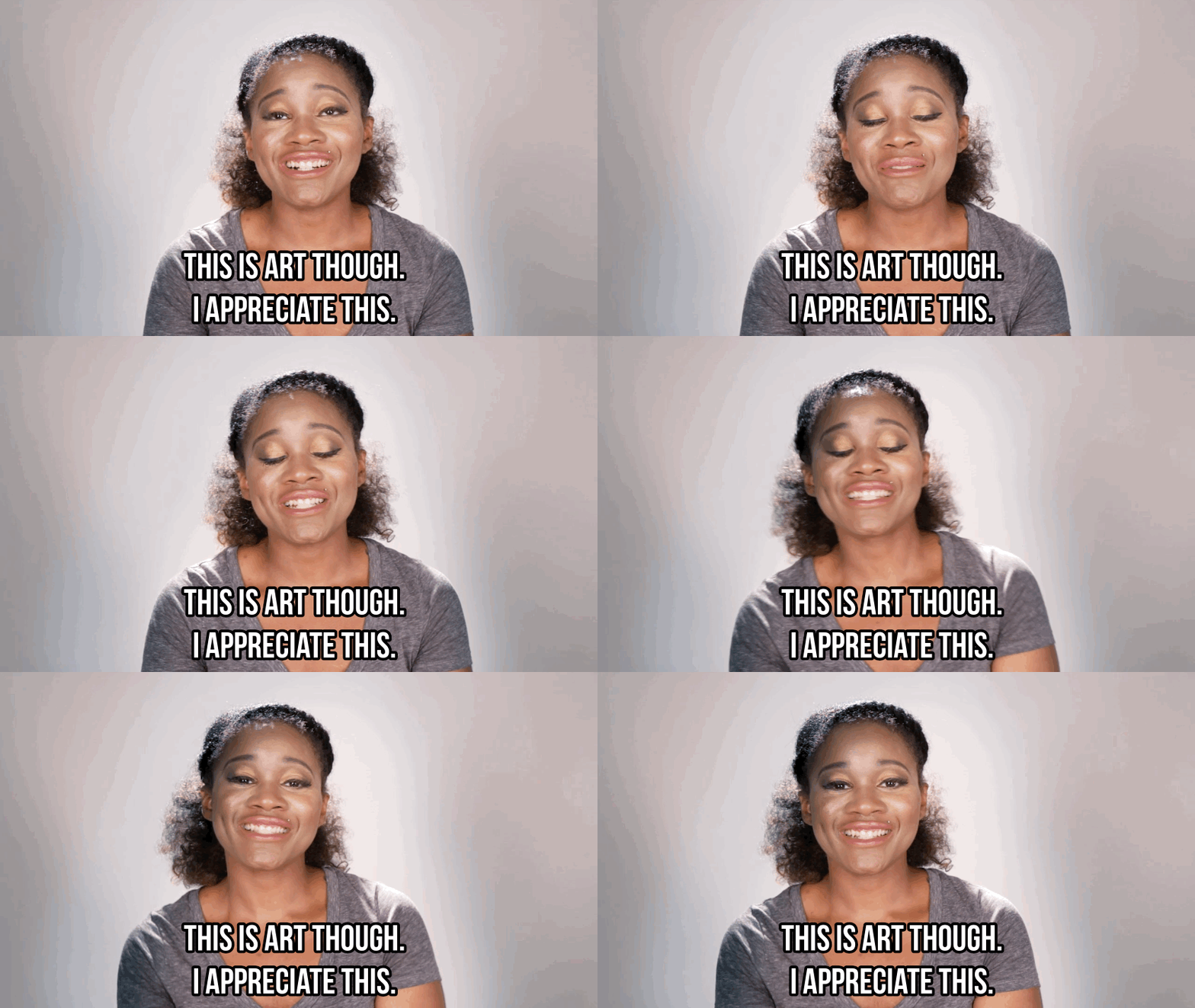
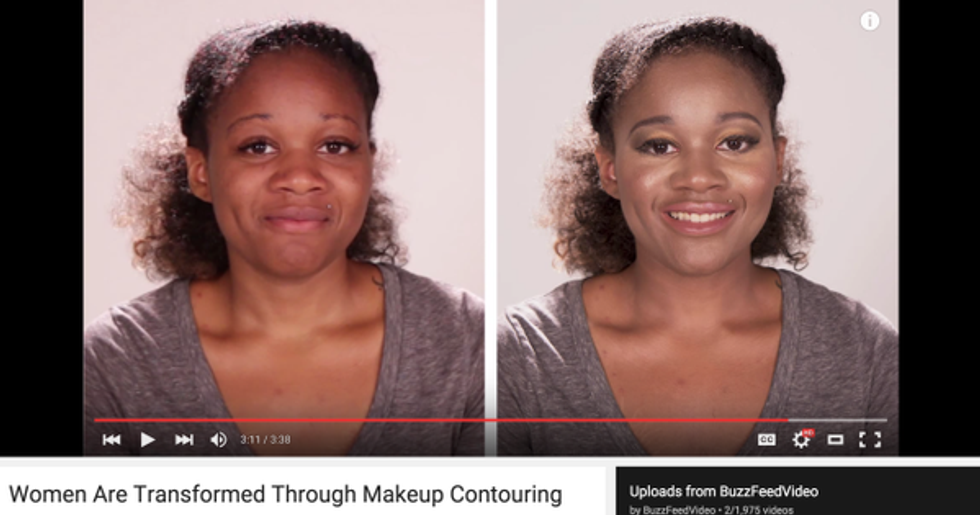
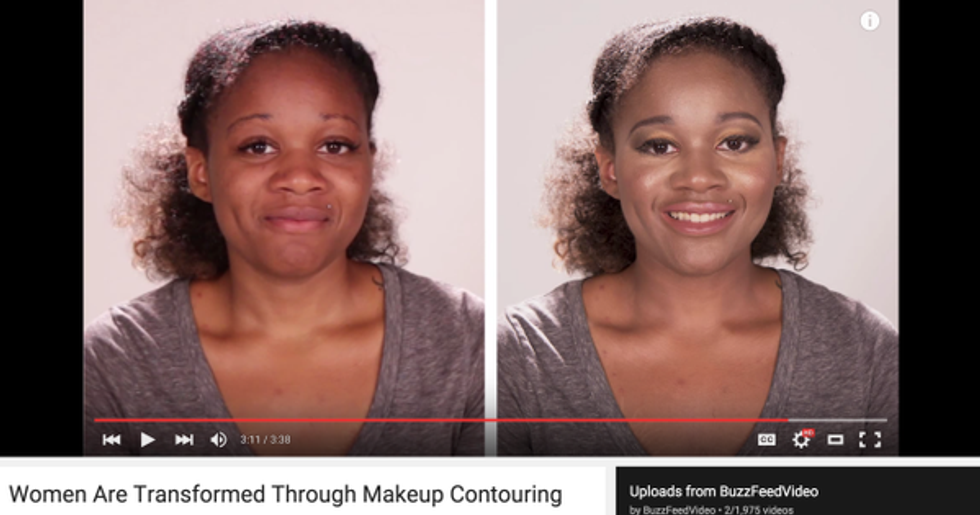
On August 11th, BuzzFeed posted an article/video where DeLune “transforms” three women who work at BuzzFeed with makeup – though only one woman was actually done up in the full clown contouring makeup. In the past few days, the video has received nearly 2 million views and over 4,000 comments. The problem people have isn’t with the clown contouring, it’s with the colors DeLune used on Daysha, the black woman featured in the video. Because the highlight was too white and the contour wasn’t a deep enough shade, Daysha ended up looking whitewashed, gray, and “ashy.” Though the other two women she made up, an Asian woman and a white woman, were color matched perfectly, the shades used on Daysha were far, far too light for her complexion. The results left people on the internet fuming, calling DeLune’s credibility as a makeup artist and BuzzFeed’s ability to provide her with makeup meant to be used on a woman of color into question.
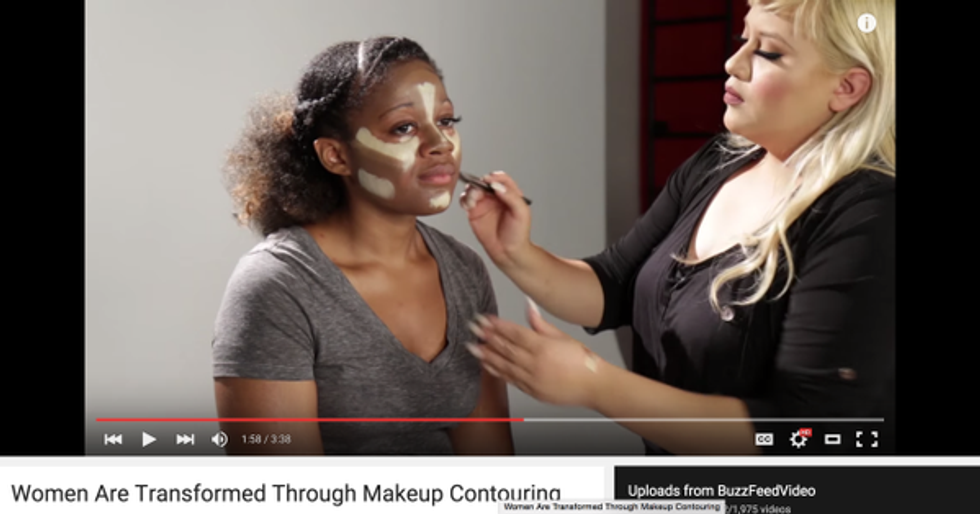
People defending DeLune have argued that BuzzFeed supplied the makeup she used, and therefore should be responsible for having the correct products, which brings up another conversation that needs to be had in the beauty world: why are artists not prepared to work with models that have dark skin tones? In July, South Sudanese model Nykhor Paul, took to Instagram to vent her frustrations with makeup artists in the fashion industry. “Why,” she writes, “do I have to bring my own makeup to a professional show when all the other white girls don’t have to do anything but show up WTF!” Though cosmetic companies make base items like foundation, concealer, and powder in a wide variety of shades, Paul writes that many makeup artists show up to shoots, equipped only with makeup for white or lighter skinned models. Any good artist, she explains, “would come prepared and do their research before coming to work because often times you know what to expect especially at a show! Stop apologizing it's insulting and disrespectful to me and my race it doesn't help, seriously!”
After the BuzzFeed video went viral and started gaining negative attention, DeLune took to Instagram to defend herself, posting a video of her transforming a black woman of color once again, this time using correct colors. She writes, “We all face daily battles, sometimes wars have to be fought and you are pressured to find a weapon to fight so viciously. Well I choose my artistry, I will let it speak for itself yet again when I am able to show its full potential.” Though the controversy over who is to blame for the makeup mishap will likely continue for some time, it’s important for us to see the bigger picture: black women of color are not catered to enough by the beauty industry. Whether BuzzFeed didn’t take enough care to get the correct shades, or whether DeLune works better on lighter skin tones, the root of the problem remains the same: mistakes like the one made in BuzzFeed’s video could have easily been avoided if anyone had simply taken the time to get makeup to actualy match Daysha’s darker skin.
It’s unfair to call either BuzzFeed or DeLune racist for the results of the video, but it’s unfair to let them off the hook either. As an artist, she should have been able to look at what she was given, known it wasn’t going to be the correct color, and said something. As a company, BuzzFeed should have made sure she had all the right products in the right shades, especially because she was working on their own employees. Hopefully the mistakes made, and the accountability demanded by viewers, will prevent other artists from not taking the time or putting in the effort to match each and every skin tone regardless of how dark or light it is. Makeup is art, and as Paul says in her Instagram post, "art is never racist, it should be inclusive of all."