Fashion is everywhere–from Walmart to Chanel, from H&M to Goodwill, from Lady Gaga's meat dress to Anne Hathaway's lumpy blue sweater. Clothing has defined people for centuries; everything from your financial status to your gender is represented by the cloth you throw on in the morning. It has allowed creative expression and has pushed social boundaries in all the best ways. However, like all good things, fashion has a dark side. Here are three problems with fashion you probably haven't thought about:
1. Gender assignments to children's clothing
We've been assigning gender to colors as early as 1927. For nearly a century pink has been a "girl" color and blue has been a "boy" color. Ever since I can remember, I've always thought of this notion as bizarre. I know a number of parents that don't allow their baby boys to wear pink because it's "not manly." Babies don't care about the color of their clothes. They're too preoccupied avoiding bright lights, loud noises, and eating after midnight.
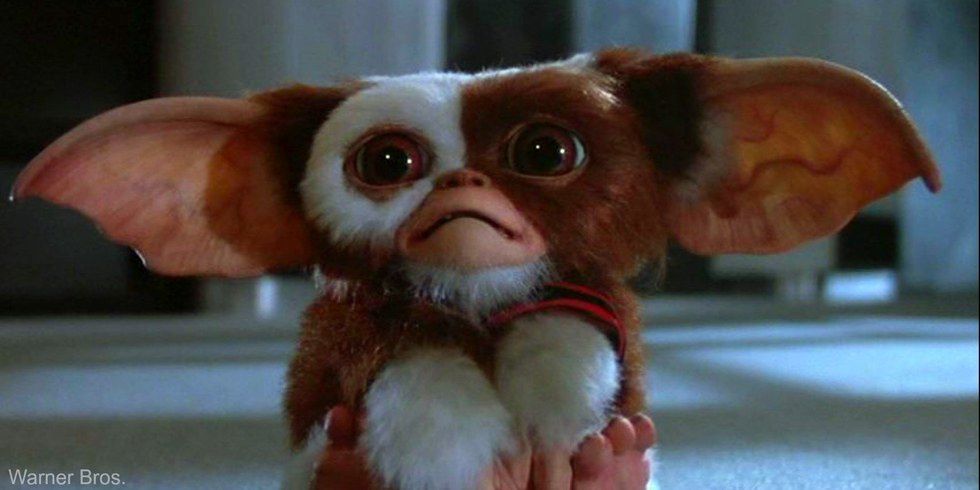
Infants are basically Gremlins.
"Woah, Darryn," you say, popping an aspirin and shaking your head, "Let's not get too liberal here." Okay, if that argument isn't working for you think about it this way:
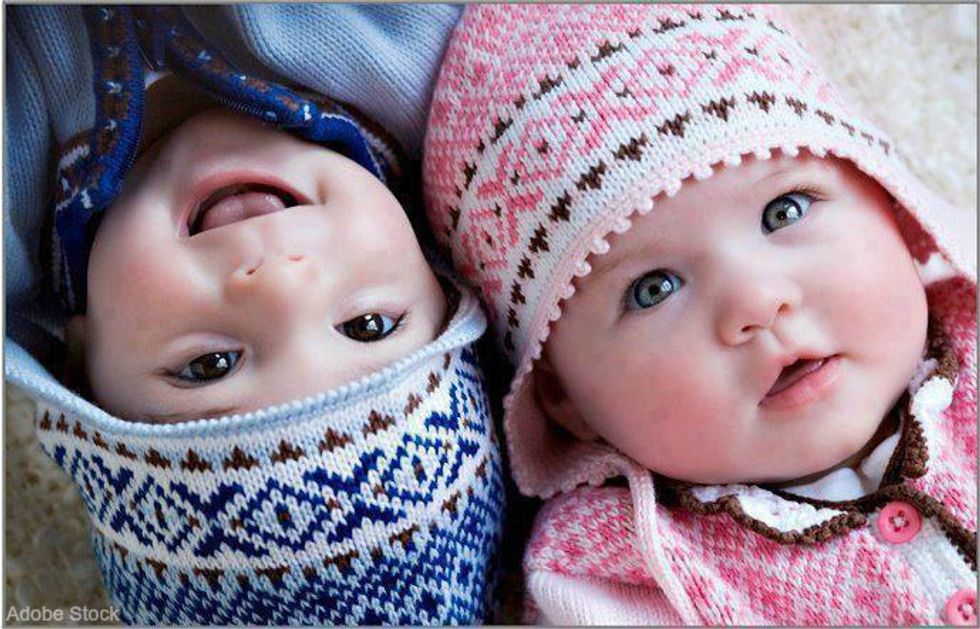 Every stranger can assume the genitalia of these children.
 EVERY. STRANGER.
2. Women's t-shirts
There are 2 types of T-shirts in America: unisex and women's. There is no such thing as a "men's" T-shirt. No, seriously.
On one end of the T-shirt spectrum you have unisex; simple pieces of stitched cloth with four holes that cover the torso of the human being wearing it. On the oher end, you have women's T-shirts; form-fitting clothes with built-in curves that accentuate the natural storage of body fat on the hips and chest of the female body. They're designed to emphasize and sexualize women. Which is problematic in itself.
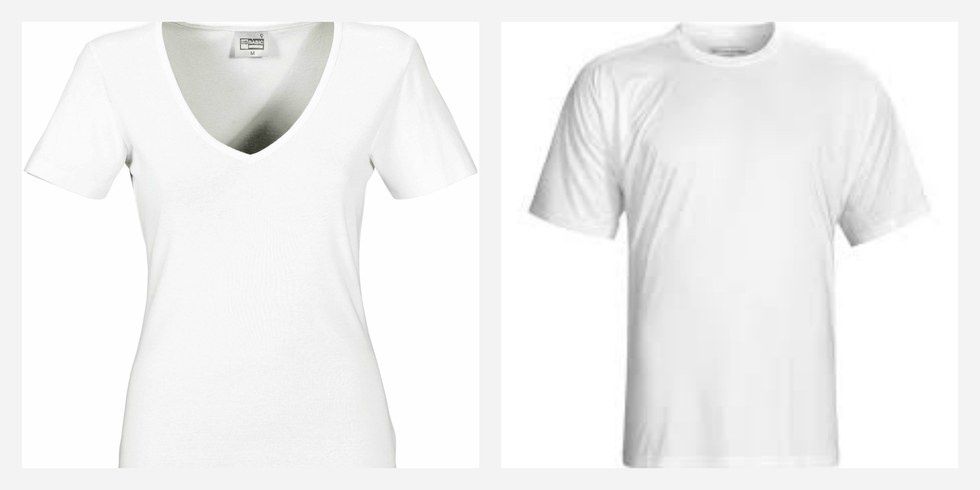
Pictured Here: Patriarchal Fashion Starter Set
Another problem with designing shirts designed to sexualize women is that you completely exclude men–and some women–from wearing these shirts. The body type these Tees adhere to isn't the average human body type. Not all females (and just about zero males) have large chests, small waists, and wide hips. The ideal is completely unrealistic and lead to women who don't fit the exact specifications stuck wearing awkward, ill-fitting clothes. It's almost as if the people we pay to design and produce clothes for our bodies have no clue what the average body looks like. Which leads me into my next topic...
3. Plus Sizes Are Near Impossible To Find
"Plus sized" women's clothing is a category for women who wear sizes 12 to 24. This is really odd considering the average woman in America is a size 14. Another oddity is that plus sizes only account for 17-18 percent of apparel sales. Why? It's not for lack of demand but rather a lack of desire to produce fashionable plus sized clothing.
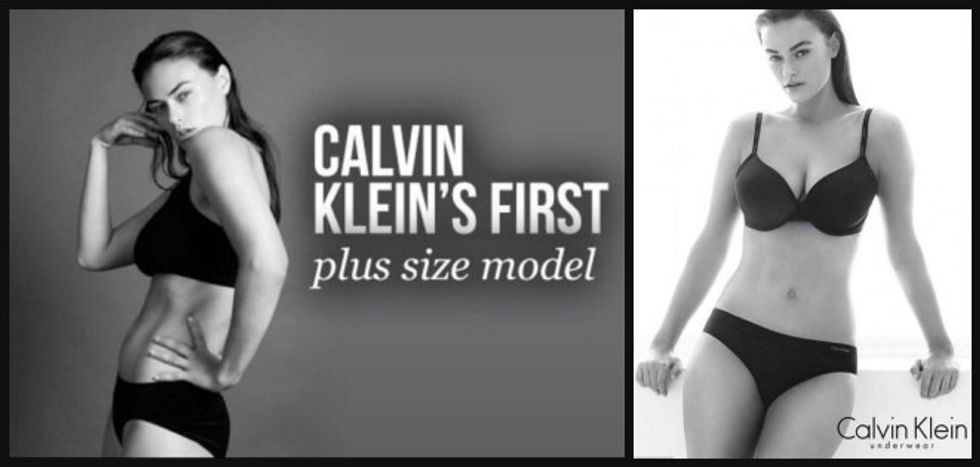
Maybe the problem is their idea of "plus sized."
Go to any given clothing store and look at their clothing section. It's almost a guarantee that the "plus" section–if it exists at all–will be constricted to a minimal amount of racks, shoved off in the darkest corner. Why? Well, in the words of a former CEO of a clothing company that targets teens aged 14-20, "A lot of people don’t belong [in our clothes], and they can’t belong. Are we exclusionary? Absolutely." So basically the size of your waist dictates how much you "belong." That's totally not a toxic mindset.
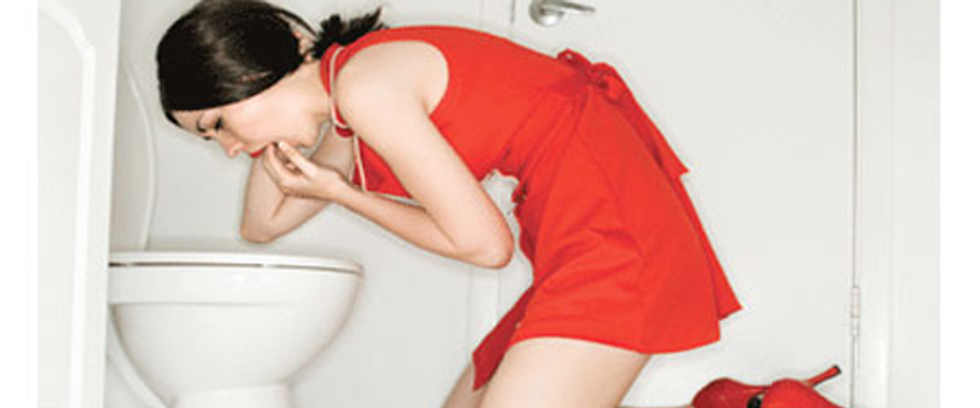
Pictured here: a true sense of "belonging."
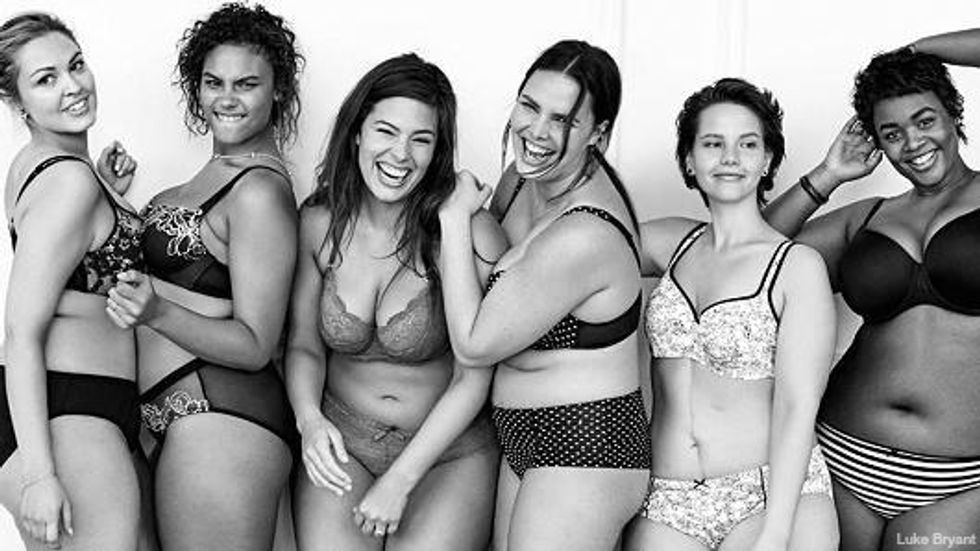
This is all we could find in our size. At 10 different stores.
This doesn't just hurt plus-sized shoppers; in refusing to sell clothing the majority of the population can wear, the companies themselves are missing out on huge profits. It should not have to be said that plus-sized shoppers are people too and have their own preferences of textile, pattern, and style of clothing. There is a growing demand and a minimal supply and this is so, so problematic. As the size of the average American has changes the size of the market for plus-sized clothing must adjust as well.
The awful truth of it all is we don't have any other options. We're forced to shop at these stores because we are obliged to wear clothing and nobody else is producing androgynous clothing with a variety of plus-sized options. And the issues don't stop there; I haven't even begun to touch on clothing advertisement issues like sex sells, and the obvious gender discrepancies.
However, this is the lot we are limited to. Unless (and hopefully, until) the fashion industry begins to actually understand the needs and desires of the consumers, the patterns of sexism and fat shaming we have come to know all too well will continue.