
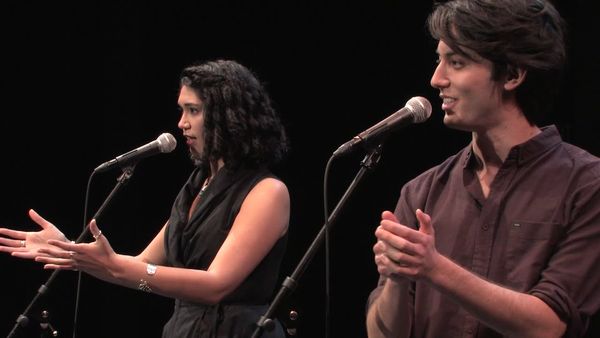

Beyonce’s newest album Lemonade has washed over the globe with her sweet, sweet vocals, and has provided us (particularly America) with a wonderful introduction to the young poet Warsan Shire.
I would like to broaden this introduction.
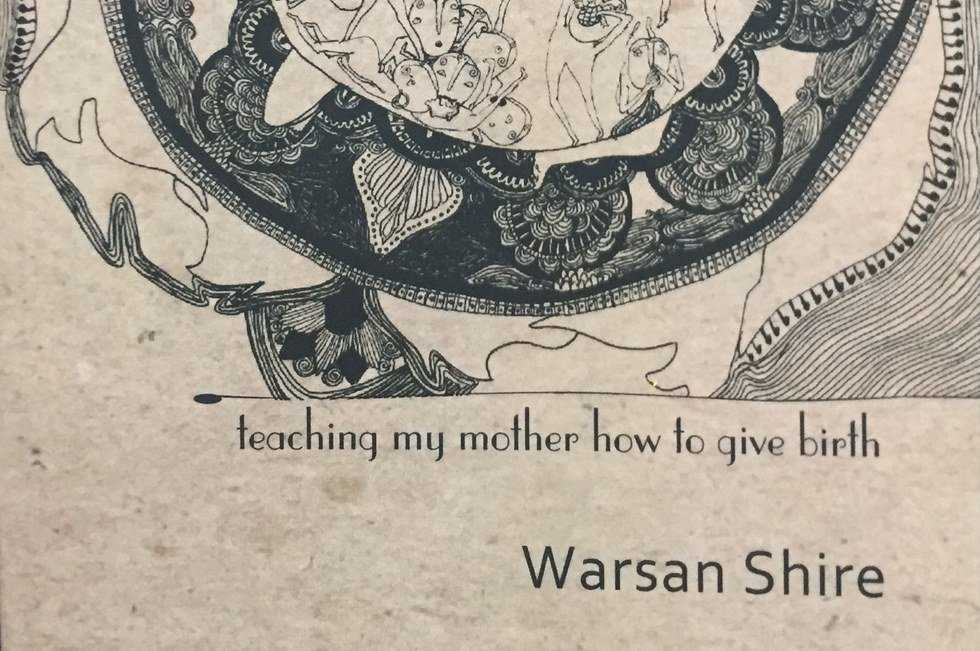
Warsan Shire is a Kenyan born, British-Somali poet who has been acclaimed as Young Poet Laureate of London in 2014. Shire has published a collection of poems as well as a chapbook (a shorter collection of poems): Teaching My Mother How To Give Birth published in 2011and Her Blue Body published in 2015. Now that Beyonce has featured Shire, it is safe to say that she is a viable part of the up and coming movement of activist poetry.
Although I haven’t been able to get my hands on Shire’s chapbook, I’ve had Teaching My Mother How To Give Birth for quite awhile: it’s one of those collections that echoes about the mind long after it’s concluded.
The collection is a dialogue between the concept of a sour nostalgic home, and being exiled from that home. Shire’s sensibility through these poems is best explained by Alexis Okeowo of The New Yorker: “she has always felt like an outsider, and embodies the kind of shape-shifting, culture-juggling spirit lurking in most people who can’t trace their ancestors to their country’s founding fathers, or whose ancestors look nothing like those fathers.”
Shire does not shy away from tough subjects; in fact, the second poem of the collection is “Your Mother’s First Kiss,” which is a poem that details a daughter discovering she is the product of her mother’s rape. Sexuality is a prominent theme, which Shire portrays through the lens of her culture with “Birds,” a short poem of how cultures glorify virginity.
One of the most intimate gestures I appreciate permeating through this collection is how Shire treats sexuality: she often juxtaposes the concept of sex with something else like food or family. Perhaps it’s due to my Western influence, but it’s refreshing to see sexuality used in an unusual way. The poems I think this is done with best in are “Snow” and “Grandfather’s Hands,” which are two pieces where the speaker reflects on both her parents’ sexual encounters as well as her grandparents. This strikes me as a familiar gesture often found in much more mature poets (Shire is only in her twenties) like found in Sharon Olds’ “The Lifting” or Stephen Dunn’s “The Routine Things Around The House.”
The most powerful of all would have to be the multi-sectional piece entitled “Conversations About Home (at the Deportation Center).” This piece has four sections in the form of prose poems, and act as a cap on the collection (although it isn’t technically the ending poem, I think it probably should be). “Conversations About Home” is a meditation on how it feels to be exiled from her country, but the sour nostalgia comes in through the dark imagery:
“I do not know where I am going, where I have come from is disappearing, I am unwelcome and my beauty is not beauty here. My body is burning with shame of not belonging, my body is longing. I am the sin of memory and the absence of memory. I watch the news and my mouth becomes a sink full of blood.”
I’ve been a fan of Warsan Shire since I had seen some of her poems floating around Tumblr years ago. I’m delighted to have her book as a part of my collection, and it certainly is advanced for how early Shire is in her writing career. I hope Beyonce has started something huge for her career and there are many more collections of her poems to come. Mouthmark, the publication which put out Teaching My Mother How To Give Birth prefaced the collection with this note: "mouthmark poetry is a kind of literary pointillism applied on a jazz-blues-blood-sex-rock-and-rolled canvas with sweat, tears and spittle as primary colours; if you don't get it you're not listening..."
I think that sums up Shire's work pretty well.

















