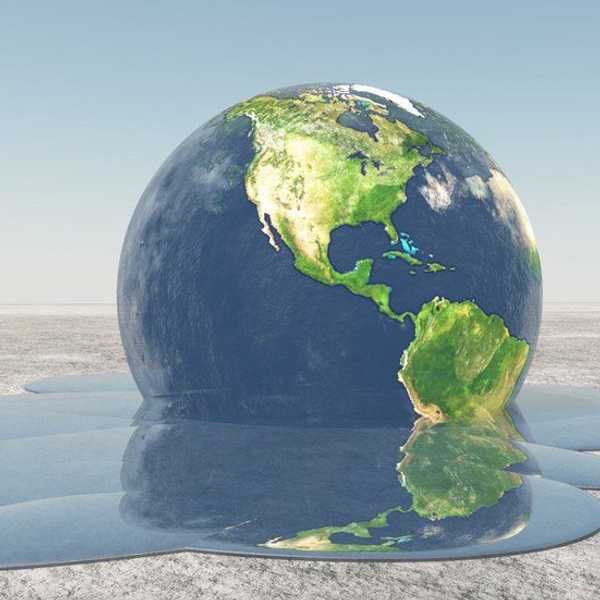

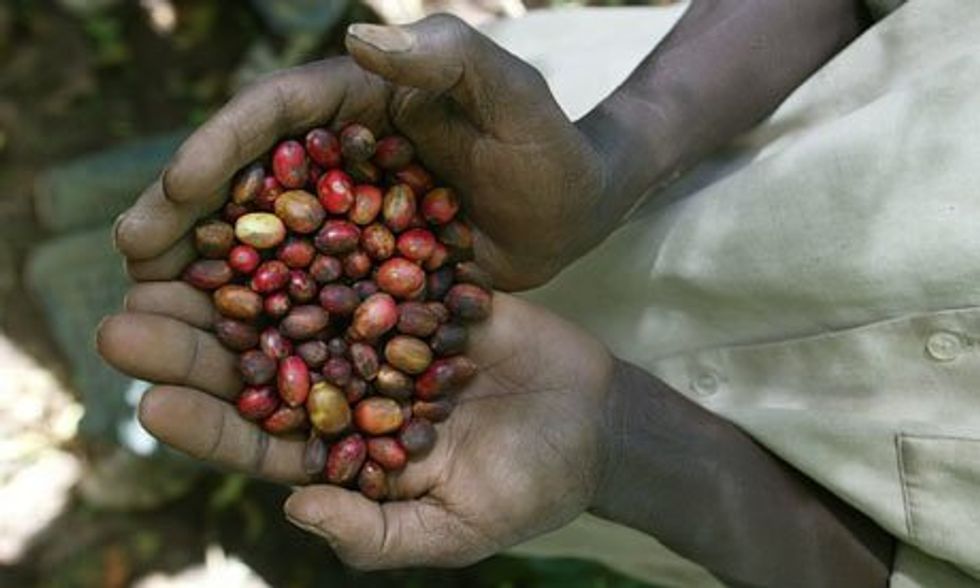
As the world continues show a trend of warming global temperatures, nature is being forced into a position where it must adapt to keep up with the extreme weather or face extinction. Unfortunately for us, the coffee plants that grow in the cliffside terrain of Ethiopia are facing such a threat. In America, we might not see this as much of a problem. Coffee comes from at least 10 different regions all around the world and so what if one area goes south? But this problem is localized, its occurring in all the coffee producing nations. In 2014, the Intergovernmental Panel on Climate Change reported that the areas able to grow coffee will be significantly limited by 2050, causing not only a downturn in the global market, but also a bunch of cranky people who will have no way to caffeinate themselves other than tea or soda.
I joke, but it's a serious problem. Most of us drink the product of the coffee plant species known as Arabica, which was a relative of the wild coffee plants grown in Ethiopia. Transplanted from the cool highlands of its origin, the Arabica plant has been traded, bartered, and genetically tinkered with to fit into the distant regions of Indonesia and Latin America. All of this has caused the Arabica coffee bean to become THE bean of choice for coffee drinkers all over the world. Its cousin, the Robusta bean, has not shared the same success or garnered the same fame.
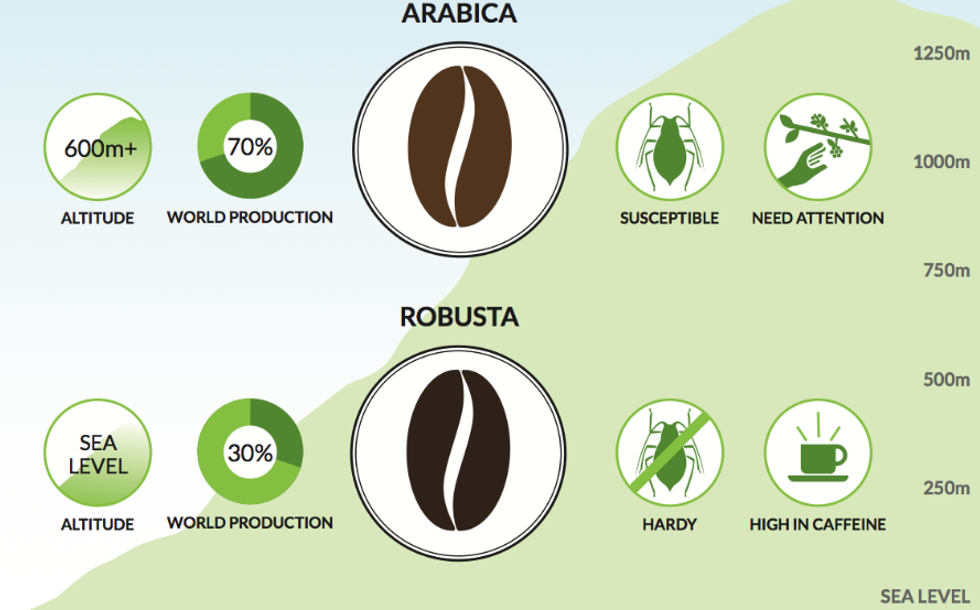
The reason is primarily for taste. Much like wine, the flavor and body of coffee is encompassed by the region and climate in which it is grown. Coffee critics agree that Arabica, across the board, from any location is just better than Robusta. It's like comparing Starbucks to Maxwell House. Even if you don’t like Starbucks, you wouldn’t be caught dead with Maxwell anywhere near your mouth. Over the centuries of human interference with the coffee plant, the genetic strand for Arabica has started to weaken due to all the inbreeding. So with climate change killing off the more hardy, genetically diverse coffee plants of Ethiopia, it then seems like our delicate Arabica might not stand a chance against the oncoming storm. Not only is this a huge issue for coffee consumers (who collectively drink over two billion cups a day), but it will devastate the global markets and the “120 million farmers” that count on coffee as their main source of revenue.
But how does climate change affect the industry?
Warming weather is perhaps the largest threat to the sustainability of the coffee industry. The Arabica bean is like a high-maintenance diva with lots of requirements. The temperature, the rainfall, and the altitude must all fit into a highly specific combination in order to produce.
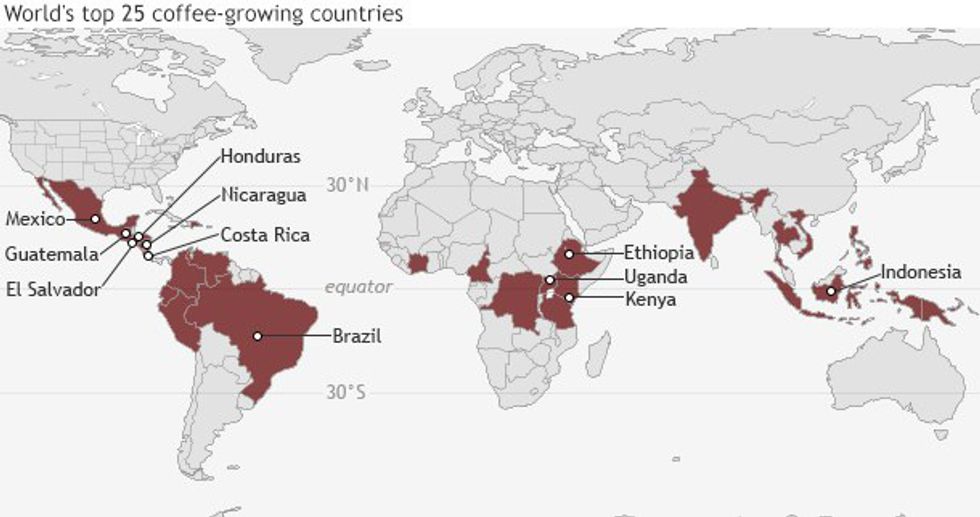
On the map you can see all of these specific regions fit into what is called the global coffee belt. These are also the regions most likely to be devastated by the warming of ocean temperatures (via hurricanes/typhoons, monsoons, increased rainfall, El Niño/La Niña).
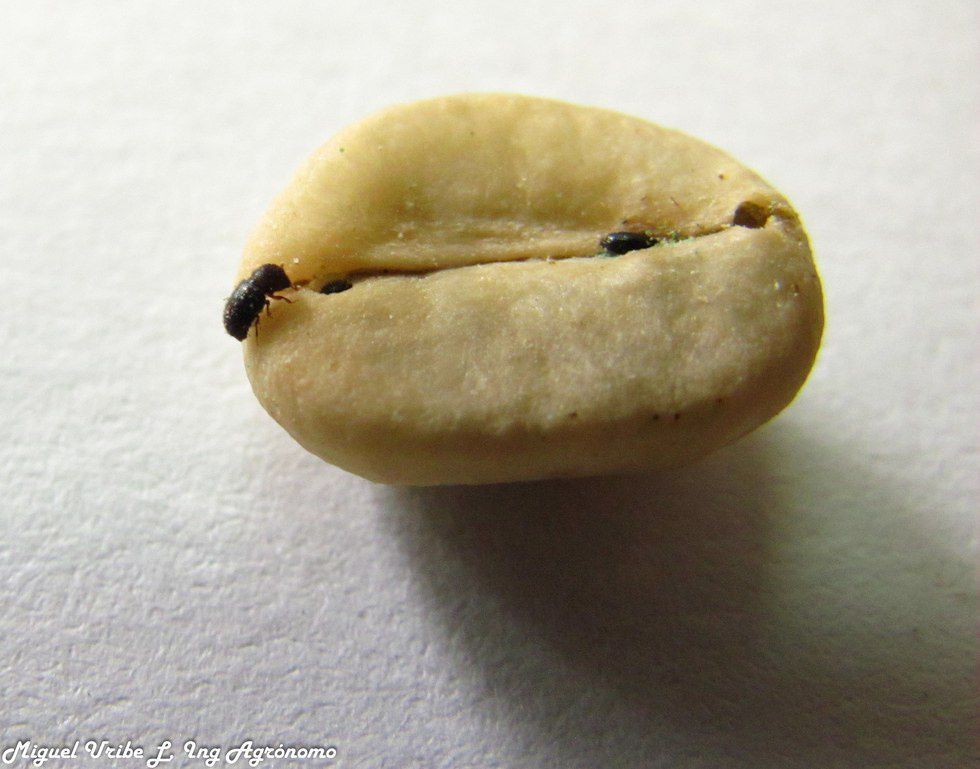
The water and heat invite diseases and pests to destroy the vulnerable plants. Rust leaf has been known to wipe out scores of coffee plantations and small bugs, the coffee berry borer, has already caused over $500 million in losses. Farmers have no choice but to push their coffee crops up into higher altitudes, which will mean less production in the near future.
What’s being done?
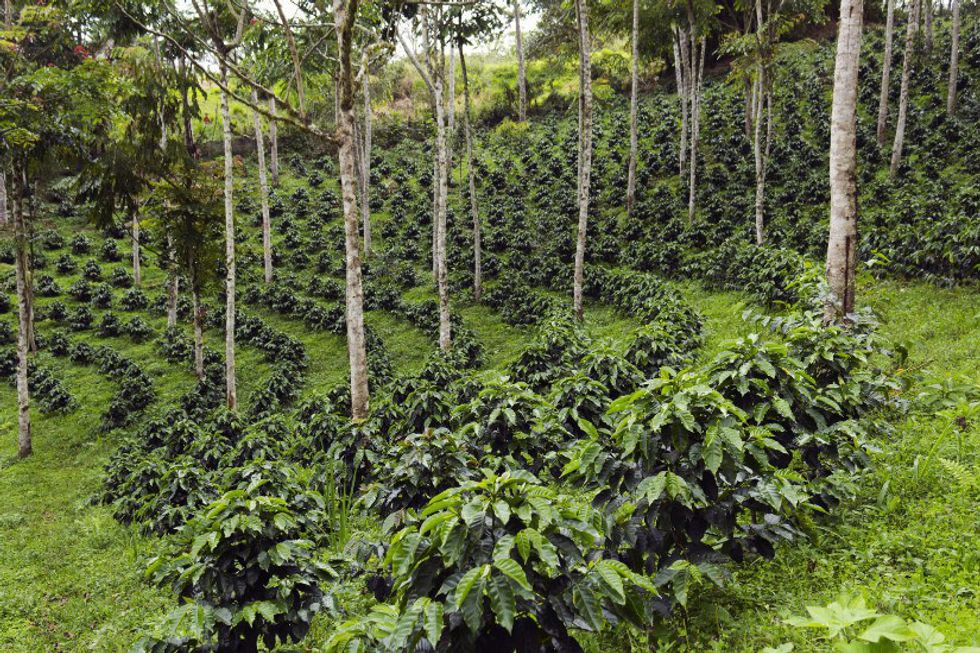
Thankfully, the coffee industry has begun to take serious measures in the effort to combat the effects climate change is having on its product. In 2014, the Inter-American Development Bank released the complete genome sequence for the Arabica bean the public domain for scientists around the world to experiment with. The research will hopefully speed up the process in creating coffee species that will be able to withstand the increase of temperature and become more resistant to infestations. Some cultivators are also trying agroforestry methods such as shaded plantation. These plantations incorporate local canopy trees alongside their coffee plants. The trees keep the coffee plants nice and cool while also preserving the local tropical rainforest, reestablishing lost migratory bird habitats, and welcoming desperately needed pollinators such as bees into the grove. Many small farmers already use this method because it creates more revenue for them, and large companies like Starbucks are leading the way, proving that big industry can make the switch to ethically sourced and grown products.
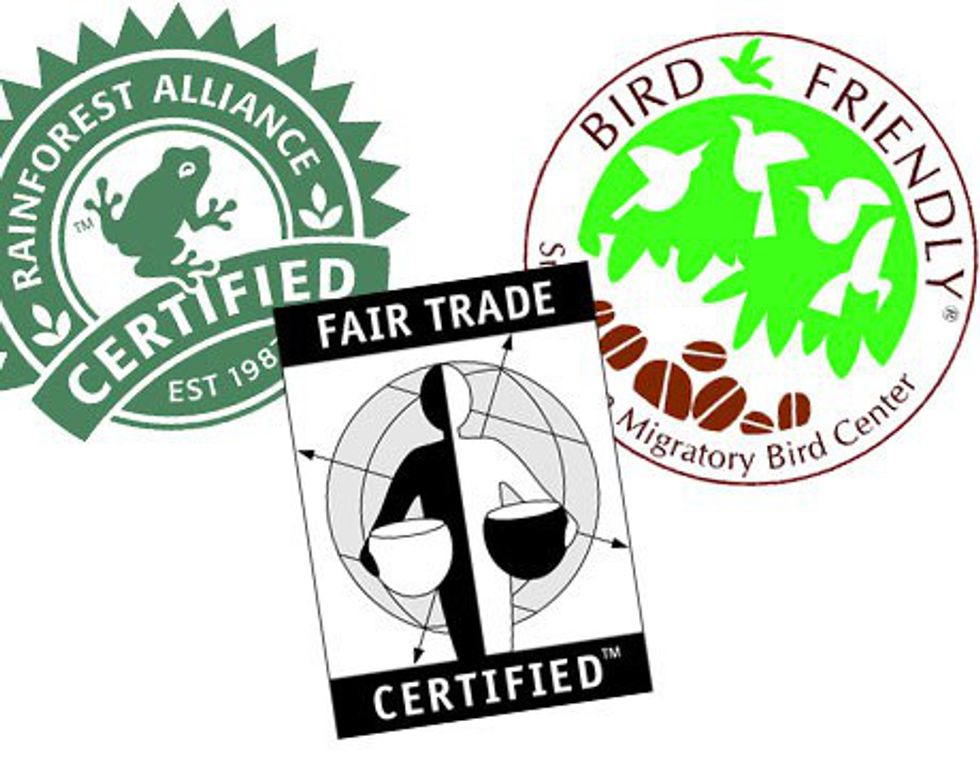
Ultimately, restructuring of the Arabica gene’s DNA sequence and further analysis into what makes the Ethiopian coffee plant strong needs to take place. For now, we take our coffees with hope that modern-day science and the economic pressure pushes the world to think more green about its daily cup. If you’d like to buy coffee products that have been grown through the shaded plantation method, look for the Smithsonian Migratory Bird Center’s or the Rainforest Alliances’ seal of certification. Both do great work in supporting maintaining rainforests and educating the public on Earth-friendly foods and other items.