
Just last night I watched a documentary on Martin Luther King Street in Tennessee, feeling ignorant, tolerant and sad about the state of our country. Occasionally, I feel like the United States has made more leaps than setbacks and society is on its way to equality, but immediately after, I feel bogged down and disappointed by the bias and hurt which oppress our minorities.
"Minority" is an interesting word these days. What does it apply to? It isn't just a racial matter anymore, not just because minorities are quickly growing and still being treated like they're largely outnumbered, but because there are new realms of oppression that are hard to reconcile. Though race is an equally large issue today as it was 50 years ago, LGBTQ rights, women’s rights and animal rights have quickly pushed into awareness and are adamantly fighting for our attention and recognition.
I think a primary issue of relevance with American Christians is finding a way to make our religious belief, moral belief and political beliefs live in some sort of harmony. Though there are important distinctions between all, there’s an equally important overlap in which our perceptions and ideas must coalesce. We must find common ground between all realms of our beliefs, or hypocrisy and bigotry creep not-so-subtly into the picture.
Whether we want to talk about it or not, whether we will ever come to an agreement about the proper political approach, we need to start having conversations about how to treat people who are in the minority.
I’ve never personally met a person who loves Jesus who didn’t want to bridge the gap between church and victims of current social issues. Where the issue comes is agreeing on how to approach the matter of Scripture and human rights. Where does one turn to when scripture seems woefully non-specific about the variety of issues we face today which confuse and overwhelm us?
I’m going to share something with you, which I think most people have realized, but maybe need to hear again. Christianity is a lovely thing, it really is, but I think sometimes the Christ in Christianity is blurred over and forgotten. Christ is the most perfect role model for how to treat people whose ways we might not understand. Christ not only approached and loved on the prostitutes, tax collectors and Pharisees (also known as the “urchins” of ancient society) he invited them into his intimate company, to his dinner table. He rightly defended them in front of religiously misguided people who wished to cast judgment on them.
He brought Matthew, the tax collector, into his very select group of flawed, wonderful, sinful people who would ultimately change the world, and he loved him.
Keep in mind, Jesus did tell these people to change their ways, to repent and follow him. I don’t think that means we are like the son of God and can bring people to their knees in sorrow and repentance. That’s not to say that you shouldn’t form relationships with people whose lives are wracked with a Christ-less existence and perhaps, after becoming intimately acquainted with them, talk to them about the Bible and what God asks of us. I just think that Christ was God incarnate, which is an important thing to note, and maybe his approach to repentance was a bit more justified than ours might be.
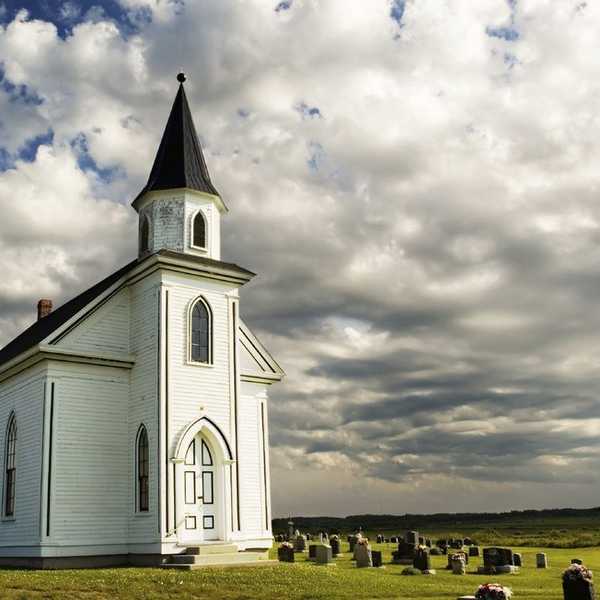
We are a sinful people. We walk through holy doors to church buildings filled with flawed and hurting people every week, and somehow those among us who long for acceptance, love, and understanding don’t feel comfortable to approach our buildings, once designated as society’s safe place from wrongful prosecution and harm. That means there’s a definite wrong doing in our communication with minorities.
There is a miscommunication when women who want to be of use to the church, feel they must let a man tell their story in front of a congregation based on that extra X in their chromosomes where a Y should be.
There is a miscommunication when gay and lesbian people feel that approaching a church building is not even an option.
There is a miscommunication when church buildings built on the nice side of town are filled with those who live according to the standards of their quaint corner of society, and church buildings built on the rough side of town are racially homogeneous and avoided by those who feel they wouldn’t fit in.
There is a miscommunication when Christians can’t agree to love other Christians based on the idiosyncrasies of their own denomination.
Our miscommunications have become a rigid dividing line among classes, races, between heterosexuals and those in the LGBTQ community, between political opposites, and denominations, and I, for one, am horrified that one day we will have to stand before the Almighty and justify away why our church buildings were empty of diversity and our hearts were full of prejudices we didn’t dare to erase.
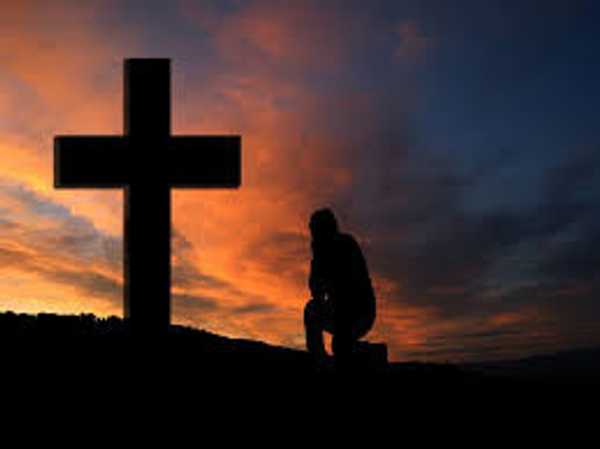
If there’s anything to be taken from this, it’s this: when in doubt, look to Jesus. It may seem impossible to create common ground between religion, morality, and politics, but love should be the common denominator. And Jesus is love.