Chinatowns across the nation are founded on rich history. Immigrants from China come to America in hopes to start a new life. Some come for family, some come for a shot at the illustrious "American Dream." All of them come with a little piece of home in their hearts.
That piece of home acts as a seed, planted in the garden that is their new hometown, and sprouts into a growing populace of Chinese culture - Or, at least, that is how it should work.
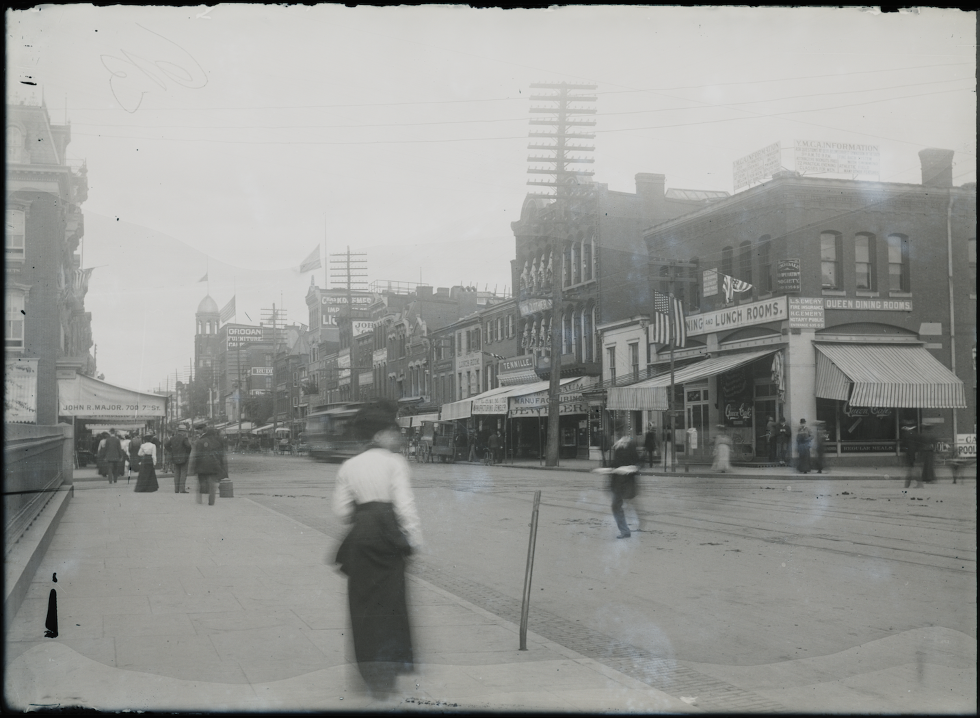 7th Street NW, east side, looking north from G Street, circa 1900–1905, the current location of Capital One Arenaupload.wikimedia.org
The suburb of Chinatown, D.C., was established in the 1930s. A large population of Chinese immigrants were relocated from the unofficial Chinatown area on Pennsylvania Ave. The new location provided more space for immigrants to expand and establish a new place to call home. For 30 years, the new region of Chinatown allowed Chinese immigrants to live in peace, celebrating their culture, until the riots of 1968.
In 1968, Dr. Martin Luther King Jr. was assassinated at the hands of James Earl Ray in Memphis, Tennessee. The news of Dr. King's murder shook the nation and particularly affected cities that were deeply segregated. Riots broke out in several major cities, and Washington D.C. was hit particularly hard. Black neighborhoods in the south of D.C. moved northward to confront the predominantly white section of the city, and Chinatown was caught in the crossfire.
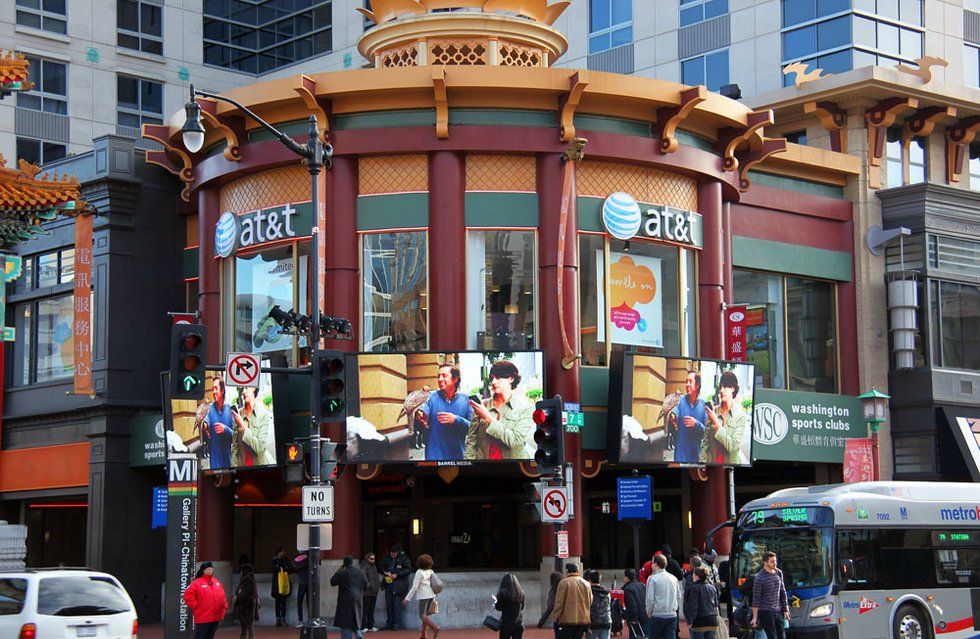 Gallery Place - Chinatown Station Subway Entrancelive.staticflickr.com
The Chinese-American residents of Chinatown left the suburb to find safer areas to move to, such as Fairfax County, VA and Montgomery County, MD. After the riots subsided, Chinatown was left as a shell of its former glory. With vacant buildings and ruined storefronts, Chinatown became a slum that was the perfect site for gentrification.
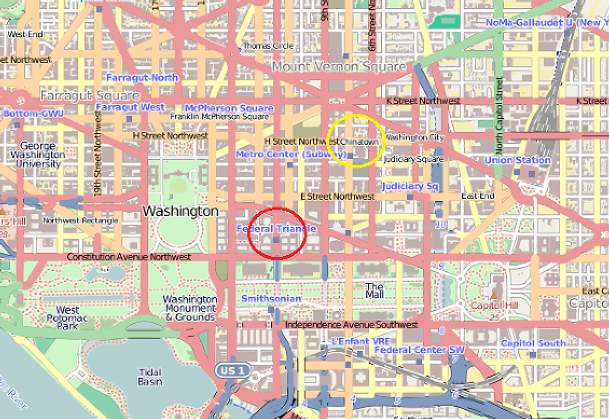 Map of Washington, D.C., with old Chinatown highlighted in red and the current Chinatown in yellowupload.wikimedia.org
Since the mass emigration in the late 60s, Chinatown saw a massive decline in residents of Chinese-descent. In 1970, the census reported that there were 3,000 Chinese tenants in the region of Chinatown. Fast forward to 2016, where the number dwindled down to less than 600. Today, Chinatown's population is only about 21% Chinese-American, or of Chinese descent.
Walking the streets of Chinatown, you see storefronts that show both English and Mandarin on display. The crosswalks are painted with images of zodiac animals, and the massive Friendship Archway welcomes you to an Epcot-like area of cultural crossroads. Rich and vibrant buildings are adorned with Chinese-inspired designs, and the streets are lined with the poor and the homeless.
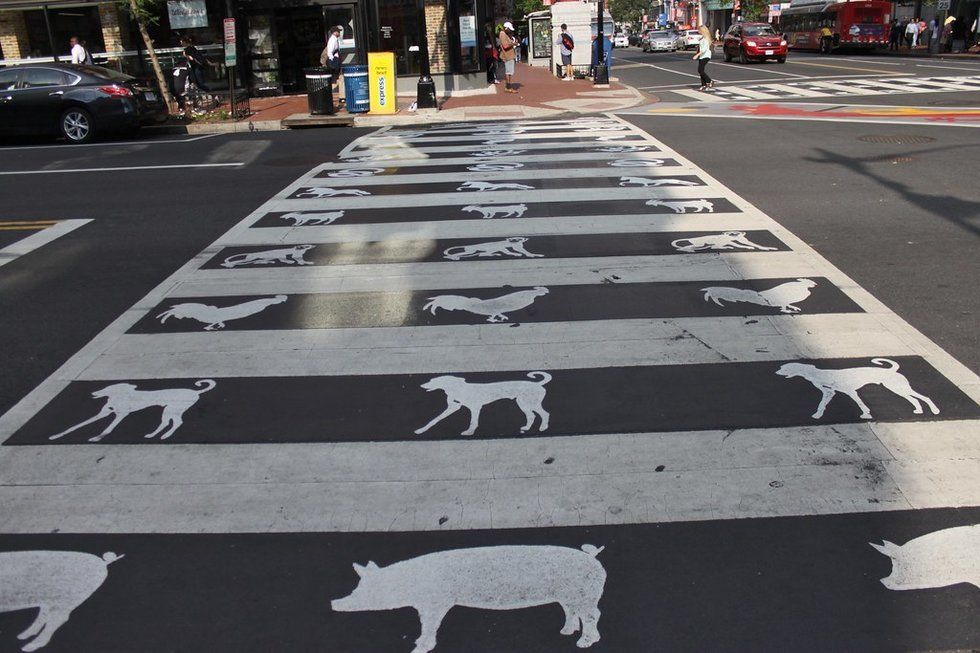 Chinese zodiac animals painted within the crosswalk in front of the Friendship Archwaylive.staticflickr.com
While the surroundings in the neighborhood look distinctly Chinese, the district has a hauntingly empty feel. Beautiful new stores built over the top of old buildings which once housed the hope and dreams of Chinese families. Manicured roads and sidewalks, littered with trash and human refuse.
Tourists marveling at the grandiose display of cultural appropriation, while few members of that culture remain. Today, Chinatown, D.C. serves as a cautionary tale of gentrification and capitalism. Once, an epicenter for Chinese immigrants, now, a shell of the neighborhood's better days, kept barely alive by tourists and shoppers.
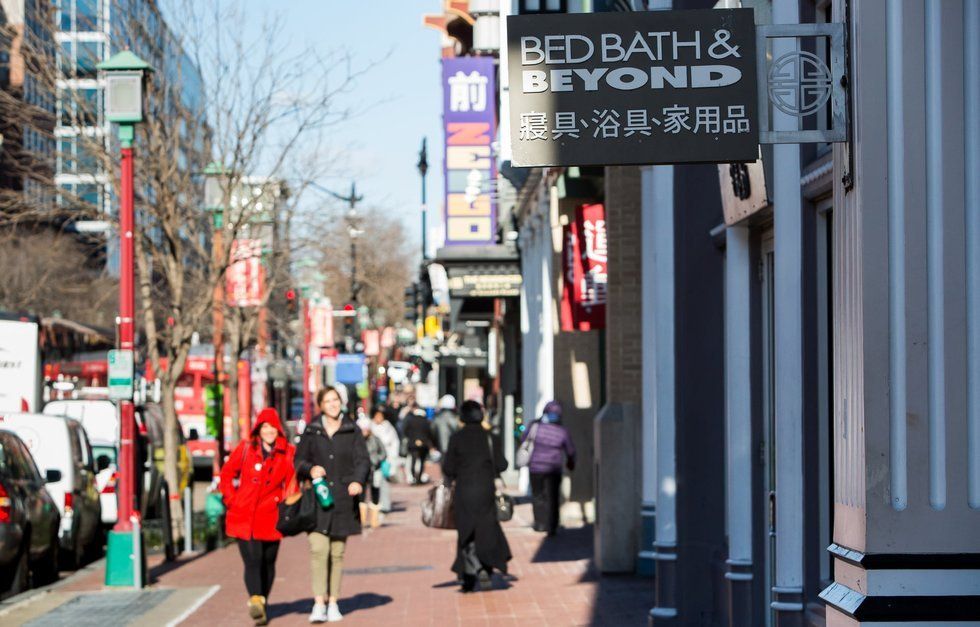 Bed Bath & Beyond storefront with English and Mandarin displayed on the signi.guim.co.uk