


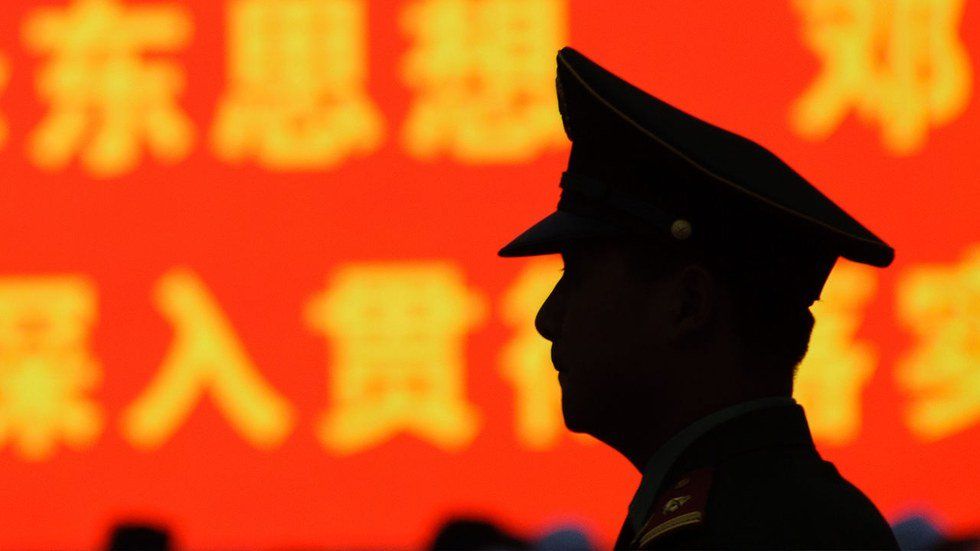
Whether it be the music, the news, or the celebrations of certain events in history, the Chinese government filters it all, blocking their people’s eyes and ears from information deemed unwanted, unimportant, or unworthy of remembering. After decades of censorship, it is evident that the common people want change, the filmmakers in China want change, and the firewall in China is getting too strong and needs to be changed. Censorship in China has long taken away what should be the standard rights of the Chinese people, and is a bad influence for other countries.
Chinese society has always been full of strong opinions and voices. As June 4th arrived, the hidden voices of the Chinese people unraveled, revealing their mourning and desire to commemorate the Tiananmen Square Massacre. 24 years ago on the same day, hundreds of student protesters were killed by Chinese tanks for expressing their opinions against the government. On June 4th, 2013, controversy arose among Chinese society once again as all citizens spent hours posting pictures of army tanks and calculators with the numbers “198964” punched in onto Weibo, one of China’s most prominent social networks. Coincidentally, on this day, search terms like “today”, “6-4”, and even the search term “May 35” led to an error in the search engines. Despite the censorship, people have found loopholes, such as editing the blocked army tank pictures and replacing the tanks with rubber ducks or other objects that would get past China’s strong firewall. People posted pictures of themselves covering their mouth with their hand and holding playing cards with the respective numbers corresponding to the date of the event. It is clear through this event that the people in China have a strong opinion, willing to find creative ways to bypass the censorships planted by the government and ready to make a change.
“Say a director writes a screenplay.… He racks his brain, and plumbs his mind to come up with one interesting sentence—one good detail, a believable context, a background we can relate to.… And then the censorships will say this phrase has to be changed, that phrase cannot be said. Sometimes it’s reasonable, but other times you get those notes and they’re so outrageous and absurd that you don’t know whether to laugh or cry!”. Chinese director, Feng Xiaogang, stepped up on stage to receive his “Director of the Year” award on April 12, 2013. After the usual formalities and thank you speeches to the staff and people who have helped him create his films, he mentioned a word that no one has dared to mention through the years: censorship. The people in the audience were shocked but less than a minute later, all cheered for him, showing their support. Luckily for the Chinese government, the censors were quick enough to bleep out the word as it went on live broadcast. Many filmmakers like Feng have been living through the distress of going by China’s guidelines to produce their movies. Another Chinese director, Lu Chuan, stated, “In an American movie, you can blow up the white house. We cannot blow up (Tiananmen) Square”. Does this restriction in Chinese films implicate a distrust for the citizens in China? This quote just goes to show how much censorship has limited not only the internet, but movies and films in China. Regardless of the Chinese film directors, even the Chinese government has a limit to how much they can push on the nerves of their people.
After filtering through more than 204,000 websites found from search engines “Google” and “Yahoo!”, it was found that more than 19,000 of those sites were inaccessible at some point in time. This censorship, already ridiculous to most Chinese netizens, is going further as China continues to censor search terms that may bring up topics about democracy and censorship itself. Websites belonging to the Massachusetts Institute of Technology and Columbia University in the United States have been blocked reason being that these universities hosted pro-democracy groups on campus. Broadcasts relating to the Tiananmen Massacre were replaced with a black screen on television until the reporter switched to a more benign topic like the 60th anniversary of the coronation of the Queen of England (Doane). As the censors in China tighten up their security, people begin to express their displeasure. When Fang Binxing, president of the Beijing University, handed in his resignation letter back in June of 2013, netizens rejoiced, happy that the man known as the “Father of the Great Firewall of China” has finally stepped down. Fang Binxing was the main reason that China’s firewall persisted on and grew stronger, leading to what it is today. Upon the announcement of his resignation, scathing comments like “We are glad you are gone for good!” and “Wish the illness can defeat Headmaster Fang as soon as possible!” surfaced onto the internet. This incident shows how much the people of China despise and loathe the censorship in China.
Whether it be the incident in Tiananmen Square 24 years ago or the resignation of headmaster Fang Binxing, all of these events have been closely monitored and shut out by the Chinese censors. It is obvious that people want change. Chinese filmmakers want to be able to let the people view their films with a sense of freedom and the people want to be able to express themselves not only in the public but on the internet. With all of these strict censorship rules, it will be a matter of time before the Chinese people reach their own boundaries and the Firewall crumbles to pieces.

















