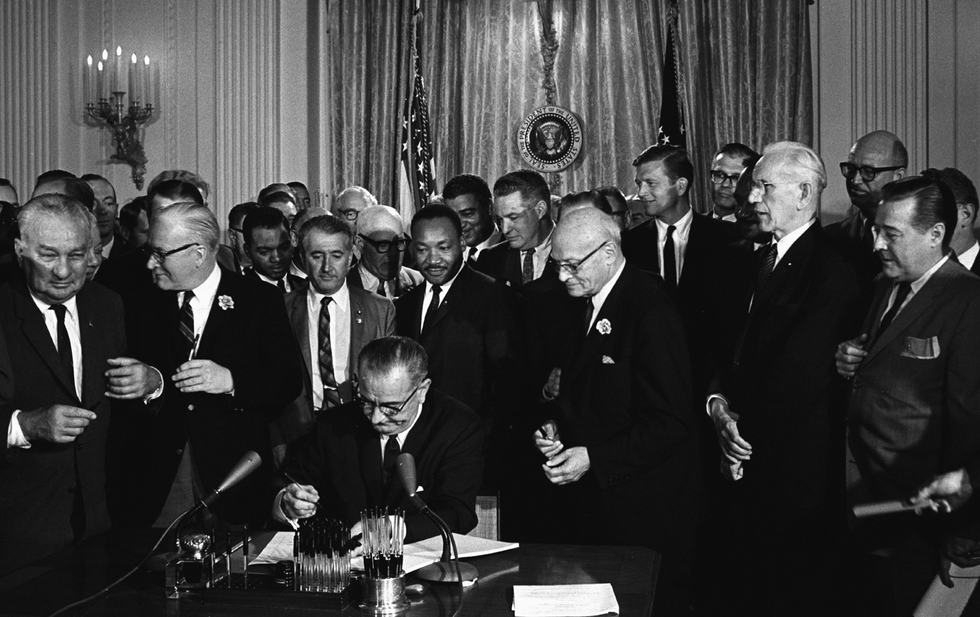
The Civil Rights Act of 1964 is one of the greatest, if not the greatest, pieces of legislation in American history, and it is the crowning achievement of the civil rights movement. It is Martin Luther King Jr.'s greatest legacy that we all benefit from every day.
The law shaped the America we live in and navigate today more than any other document in modern American history. The Civil Rights Act of 1964 outlawed discrimination based on race, color, religion, sex, or national origin. It dismantled Jim Crow segregation on a federal level in schools, employment, and public accommodations. Today, the values entrenched within the Civil Rights Act of 1964 have become as sacred and fundamental as the Bill of Rights and the Declaration of Independence, yet the document itself, which King called the second Emancipation Proclamation, is not as universally known, recognized, and taught.
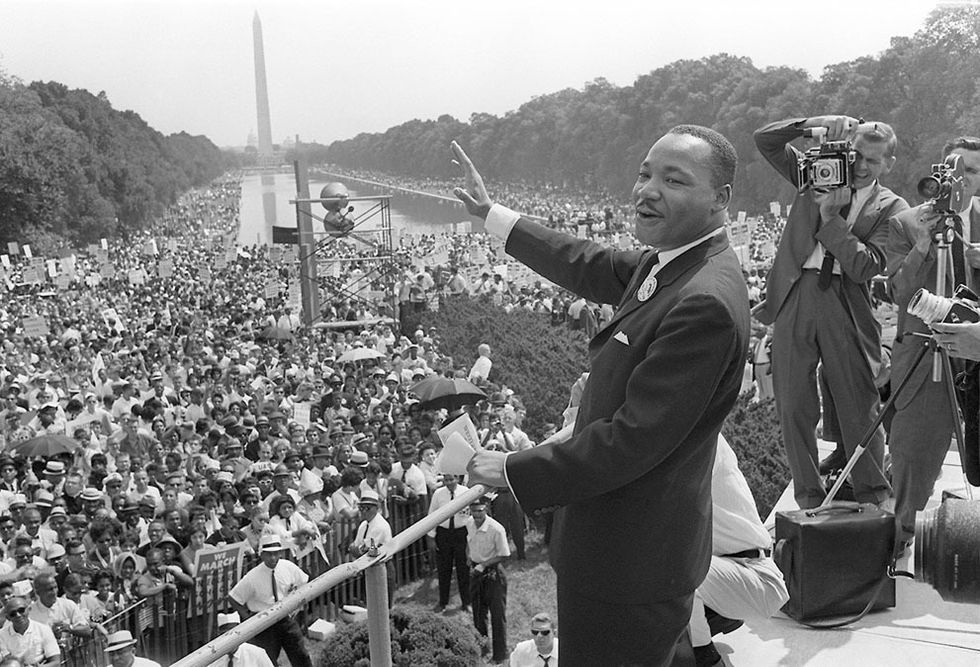
The entire point and purpose of the 1963 March on Washington and the "I Have a Dream" speech was to pressure Congress to pass the civil rights legislation outlined by the Kennedy administration earlier that summer, and protections that had been desired by African-Americans for nearly a century since slavery had been formally abolished. Yet, every Martin Luther King Jr. Day, every dedication mentions his dream and speech, but not their purpose and outcome. King did not just give a speech full of feel-good quotes about equality, and Jim Crow segregation somehow magically sorted itself out; it took decades of organization and years of intense protest by thousands who were unwelcome by a hostile public and most public officials.
Most white Americans were against advancing civil rights for black Americans and the demonstrations of the movement. Just like during the Civil War with the issue of slavery, most white Americans felt that segregation was a "states' rights" issue and that the federal government had absolutely no right to interfere with their social caste and way of life, which they justified as the natural order. It took decades of enforcement of the Civil Rights Act of 1964 and other civil rights laws to eventually change most hearts and minds. King had said, "It may be true that the law cannot make a man love me, but it can keep him from lynching me, and I think that's pretty important."

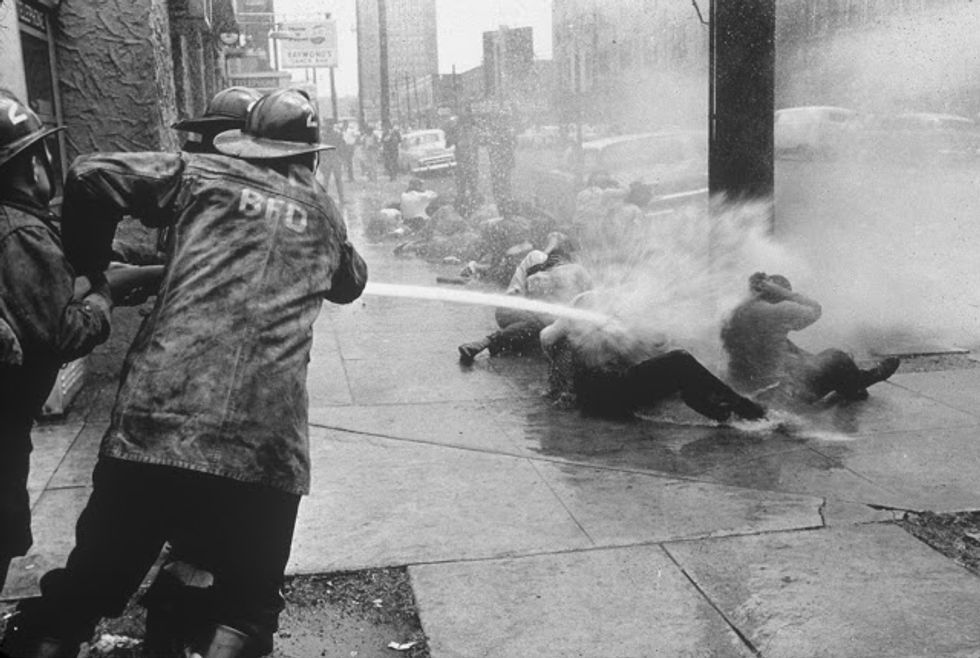
The Civil Rights Act of 1964 was first proposed by President John F. Kennedy on June 11, 1963, in response to the Birmingham campaign earlier that year. The Birmingham Children's March, one of the most iconic and influential campaigns of the civil rights movement, was led by King to bring attention to the desegregation efforts of African-Americans in Birmingham, Alabama, a city King deemed the most segregated in the country. Most non-violent activists who demonstrated were black elementary, high school, and college students.
While the children were attempting to march peacefully to Birmingham City Hall, over a thousand arrests by the Birmingham Police Department were made. As the prisons grew full of arrested students, Commissioner of Public Safety Eugene "Bull" Conner ordered the city police and firemen to use high-pressure water hoses and police attack dogs on the majority of child protesters. Just like the unrest in Ferguson and Charlottesville we witnessed this decade, the unrest in Birmingham alerted the world and became an international symbol of American institutional racism, anti-blackness, and segregation.
Birmingham is also where King wrote his "Letter from a Birmingham Jail," in response to white liberals and moderates who then criticized the civil rights movement for moving too quickly, and that the fight against Jim Crow segregation should have been fought solely in the judicial system. It is not only the bible of the civil rights movement, but of any social movement. "I have no fear about the outcome of our struggle in Birmingham, even if our motives are presently misunderstood. We will reach the goal of freedom in Birmingham and all over the nation because the goal of America is freedom."
Though Kennedy was hesitant throughout his presidency to speak publicly on civil rights, the worldwide shock, outrage, and condemnation of the response to the Birmingham campaign and the horrors of Jim Crow at the height of the Cold War were the catalyst for his civil rights address. How could the United States continue to preach freedom and criticize the Soviet Union and other communist countries for human rights violations, while the United States itself was hypocritically denying basic human rights to its African-American citizens? Echoing civil rights leaders like King, Kennedy's proposal to provide equal access to public schools and other facilities and greater protection of voting rights became parts of the Civil Rights Act of 1964 and Voting Rights Act of 1965. It is my favorite speech by Kennedy and probably one of the greatest in American history, with many of its passages still relevant today. I saw an excerpt of the speech go viral on social media after the white supremacist gathering in Charlottesville last year. He called on Americans to recognize civil rights for African-Americans as a moral cause. That took what Kennedy called: political courage.
By political courage, he meant taking a political stand that was morally just, even though it was politically inconvenient. At the time Kennedy gave this speech, three-fourths of the country opposed the civil rights movement, and a few hours after the address, an upcoming civil rights leader, Medgar Evers, director of the Mississippi National Association for the Advancement of Colored People (NAACP), was assassinated in the driveway of his house.
The 1963 Dallas trip, where Kennedy himself was assassinated, was the first major re-election effort of his 1964 campaign. He was planning to campaign aggressively in the South to rescue his sinking approval ratings there because of his public support for civil rights and federally mandating the end of segregation. His approval rating in the South was in the sixties in March 1963 and had dropped to the forties by September 1963, even though the South had always been a Democratic stronghold at that point. He was also worried about his overall approval rating because most white Americans began to feel that he was doing far too much for black Americans and not enough for whites. Unfortunately, he did not heed the advice for more protection because of the growing animosity in the South. My grandfather was a police detective for the D.C. Police Department at the time and remembers witnessing a sign that proclaimed, "They finally got that nigger loving president."

Kennedy's true commitment to civil rights is still questioned and criticized today, but there is no doubt that the racial violence and terrorism that occurred during his presidency angered and horrified him. For contrast, the same could never be said of our current president. Like Lincoln, Kennedy was a man of his time, but he was greater and more evolved than most of the men of his time and those who came after him.
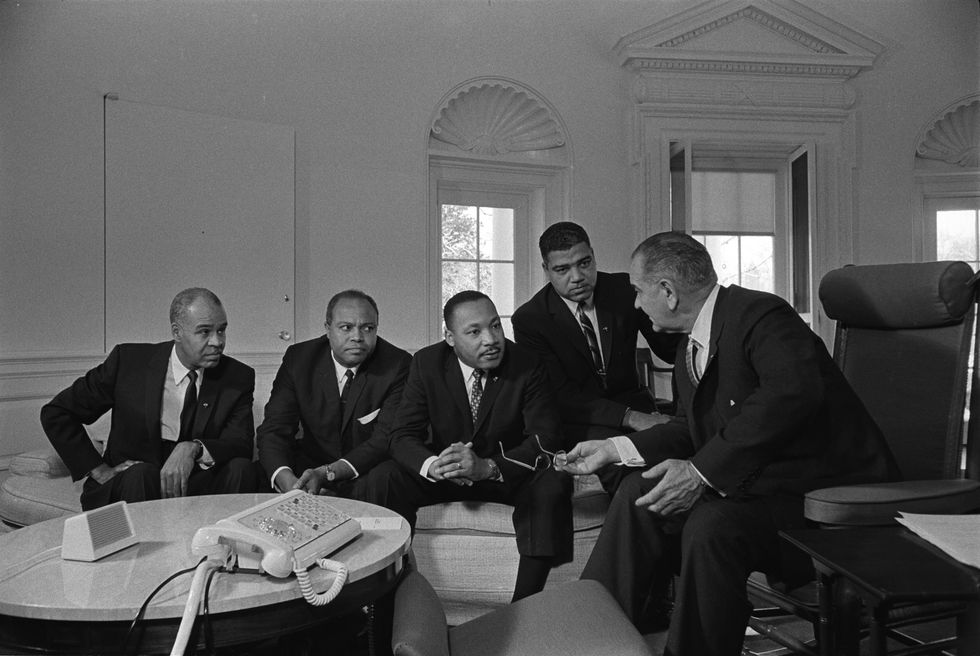
On November 27, 1963, Kennedy's successor, Lyndon Baines Johnson, who was very much a man of his time, declared to Congress and the nation that he would continue and pursue Kennedy's civil rights agenda after his assassination. "No memorial oration or eulogy could more eloquently honor President Kennedy's memory than the earliest possible passage of the civil rights bill for which he fought so long," Johnson told lawmakers in Congress.
After facing strong resistance and opposition from southern conservatives, meaning being averse to change, within his own party and the longest Senate filibuster in American history, the Senate passed the bill 73-27, and the act became law on July 2, 1964, less than a year after Kennedy's assassination. The act was passed nearly a century after the original Civil Rights Acts of the Reconstruction era and contained many of the same provisions.
During Reconstruction, radical Republicans, with large majorities in Congress, passed a slew of progressive legislation and amendments to grant equal rights to black freedmen. Radical Republicans passed three amendments to the United States Constitution: the Thirteenth Amendment in 1865, the Fourteenth Amendment in 1868, and the Fifteenth Amendment in 1870. The Thirteenth Amendment abolished slavery, except as a form of punishment; the Fourteenth Amendment granted citizenship to all natural-born persons, and the Fifteenth Amendment granted black freedmen the right to vote. Congress passed the Civil Rights Acts in the 1860s and 1870s that granted citizenship and the same rights enjoyed by white Americans to all males in the United States. In addition, for the first time in our nation's history, we had black politicians and black representation in Congress. They were all radical Republicans who fought for the civil rights of black freedmen.
This massive amount of racial progress was met with white resistance and a conservative backlash just as massive as the progress. This resistance and backlash were called Redemption. Calling themselves redeemers, conservative Democrats saw themselves as redeeming the South by regaining power and restoring white supremacy. They resisted federal action on civil rights in support of “states' rights." The Ku Klux Klan was born from this resistance, and they incited lynching and racial terrorism throughout the South. In addition, the Thirteenth Amendment was exploited immediately, and Black Codes were enacted throughout the South. The Black Codes were laws that violated the civil and political rights of black freedmen.
Ultimately, the backlash of Redemption was greater than the progress of Reconstruction. In 1883, the Supreme Court ruled the Civil Rights Acts unconstitutional. It ended attempts by radical Republicans to ensure the civil rights of African-Americans and ushered in the Jim Crow era as they shifted their interests to business and the Industrial Revolution.
 In 1896, another Supreme Court case, Plessy v. Ferguson, upheld state laws that established racial segregation in the South and provided a precedent for further segregation laws. After Reconstruction, black Americans did not hold political power for nearly a century because of obstacles to voting, like poll taxes and literacy tests. It wasn't until 1954 that Brown v. the Board of Education reversed Plessy v. Ferguson, paving the way for the civil rights movement and the Civil Rights Act of 1964.
As the Civil Rights Act of 1964 was making its way through Congress, it became the center of the 1964 election. Johnson's opponent, Barry Goldwater, was a conservative Republican and was at odds with most of the prominent members of the Republican Party at the time. He was the Republican nominee, and he opposed the Civil Rights Act and viewed it as a "states' rights" issue. He wanted to repeal the Civil Rights Act of 1964. He lost the election in a historic and unprecedented landslide due to his outlandish persona and the assassination of Kennedy. Johnson rightly branded him as a dangerous demagogue who would launch a nuclear war, but Goldwater's position on civil rights appealed to Dixiecrats and Segregationists, and he became the first Republican candidate since Reconstruction to win the South. The South, except for the 1976 election, has remained Republican territory ever since.
King even mentioned the 1964 presidential election during his Nobel Prize Lecture in Oslo, Norway, while discussing the progress being made under the Civil Rights Act of 1964: "Another indication that progress is being made was found in the recent presidential election in the United States. The American people revealed great maturity by overwhelmingly rejecting a presidential candidate who had become identified with extremism, racism, and retrogression. The voters of our nation rendered a telling blow to the radical right. They defeated those elements in our society which seek to pit white against Negro and lead the nation down a dangerous Fascist path."

The Civil Rights Act of 1964 forever changed racial politics in America, which led to the eventual realignment of both political parties as Republicans sought to engage disaffected white voters and conservatives who felt betrayed by the Democratic Party and were anxious about civil rights and federal power. The civil rights movement effectively ended in 1968 with the assassination of King, its most prominent leader, the assassination of Robert F. Kennedy, who was running for the Democratic nomination on a civil rights platform, and the electoral defeat of Johnson's Vice President, Hubert Humphrey, to Richard Nixon, who ran on an anti-civil rights platform called the southern strategy.
Nixon recognized he could not directly appeal to white supremacy. (Nixon) "Emphasized that you have to face the fact that the whole problem is really the blacks. The key is to devise a system that recognizes this while not appearing to." The 1968 Nixon campaign ran on "states' rights", "law and order", and "forced busing," which were coded appeals to racial resentment.
Nixon was the first president to coin the phrase "war on drugs." Nixon's aide, John Ehrlichman, admitted that Nixon used the war on drugs to disrupt and criminalize black and hippie communities and their leaders. Ronald Reagan continued the dog whistle rhetoric regarding the war on drugs and signed it into law in 1986, which led to the disproportionate mass incarceration of African-American males we witness today. He also championed coded language like "welfare queens." Reagan's adviser and George H.W. Bush's campaign manager, Lee Atwater, said of the southern strategy, "You start out in 1954 by saying, "Nigger, nigger, nigger." By 1968, you can't say "nigger," that hurts you. Backfires. So you say stuff like forced busing, states' rights, and all that stuff. You're getting so abstract now, you're talking about cutting taxes, and all these things you're talking about are totally economic things, and a byproduct of them is, blacks get hurt worse than whites."

Bill Clinton sought to recapture white voters back into the Democratic Party in the 1990s by signing conservative priorities like the Crime Bill of 1994 and the Welfare Reform Act of 1996 into law, and it cost his wife, Hillary Clinton, minority votes in the 2016 election.
Though many thought that the southern strategy had died in 2008, we underestimated America's history of white backlash whenever significant black progress is made. The epitome of the backlash faced was the 2016 election of Donald Trump, who I consider to be the personification of modern American racism and bigotry.
Donald Trump took advantage of the growing racial and ethnic demographics in the United States today and used them as a tool to maximize white racial resentment. He spent his entire campaign insulting and degrading the increasingly diverse and multicultural America that the Civil Rights Act of 1964 helped to create. From calling most Mexicans "drug dealers, criminals, and rapists" in his 2015 presidential bid to calling for a "Muslim ban" later that same year, it has all been a purposeful effort to play on white America's biases in ways John McCain and Mitt Romney refused to do. His top adviser and political strategist was Steve Bannon, a white supremacist. That is where we are right now.
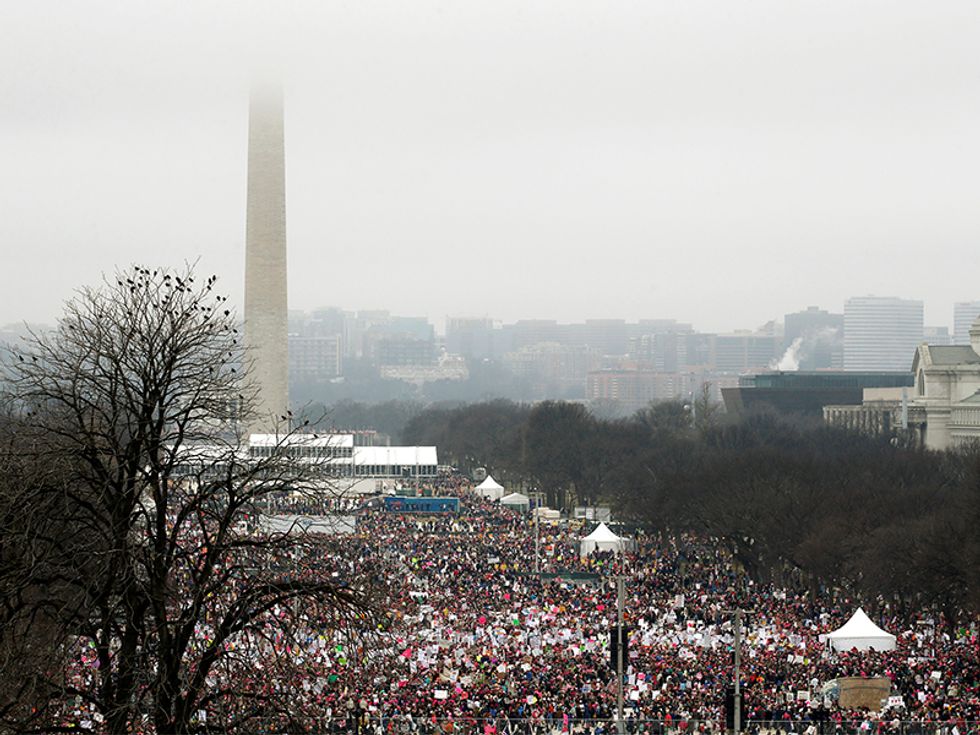
This administration's unprecedented attacks and regression on civil rights have effectively cemented this era as the new battle for civil rights. Don't remain neutral or complacent. What you are doing now is what you would have done fifty years ago.
The Civil Rights Act of 1964 and the other legislative and judicial achievements of the civil rights movement, like the 24th Amendment, Immigration and Nationality Act of 1965, Voting Rights Act of 1965, Loving v. Virginia, and the Fair Housing Act of 1968, are not as recognized and celebrated as they should be, and that needs to change. Whenever we discuss the civil rights movement, we only discuss key figures and protests, but never the legislation that gave the movement long-term impact that is felt every single day in our daily lives and politics. Whenever we mention Thomas Jefferson, we pay equal mention to the Declaration of Independence. When we mention Abraham Lincoln, we pay equal mention to the Emancipation Proclamation. When we mention Martin Luther King, Jr. and "I Have a Dream," we need to begin equally mentioning the Civil Rights Act of 1964.
For people of color, this is our document. This is when we became free in America, even though we still have so far to go. Let us build on the progress of our ancestors and tackle the civil rights issues of our time: reforming the criminal justice system, dismantling institutional racism, and ensuring equality for every marginalized group of Americans. In his "I Have a Dream" speech, King said, "There are those who are asking the devotees of civil rights, "When will you be satisfied?" We can never be satisfied as long as the Negro is the victim of the unspeakable horrors of police brutality." All American citizens being treated equally by law enforcement and having an unbiased justice system that is fair and equal to all is a grand part of his dream and vision for America, and it should be yours, too.