WARNING: Contains Spoilers!
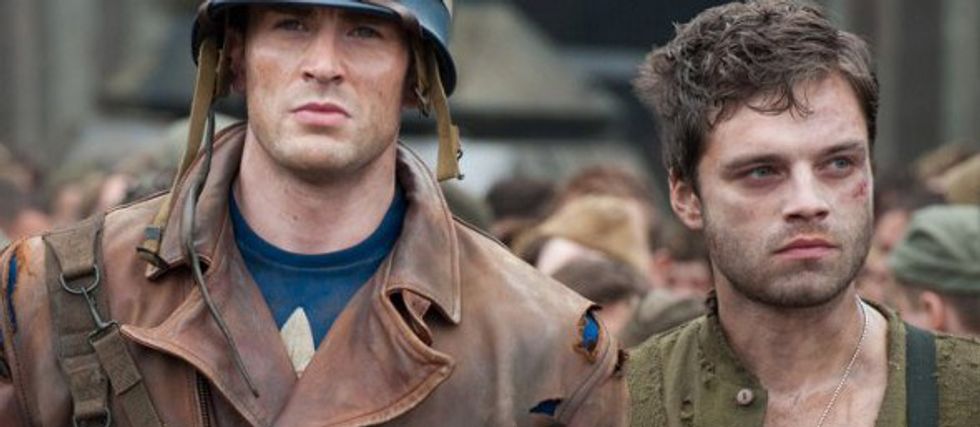
In the newest Captain America movie, "Captain America: Civil War," the story centers on Cap's loyalty to his childhood best friend, Bucky. In the movies, we first meet Bucky in the early 1940s at the start of World War II. As he goes off to war for he and Cap both, his magnetic and catching personality make him a likable guy. After all, he is a clean cut man in a uniform who encourages his friend and finishes fights Cap can't. We are even privy to the fact that Bucky took care of Cap when his parents died, through poverty and physical weakness.
For those of us unfamiliar with the original comic story line, Bucky's fall in the crevasses of the German mountains was shocking and saddening, especially after all Cap did to rescue him, and their partnership was balanced for the first time. The Brooklyn boys matched in heart and fight, but their duo wouldn't last.
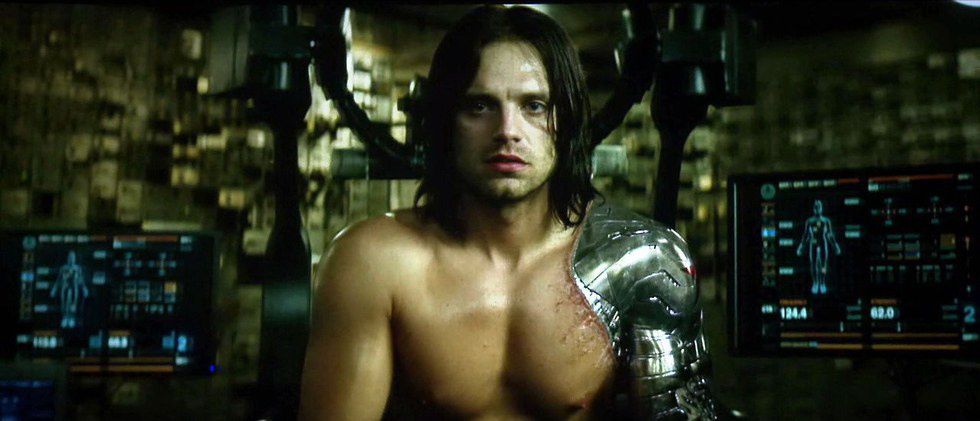
When Bucky turned up alive, we would generally be relieved. However, our genuine and heart-warming Bucky had been transformed into a killing machine, trained by dark men to be a ruthless match for Cap, complete with a bionic arm. Cap refused to kill Bucky, however, and Bucky began to remember who he was before his brainwashing.
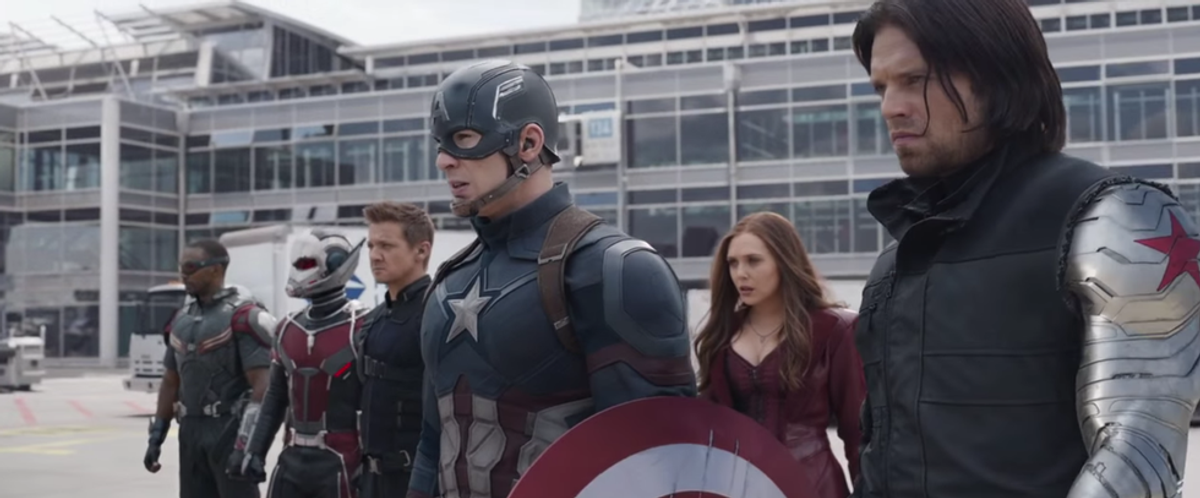
In the most recent film, Bucky is hunted by the government to pay for his atrocities committed as a mercenary. At this point, Bucky is learning to resist his brainwashing but can't stop himself when his mind is taken over by a vengeful man out to tear the Avengers apart. After a final showdown between two sides, only Cap and Bucky escape. Bucky admits to Cap he was not worth Cap's friends being arrested, but Cap denies it, arguing that what Bucky did was not actually him, and he doesn't deserve the punishment. But does he?
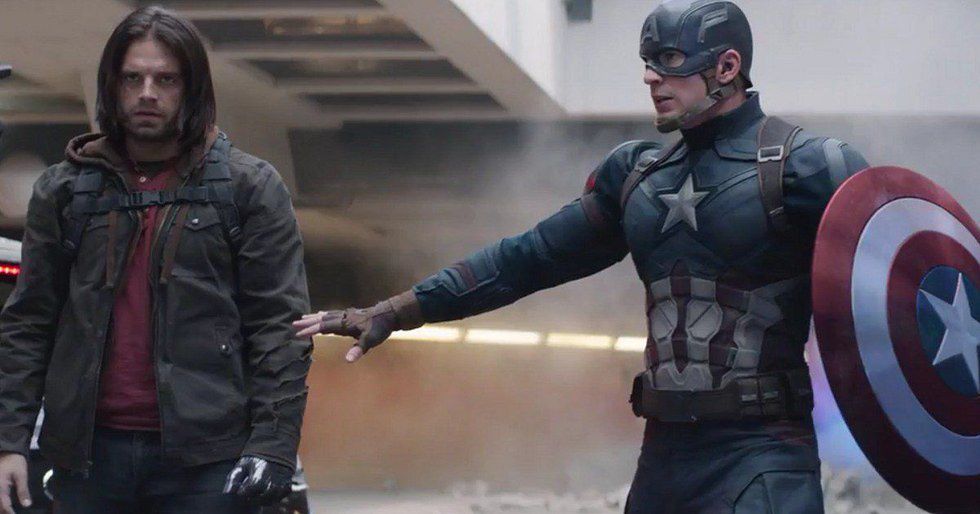
As viewers, our heartstrings are completely torn. No bond is stronger than two friends like Cap and Bucky: neither gave up on each other when they needed someone the most. Their relationship demonstrates that true loyalty reaches far deeper at the end of the day than your average mind control and psychological warfare. But friendship aside, Bucky, as the Winter Soldier, committed heinous crimes that can't be forgotten. So what now?
When playing Bucky and the Winter Soldier, actor Sebastian Stan takes on the mindset of a real soldier suffering to find his place in society after returning from war:
"A lot of these people come back and they don’t know how to function in the world anymore; the world is not embracing them in the same way. That was a big part of this character’s journey in this film: Understanding the world that he’s finally found himself in. How is he going to function there?"
In this light, the Winter Soldier is a sympathetic-demanding character. At this point in the storyline, he is now seeking redemption and understanding from his actions. At the end of "Civil War," Bucky places himself "back under" to wait for things to settle down and for an answer: who is he and is he even worth sticking around? It is up to viewers to decide how they think Bucky should be handled, but for now, we can only wait to see what the story unfolds next.