

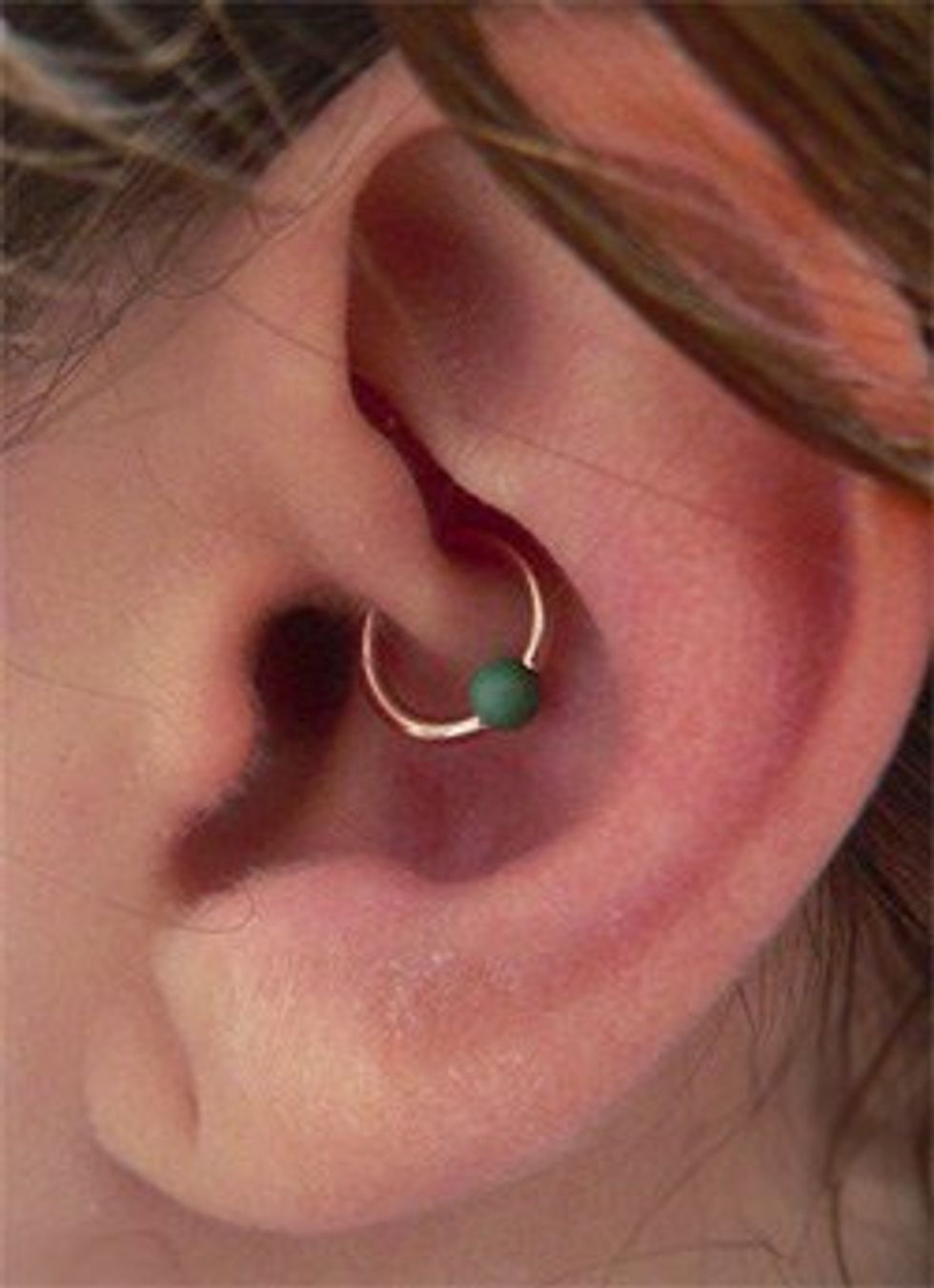
Countless people struggle with migraines, but a new treatment is becoming popular; although slightly unorthodox. Some are hesitant to believe that an ear piercing could relieve migraines, but many people swear by this method of treatment. Having a specific area of your ear pierced, called the daith, can drastically reduce the frequency and intensity of migraines. If still unsuccessful, a nearby cartilage piercing, the rook, is often helpful as well. These piercings may even help relieve pain in chronic, severe cases.
Being relatively new, no research has been done to support the daith or rook piercings for migraine relief; however the anecdotal evidence is overwhelming. My roommate has been having severe migraines for the past three years. She was also currently experiencing one migraine that had lasted for the past week and a half until the day we went into the piercing shop. Within seconds of the needle going in, she reported the pressure in her head lessening. By the time we got to the parking lot her pain was completely gone. Since then, several migraines have started and immediately dissipated. It has been almost a week now and she has still not had a migraine, which is incredibly unusual.
Inspired by acupuncture, the piercing works by relieving a pressure point in the ear cartilage. Advocates suggest getting the piercing on the same side of the head as the migraine usually begins or where the most pain is felt. If still ineffective, there is another area in the ear directly above it called the rook, which can also relieve migraine pain.
Either piercing can cost anywhere from $30-$80 depending on the studio and type of jewelry. You can call to check the pricing for different tattoo and piercing places nearby. The piercing itself is simple and fast, done by a curved needle that attaches to the earring and pulls it though the hole after the needle. The pain involved in this particular piercing is different for everyone. Some people feel that it is incredibly painful, while others feel nothing more than a little pressure.
Piercers are reporting increasing amounts of people coming in for this specific piercing, but few customers think to return with success stories, leaving most professionals unsure of it’s validity. Make sure to give your piercer a call to let them know if this works for you so they can confidently recommend it to others in pain.
Remember that there is little scientific support for this new treatment, and it may not work for everyone, but the claim is supported by an ever increasing number of successful cases. This is not proven to work, but if you suffer from migraines it might be worth your time and money to try getting your daith pierced. Do some research of your own and see what you come up with!