
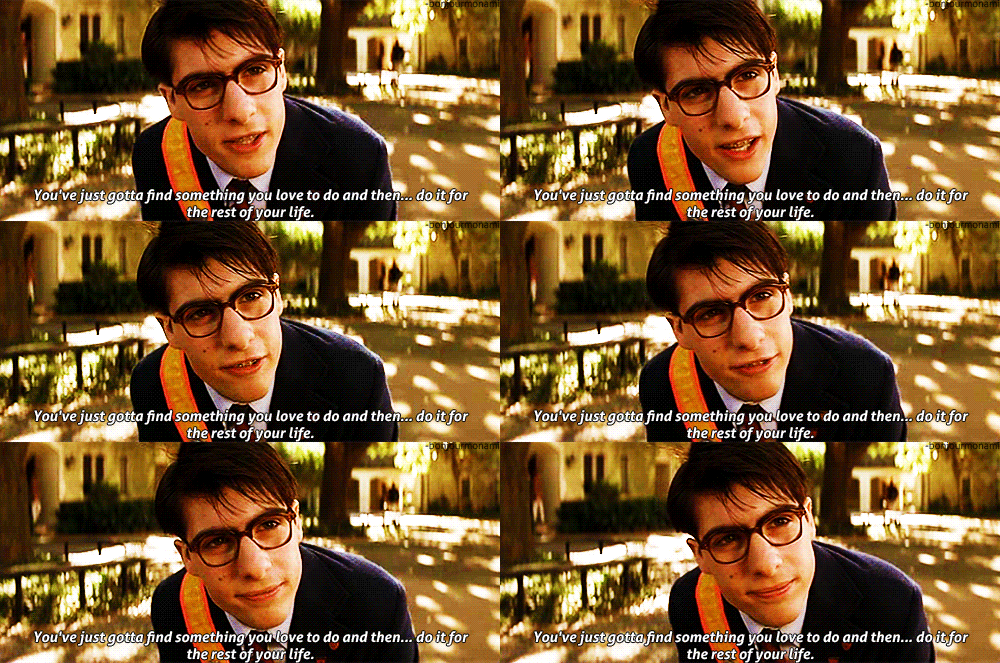

Having been on holiday break for several days now, I can’t help but feel like something is missing. While I may have slept fifteen hours the night of my homecoming, the initial wave of exhaustion has come and gone. I am now starting to writhe. I pick up a book and I find myself struggling to get past the first page. I sit in front of the TV but mechanically check my barren email instead. I meet with friends and family but internally schedule nonexistent events into my Outlook Calendar. It’s official. I have fallen victim to the “Busy Trap".
This phenomenon is something more than prevalent on my campus. It’s become the default response when you ask anyone how they’re doing: “Busy!” “So busy.” “Insanely busy.” It is the boast disguised as a complaint I myself am continuously guilty of. And the stock response of course is a kind of congratulation: “That’s a good problem to have”, or “Better than the alternative”.
Almost everyone I know is busy. We feel anxious and guilty when we aren’t working into the late hours of the night, finishing homework during lunch hours, or cramming meetings into the spare twenty minutes we have during the day. We schedule in time with friends the way students make sure to sign up with community service because it looks good on a resume. Too many times have I resorted to blocking out set periods of time for “fun.”
Even children are busy now, bogged down to the half hour with classes and soccer practice and dance classes and piano lessons and Boy Scouts. They come home at the end of the day as tired as adults.
But the present hysteria is not a necessary or inevitable condition of life; it’s something we have chosen, if only by our acquiescence to it. I remember vividly a trip to Italy years ago, where things seemed to unfold in slow motion. “What’s the rush?” “Where’s the fire?” they would ask laughing. Our planning was incomprehensible to them, a scheduling of memories and experiences in their eyes. But over the course of our three week excursion, we grew accustomed to the spontaneity, the dawdling. We spent hours lounging on their patio, lost track of time in small cafes, laughed late into the night at the dinner table. What’s the rush?
Slowing down isn’t just advice for a healthier, happier, more fulling life, but also practice for greater clarity. Your instinct may be to say that this is ridiculous, business and productivity are all about speed. We must be the first to create, innovate, and market. First and fast.
But “busy” isn’t really the problem at all. What I’m talking about is a state of mind. Sure, there never seems to be enough time in the day to do things the way you want to, and we all face time constraints. But time constraints can also be a great motivator, bringing a sense of urgency to accomplish the things that stimulate you and the search for discovery. The problem lies in “busyness.”
Busyness is that uncomfortable feeling you have when you feel rushed, distracted, and a bit unfocused and preoccupied. The nagging tasks that remain unfinished on your internal checklist. Although you may be accomplishing tasks, you wished you could do them better. You know you can. But in spite of your best intentions, you find it difficult to create a state of mind that is contemplative rather than reactionary. You try. You take a deep breath. You have a big presentation next week. So you begin to think. Then your phone buzzes with a text and your email pings with new mail and your Outlook Calendar pops up with the foreboding fifteen minute warning of an event. In this environment, it is impossible to slow down.
Busyness kills creativity. It leads to the creation and display of the expected, the typical PowerPoint template slide we are all too familiar with. We want to be innovative but we’re rushed. We ache to reach our creative potential but we’re frantic. So we slap together that PowerPoint slide and insist that we’ll delve deeper into our minds next time.
Sometimes I find myself in this position while writing articles. The school week is hectic, I have three exams tomorrow, my meeting ran late. There’s just not enough time in the week to feel inspired to write. For that I apologize to all of you. But this past semester has helped me come to terms with the fact that writing these articles is something I truly love doing. In an environment where every minute of the day feels planned, writing these articles helps me reach a place where my mind can rest and I can feel at ease.
Perhaps the world would soon slide to ruin if everyone behaved so incredibly idle. But I would suggest that an ideal human life lies somewhere between defiant indolence and the world’s endless frenetic hustle. To do something unique and extraordinary, you must take time and space away from “busyness.” Spend time with your families, meet up with old friends, laugh late into the night. Read the books you’ve been meaning to. Paint, draw, write, create. Take this precious free time to be busy with the things you love, and let your mind run wild without constrain.