



In college, especially at The Buck, many people decide the intelligence of another depending on their major. Many of my friends are pursuing a Bachelor of Science in fields such as Biology, Biochemistry, Physics, Math, et cetera. The other half? Pursing BA's in Music Education, Vocal Performance, English, History, also et cetera. Here is a couple of things I've learned over the past year and a half, mostly because of confusion. With a lovely dash of "what the hell is it that I actually want to do?!"
1. Both practices require basically the same amount of work outside the classroom.
I'm currently in the process of switching majors from BS Biochemistry to BA in English, Creative Writing. The road that led me here was long and complicated, and filled with lots of panic attacks, papers, coffee, and fatigue. Who hasn't experienced similar, even if they're not in the process of switching majors? But I digress. I've seen both sides of the general liberal arts college experience: research, applied science, and arts (music and writing). I've been asked many times if being an English major is "easier" or "less constricting" than when I was previously a science major. To answer that, I'd like to say NOPE.
There's essentially the same amount of everything. Same number of hours needed outside of class to fully understand the material. Same levels of frustration when I try to understand something, but can't. Also same level of frustration when I think I understand something and cannot put it into practice very well. It's all the same.2. It appeals to the "split-brain" that I have.
Truth be told, at Bucknell, I always felt too "split-brained" for any one particular practice. Many of my peers pursuing a BS were incredible at what they did. Seeing them work through a problem or in a lab was akin to watching a choreographed dance. It was extremely humbling. And while I was able to (decently) apply the material to get good grades, I never felt the same degree of comfort as what I perceive they felt. The term savant comes to mind, because so many people here are incredible in their one practice, so much so that it was unnerving to others (me) at times. I thought it was a curse to have the ability to enjoy both science and the arts. That being said, I did feel more "locked in" to my classes as a student pursuing her BS. I'm glad that I've been able to find a major that fits what I love, and also challenges me just the same.
3. The process of switching was probably the greatest lesson I've learned so far.
To be completely blunt, I think too many students everywhere are concerned about picking a job that will guarantee them the best paycheck fresh out of college. I know that was something I was concerned with, before and at Bucknell. For example, I had zero desire to go to medical school and yet I looked into cardiology as a potential career because they had some of the best salaries. How messed up is that? The process of becoming more disenchanted with my classes was torturous, but also incredible. Corny, I know. I feel it's super important to tell others that following your heart is the priority, not daydreaming about the size of your checkbook in the future. I'm one of the only people out of my closest friends who's made a switch of this caliber, and frankly, I think they're all pretty scared for me. I've decided not to care as much about the paychecks later, that'll work itself out. Now is the best time to learn!

4. Being afraid is perfectly okay. Encouraged, even.
What's life without a little suspense? Living the predictable life: home in the 'burbs, wife/husband, 2.435 kids with nice grades at that school you two like, some sort of domesticated pet, and going out to that one restaurant on that one street every Sunday after that one thing you all do as a family. Hey, I'm not shaming that. That's great. It's just not what I want for my life. Which is also okay, I realized. Aren't challenges what make us grow as individuals? What's the point in staying in the carpool lane, never rocking the boat, when you feel like there's something you'd really rather be doing with your life? It's not too late to start thinking about these things, that's the beauty of college.
5. Art, particularly writing, is incredible.
In my humble opinion, anyway. I really enjoy it because we have the entire world and trillions of different universes at our fingertips. Rowling, Tolkien, Seuss! They were inventors. Famous stories, coming out of nowhere. Which, duh, everybody knows that. That's part of the creative process. But when you really think about it, the capacity to just create entire worlds and stories and to have fictional characters capture the hearts of millions of unseen viewers is simply incredible. Not that unearthing the secrets of the universe isn't incredible either because it is. I just think there's something to be said to create a work of art that moves many, and at the same time, that nobody will ever really understand. The author usually doesn't have all of the answers either. Finding these characters in your mind is like an adventure in and of itself, independent of the story that's written about them. I think it's incredible.
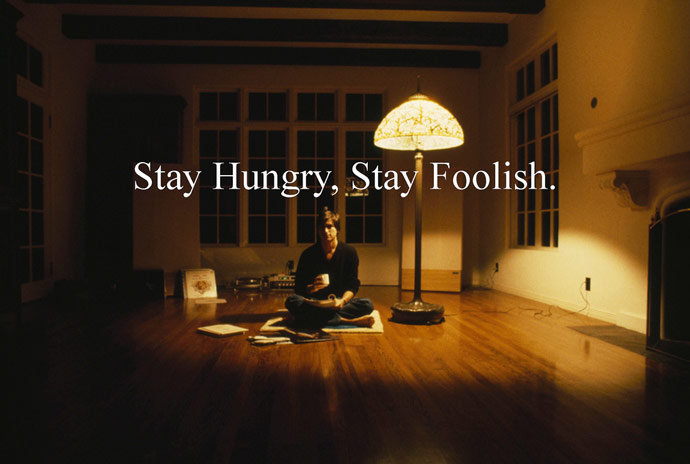
6. It taught me the value of criticism and rejection.
As a person with a huge pride streak, criticism (constructive or otherwise), has always been something I've grappled with. It's hard for me not to take it personally, to be embarrassed, and to just get frustrated when things aren't perfect. Aspiring artists, musicians, and writers have the most criticisms out there. It's all based on opinion. People don't look at paintings, listen to songs, and read stories solely for the technicality of the work. Good technique is important, of course, but style is really what people look for. Having someone criticize your style is hard not to take personally, but it's a requirement of the job. Without criticism and rejection, being published or discovered wouldn't be a big deal anymore. It makes artists dream, and those dreams are what give birth to some pretty damn incredible songs and works.
7. Never give up trying, even when you're really disappointed.
Especially in the field of writing and other arts, rejection is really hard to take. With these pieces, artists are pouring their souls out onto whatever medium it is that he/she are using. However, being published or discovered comes down to the opinions of a few key individuals. I've already had to cope with that in my young career of writing. Instead of being disappointed and letting rejections take a toll on my creativity, I re-write my stories and brainstorm several more ideas. It's really difficult at times, but it's worth it.

Maybe I'm the odd one out, but this is what I imagine as I start writing a new story. Too much?
Not everyone makes this switch. Even if it doesn't directly apply to your situation, it's really important to acknowledge some of the other lessons college peers have learned. Who knows? Maybe you'll decide to switch your major after all.
















