


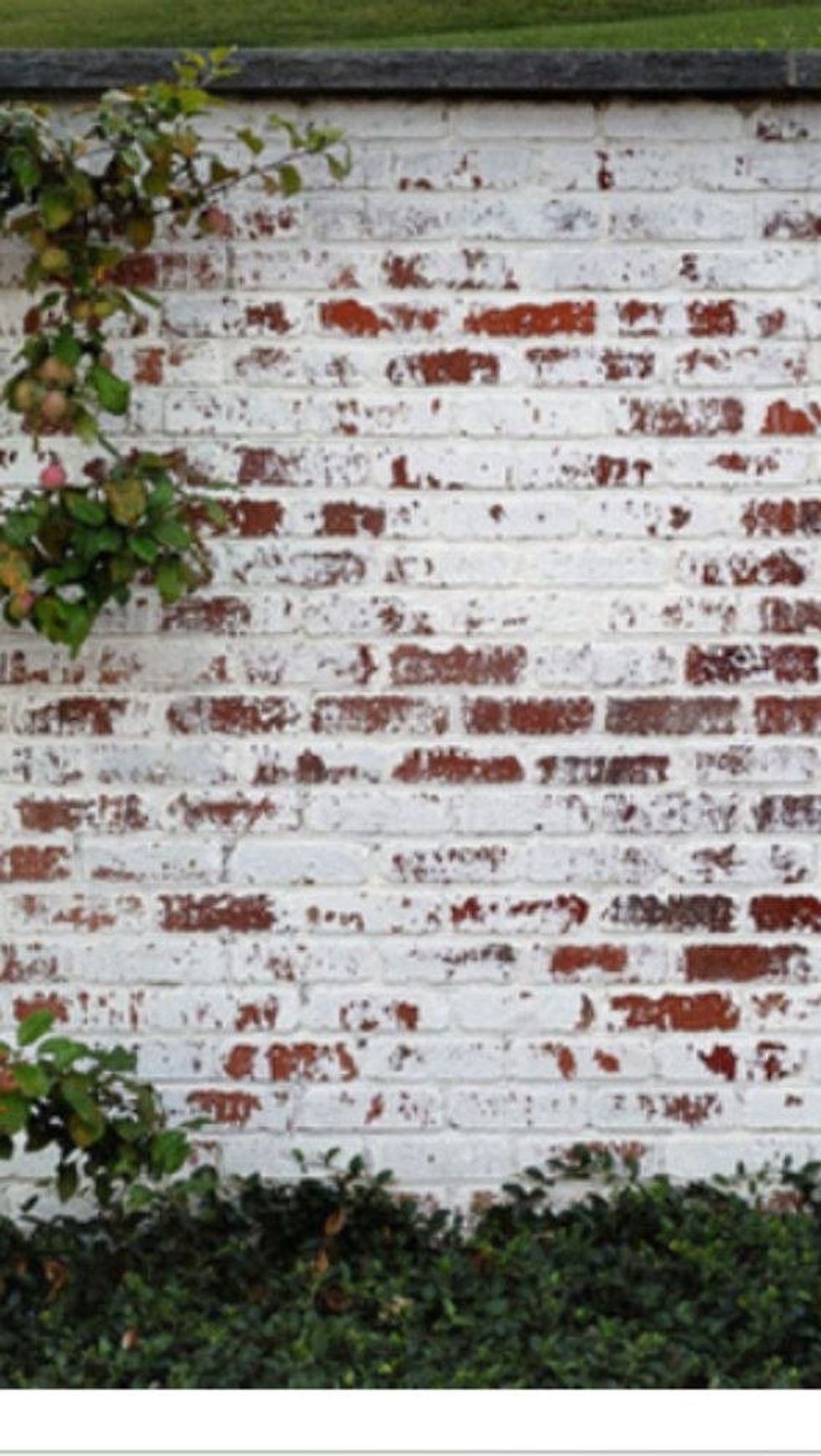
“When I was a kid, we actually lived in a house that had been divided in two at one point, which meant that one room in our house opened up onto a brick wall. And I was convinced all I had to do was just open it the right way and it wouldn’t be a brick wall. So I’d sidle over to the door and I’d pull it open.” –Neil Gaiman
Brick walls have an unfortunate reputation in American speech.
“We were getting along fine and then we hit a brick wall.”
Brick walls are impediments. Obstacles. Obstructions. During your efforts to solve an issue, the brick wall is what stands in your way.
“I feel like I’m talking to a brick wall.”
You’re trying to solve an issue through discussion. You’ve come armed with all your best arguments, your utmost powers of persuasion, and you’ve mastered the perfect tone. But your arguments fall on deaf ears, your powers of persuasion are lost on someone who refuses to be persuaded, and you’re quickly losing power over your tone. It’s like talking to a brick wall. Yet when the brick-wall-of-a-person you were talking to is questioned, they say the very same of you. What went wrong?
To take one step backwards, just what was the purpose of the discussion?
“To solve the issue,” you say.
So says the other person too.
You’ve both gone into the discussion prepared to solve the issue, armed with all your- argumentative powers? You’re both determined to bring the other to your side, for then the issue can be solved.
No wonder a brick wall was created. Both people in the “discussion” are heading at one another with full strength of argument, and somewhere along the way the true purpose - solving the problem - is overshadowed by the determination to be right.
This is the brick wall. We approach it so often as Neil Gaiman approached his brick wall as a child - trying to “sidle over” and “open it the right way,” whether it be with the right argument or the right tone. The brick wall, of course, isn’t going anywhere….
Just how does one get rid of a brick wall? In the case of discussion to solve an issue, it’s the touch of grace. Grace reaches over the wall to the other person and allows a margin for the goodness of that person’s intentions. Grace opens the door for meaningful dialogue. In talking to someone else, you grant them the same attentiveness you hope for for yourself.
When you find yourself in a discussion of an issue deeply significant to you, and feel as if you’re hitting a brick wall, consider grace. The fervency you approach the discussion with, the determination to solve the problem, the certainty that this must be the way, might well be true for the other person. You both carry in common a devotion to what is right, what is good. Let grace be the bridge between you.

















