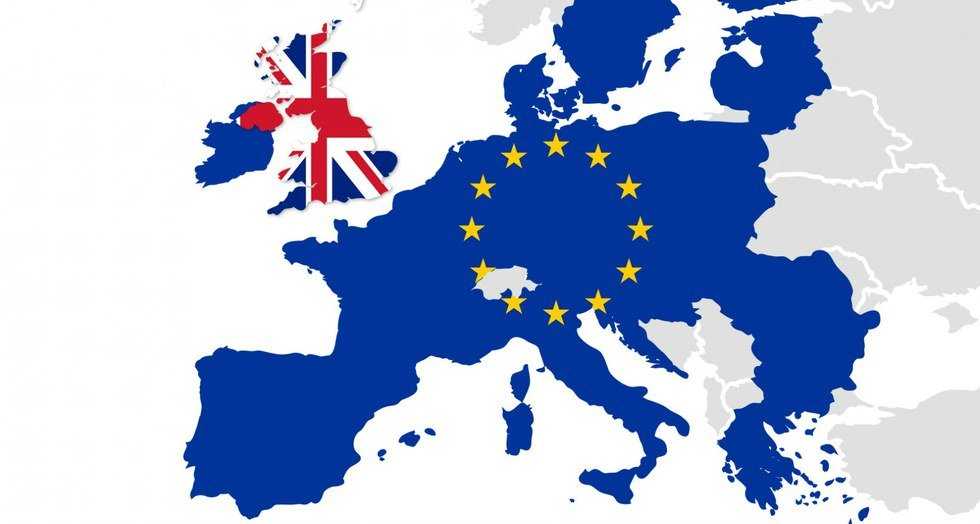
Numerous articles have been written in the last two weeks regarding the United Kingdom's vote to leave the European Union (EU). Most have focused on how the refugee crisis enveloping the continent spurred on Brexit (as the vote has been dubbed). But, as in most international issues, the factors are more nuanced and complicated than a one-trick pony. First, a little background.
The project for European unification began early on during the aftermath of World War II.
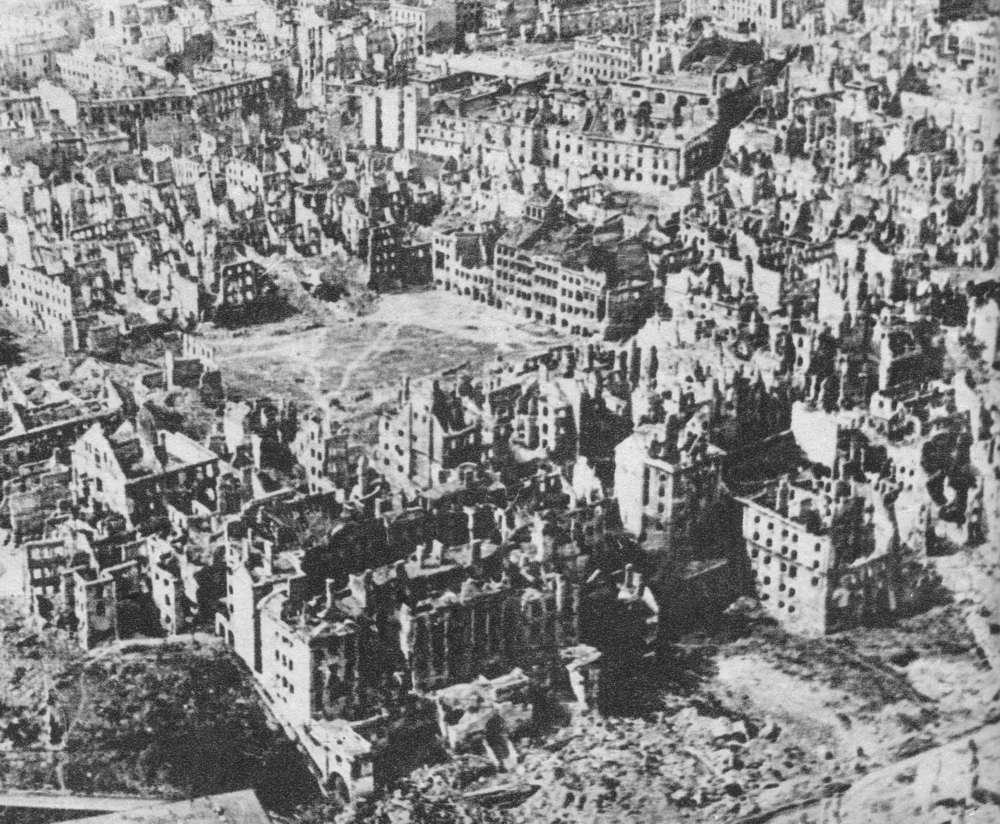
The thought was that if the main rivals of the continent, France and Germany, were more fully integrated, the root causes of war could be ameliorated. To that end, the European Coal and Steel Community was formed in 1951. As the steel and coal industries were instrumental to the war machines of the time, they were merged to prevent European countries engaging in a war against each other. It also created a common market that promoted collaboration rather than competition for the same resources. The European Economic Community was created in 1957, further assimilating European markets. Other institutions were formed along the way towards the same end in the following decades, leading to further and further integration. These institutions focused on standardizing manufacturing practices and financial regulations. It also established a European customs union that standardized tariffs and trading practices. In 1993, the Maastricht Treaty was ratified to form the European Community. The Treaty of Amsterdam implemented the European Central Bank in 1998 (to control inflation, price stability and maintain cash reserves) and the following year, the euro was created as a common currency to be used by all member states. The EU currently comprises 28 member states, including the UK, which has yet to fully implement its exit.
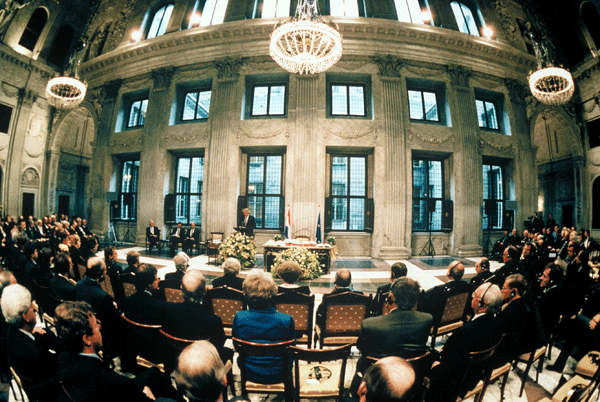
As part of the Amsterdam Treaty, another earlier agreement (the Schengen Agreement) was ratified that allowed for the free movement of people between the Eurozone and abolished internal border checks. This was seen as a way to further integrate not only the diverse populations and cultures of Europe, but also the economic and labor forces.

However, with the refugee crisis coming out of the Middle East and Africa, the Schengen Agreement has been given another critical look.

The countries bordering the Mediterranean Sea are naturally the first stop for migrants leaving their homes on their way to Europe. These countries also happen to be the poorest and least capable of supporting these refugees and migrants. Most of these indigent populations are en route to richer nations with a stronger social welfare state, such as Germany, Sweden or the UK. In 2015 alone, 1,321,560 EU asylum claims were filed. As the refugee numbers swelled in the lower countries such as Hungary and Greece, the native populations bristled at the thought of having to house hundreds of thousands of non-European migrants. This has led to the suspension of the Schengen Agreement’s open border policy in some of those southern European nations. With Britain having one of the most generous social welfare packages, it has become a favorable destination for those looking to start their lives anew. Once migrants are granted asylum in any of the EU member states, it is an easy enough next step to travel to the UK, Germany or France. That is where the Brexit conversation is placed, where pundits and politicians focus on Europe’s refugee crisis as the preeminent cause of the UK’s vote to leave the union.
However, what is less talked about by both proponents and opponents of the referendum is how it more also reflects the tension between globalism and nationalism, between national sovereignty in the Westphalian sense versus further integration into a global or regional order. The first blow to European unity came prior to the wars ravaging the Middle East and North Africa. The Great Recession of 2008 was the biggest trial for the EU in modern times. It tested the economic policies of the Eurozone, and it very narrowly escaped having to abandon the Euro or abandoning the poorer countries such as Greece which defaulted on its debt. The solution seemed to cause another problem for the future of the union. The richer nations reluctantly bailed out the affected countries but not without the consequent anti-austerity protests in Greece, Spain and other similar countries.
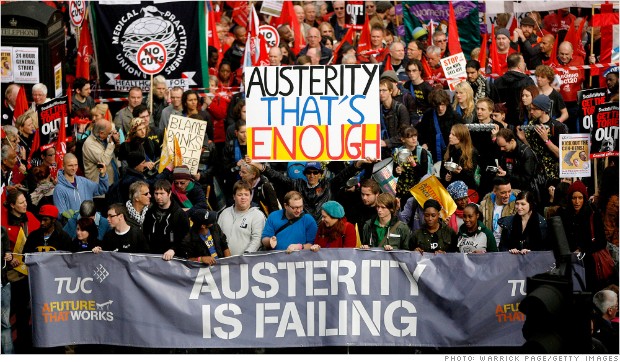
Meanwhile, protests in places like Germany and France rallied against a bailout citizens neither agreed with or voted on. The immigration crisis seemed to be the straw that broke the camel’s back.
While the open border policy made initial sense in facilitating the smooth transport of goods and peoples, this was intended for internal European movement between the continent.

What has transpired due to devastating wars and economic hardship on Europe’s peripheries is that these routes have been used by migrants to travel to richer nations willing to accept them. This came to a head in 2015 with the chancellor of Germany, Angela Merkel, initially accepting refugees until domestic protests swelled that forced her to halt asylum seekers.

While it may be easy to blame natural xenophobic tensions for the anti-refugee sentiment, the major terrorist attacks in Paris, Brussels and the cases of sexual assault in Germany during last New Year’s Eve celebrations easily were used to foment hatred for those millions. Much misinformation was disseminated afterwards, with many outlets falsely claiming that the Islamic State of Iraq and Syria (ISIS) was using the refugee flow to infiltrate European shores (conveniently dismissing that nearly all of the suspected terrorists were all born in Europe). In the midst of this civil turmoil, the right-wing (ultranationalist) parties of the continent have flourished and used the chaos to their political benefit. Voices like National Front’s Marine Le Pen of France, or the Netherlands' Geert Wilders, have raked Germany’s Merkel over the coals for extending a welcome hand to the mostly non-European masses. Why should the decision of one administration in Germany affect the immigration policies of countries such as Hungary, or even France? Countries that neither want the refugees, nor are capable of absorbing them.
While on its face, it may just seem as if anti-immigrant (and more specifically, anti-Muslim) tensions are driving the opposition to the European Union, a more critical eye could see that the familiar question of sovereignty versus globalism is at work. It can also be seen as reflective of the gulf between the more urban, younger cosmopolitan population that looked towards Europe; and an older, rural, less educated and more traditionalist populace that felt threatened by the changes of further integration. (The same dynamic can be seen here in the states where rural, less-educated voters cling to traditionalist mores and urban, more-educated voters tend to be more progressive.)
At its heart, the EU is a bureaucracy, or better said, a technocracy. This was by design and by necessity, as the need to balance the interests of numerous countries naturally involved objective expertise and compromise. While many so-called experts predicted the end of nationalism at the turn of the century, it has reared back with an intensity unseen in some time. Furthermore, while the UK’s immigrant population did double since 1993, it maintained control over its borders and was not a part of the Schengen Agreement. It also was one of the few European economies that did not contract most recently. Yet and still, the UK has become the first and only nation to opt out of the EU.
So while British politicians could count on the racist-tinged dog-whistle of xenophobia to promote their agenda of exiting the union, the real catalyst for the "leave" vote was a backlash against the dictates of a modernist, globalist mechanism thought to be a threat to homegrown values, laws and cultural mores. These forces (cosmopolitan, liberal progressiveness versus conservative traditionalist) are constantly tugging at each other for the soul of the nation. Brexit, while admittedly showing the UK’s ugly intolerant side, has also uncovered this ancient power struggle. Pundits would do well to not ignore this factor.