After the events of 9/11, a man named Mark Stroman went on a killing rampage in Dallas, Texas. His victims were anyone he suspected was Muslim. One of these victims, whom I was fortunate enough to meet in ninth grade, was a man named Rais Bhuiyan. Bhuiyan was shot and blinded in one eye at a gas station where he was working at the time. Bhuiyan attempted to keep Stroman from suffering the death penalty in hopes that Stroman would, instead, speak to adolescents about the consequences of crime. Unfortunately, Stroman was sentenced to death and never had such an opportunity. Still, Bhuiyan’s forgiveness and ability to rise above the desire for vengeance was truly inspiring.
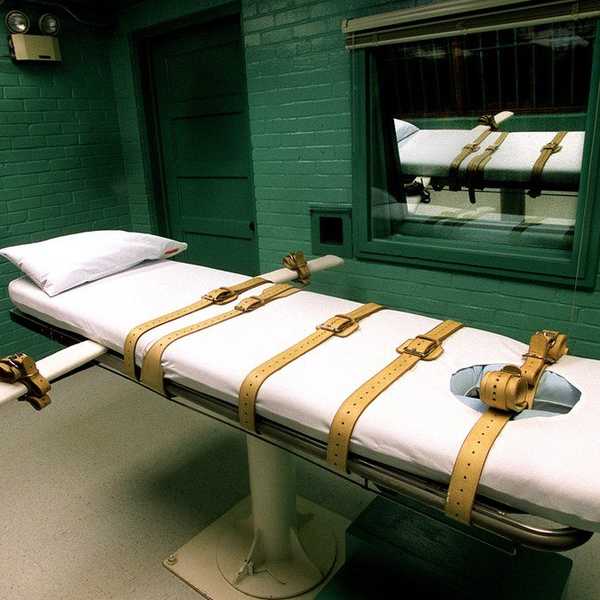
This example illustrates one of the many problems of the death penalty: if criminals normally sentenced to death were allowed to live, they could speak to troubled youth and urge them not to lead a life of crime. The United States needs to abolish the death penalty due to its discrimination against minorities and the poor, as well as its high cost. In order to fix this problem, the United States needs to implement longer sentencing laws. The result will be more cost effective, fairer to minority groups, and create opportunities for criminals to give back to society.
There are many negative consequences of the death penalty, one being its racist tendencies. University of Iowa law professor David C. Baldus examined over 2,000 homicides that took place in Georgia before 1972, and found that if whites were the victim the criminal was 4.3 times more likely to be sentenced to death than those who killed blacks. According to a New York Times article by David Row, these studies are still relevant today. Nationwide, 80 percent of those executed under the death penalty have murdered white people.
Not only does the death penalty discriminate against minority groups, but also those who are poor. According to American Council and Civil Liberties’, “A Case against the Death Penalty,” approximately 90 percent of those on death row could not afford to hire a lawyer. Generally, death row defendants are poor and, because of this, are inadequately represented. However, those who are wealthy enough to a hire a lawyer do not face this problem. Associate Justice of the Supreme Court William O. Douglas noted in the case, Furman vs. Georgia, “One searches our chronicles in vain for the execution of any member of the affluent strata in this society.”
The death penalty is also quite expensive to implement. When someone is being tried under the death penalty, the trial is an extensive process that usually takes longer than normal cases, which increases costs. Litigation costs, which include paying judges, prosecutors, public defenders, and court reporters, along with the high costs of briefs, are mostly paid by the taxpayers. A 1982 study showed that if the death penalty was reintroduced in New York, the cost of the capital trial alone would be more than double the cost of a life term in prison.
The key to a successful solution in place of the death penalty is a sentence that guarantees protection and punishment. If the death penalty were to be abolished, in place of it, a judge could instead implement a lengthy prison sentence without the option of parole. In addition, the judge could issue restitution for the family of the victim. A poll carried out in April of 1993 by the Death Penalty Information Center shows that when Americans are presented with the death penalty and this option, they usually choose the latter option. Only 41 percent of Americans chose the death penalty in the poll.
In addition, according to Richard Dieter’s article “Sentencing for Life: Americans Embrace Alternatives to the Death Penalty,” published on the Death Penalty Information Center website, because the death penalty loses support when another viable option is presented, it reveals that many Americans have their doubts about the death penalty, but are not informed about the other options available in place of it.
The solutions of longer sentencing laws provide many benefits for society overall. If the death penalty were to be eliminated, such extensive trials would no longer be needed which would thus decrease costs. In addition, although it is difficult to eradicate discrimination in the courtroom, innocent minorities and poor would no longer be unfairly sentenced to death due to such biases, and instead face life in prison. Criminals who would be sentenced to death would also have the opportunity to give back to society; such an opportunity that Stroman was never given. Also, criminals could potentially work at a job where they earn money that is given to the victim’s families as restitution.
Keeping the death penalty is detrimental to society. In order to solve this problem, we all need to start writing to our politicians and carefully looking at the policies of our government officials, so that we can elect individuals into office who will firmly stand against the death penalty.