

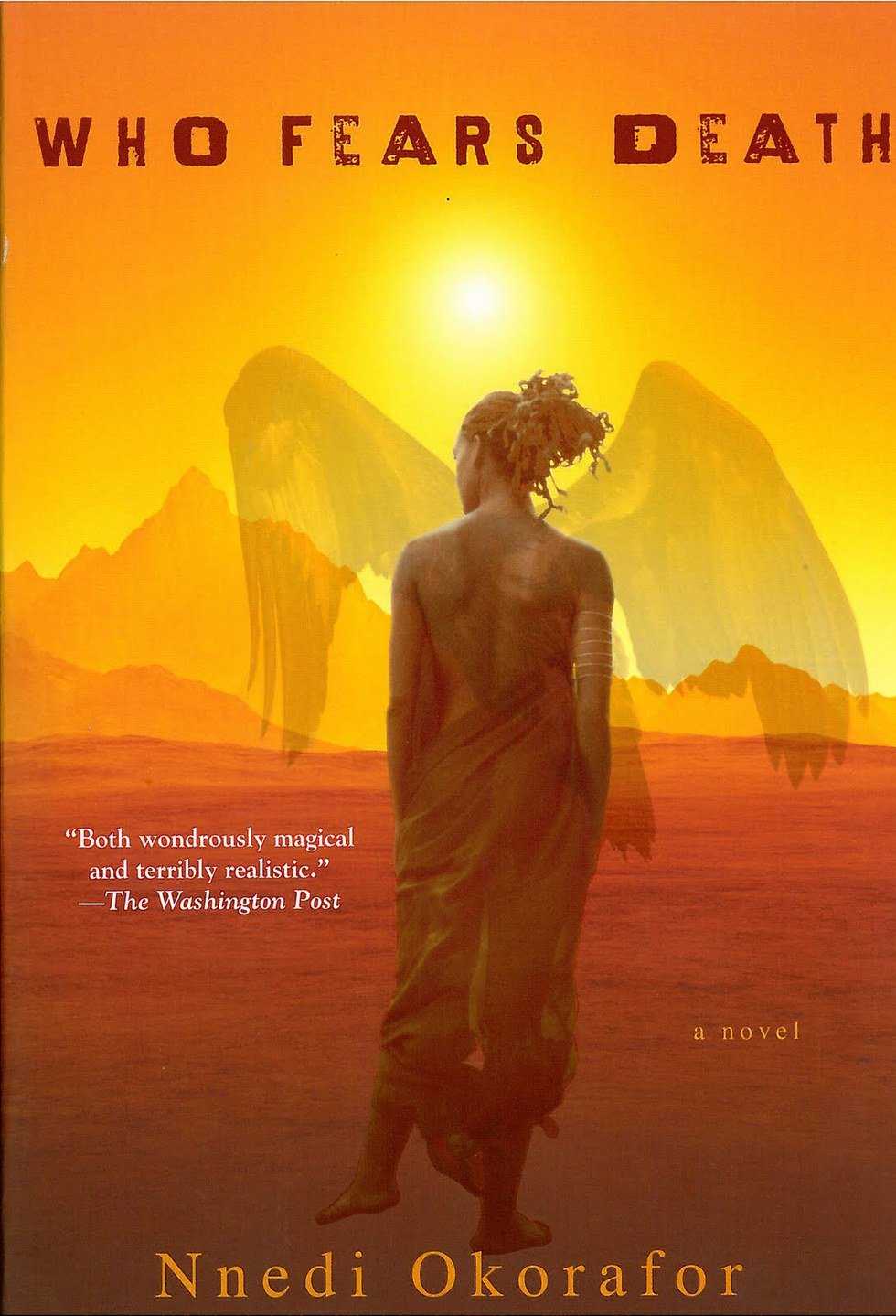
Anyone who knows me knows that I am sci-fi / speculative fiction trash. I’ve been obsessed with science fiction since before I can remember. Put science fiction with my current passion and area of study, literature featuring people of color, and I am in Heaven.
Honestly, a lot of science fiction can seem unnecessary--a lot of techno babble with no plot and no point. But often, there are science fiction novels that stay with us for a long time (Ray Bradbury’s "Fahrenheit 451" comes to mind). Yet, even those novels have a bit of distance that can make you think about how to prevent the destruction of civilization without considering your own, not really. Nnedi Okorafor’s “Who Fears Death” destroys any sense of distance that other speculative fiction novels might create. It is a difficult book to read because of this.
The novel takes place in a “post-apocalyptic” Africa and it not clear what country the events are taking place. Technology has fallen away due to years of disaster and this gives way to societies that flourish with magic and sorcery. The protagonist of the novel, Onyesonwu, is a powerful and talented child, gifted with power. But she is also an Ewu – a child of rape. This is apparent to everyone she encounters, her skin and hair are the color of sand. She is rejected, as is any Ewu child, by members of her village. But Onyesonwu’s name means “Who Fears Death?” and novel follows her journey as she searches for the man who raped her mother and she comes to find what her name truly means.
The bare bones of the novel are your typical coming-of-age, fantasy, maybe science fiction. Onyesonwu goes on a quest to find herself and the evil villain trying to kill her. She becomes very aware of the powers that she has and what they can do to save her and the people she cares about. It’s a plot that mirrors works like "Lord of the Rings" in a lot ways. But this novel is steeped in a terrible realism. Okarafor does not sugarcoat rape and circumcision, she does not spare any details. As you read the novel, you are trapped in the same world of misogyny and violence, sexual and nonsexual, that Onyesonwu is. There is no escape from it. There is realism to match ever bit of fantasy that is present in the novel, as well as a girl fighting tradition in every corner of her life. Fighting for the right to have the talent she has, fighting for the right to be acknowledged, fighting to love the boy that she loves, and fighting for the right to stay alive.
It’s a uniquely written novel that highlights the beauty of the world as well as terrible truths and realities that people have to deal with. I would recommend it to anyone.