
Most people can’t wait for the next season of their favorite television show, but fans of Netflix’s original Bojack Horseman see the release date and mark the day in their calendars as “Contemplate Futility of Existence Day.”
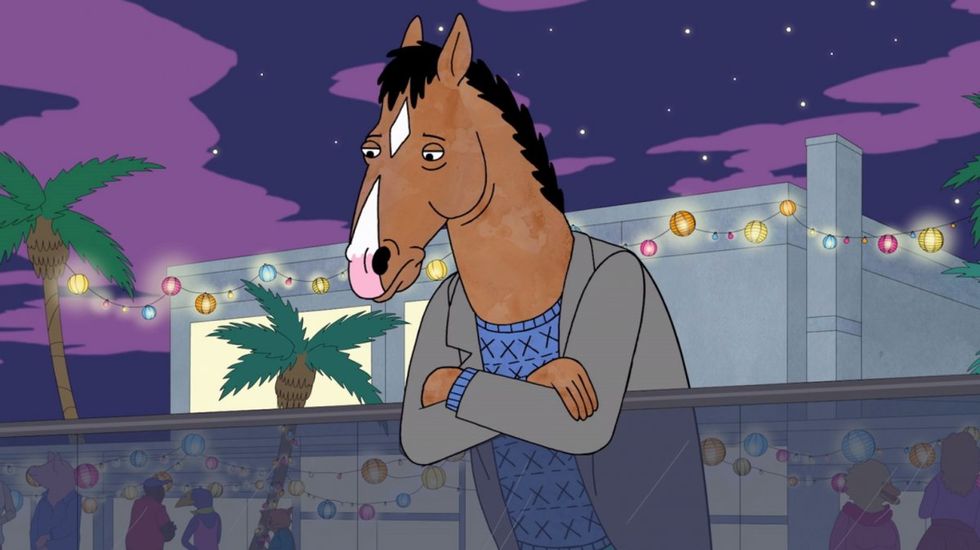
Bojack may be labelled a comedy (and rightly so; it’s hilarious), but underneath the defensive, sarcastic humor and the bright color scheme lurks a heavy-hitting commentary on happiness, identity, and self-destruction.
Bet you weren’t expecting all that from a show whose main character is a horse, huh?
Bojack, the series’ protagonist, spends most of his time in a drug-addled state of self-loathing and bitterness, oscillating back and forth between thinking he’s God’s gift to mankind and thinking he’s… well… the title of episode 6. He expects a lot from those in his life, but offers them nothing in return; he lashes out at those who help him because he hates himself, and when they leave, he spirals further into self-hatred.
But the show is hilarious, I promise.
We get a look into the black hole of nihilism that is Bojack’s mind in this season. The aforementioned episode 6 takes place partially inside Bojack’s mind, allowing us to hear the foul-mouthed inner diatribe locked and loaded on the reg. His normal is an unending cycle of trying to function, failing, trying to escape (usually via substance abuse), and hurting someone.
Season 4, episode 6 is no new information to longtime Bojack fans, though. The equine actor’s dysfunctions have been evident since the very first episode. However, only after Bojack’s back story began to unravel did viewers catch a glimpse of the hurt behind the hate. His home growing up was an extraordinarily hostile environment: his parents both verbally and emotionally abused him constantly. Their voices became his internal monologue; their image of him became his own self-image. In blaming him for “ruining everything,” they ruined him.
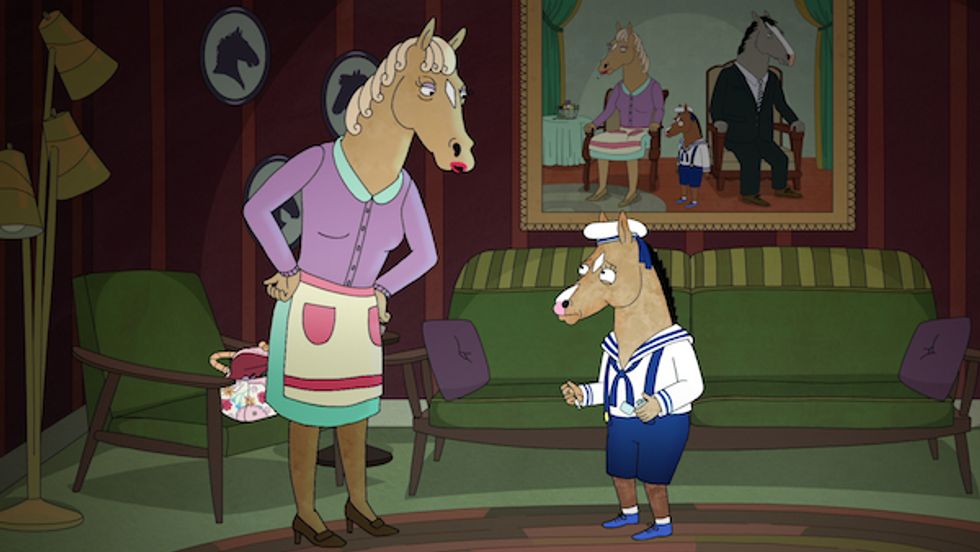
But the hurt goes back even farther. While Bojack’s father’s story remains yet a mystery, episode 11 of season 4 gave us an even more in-depth look at the tragedy that is Bojack’s family. His mother herself (Beatrice) was the victim of cold, selfish parenting - her mother checking out after the death of Beatrice’s brother, and her father exerting extreme control over her and neglecting her needs entirely. Upon abandoning this emotionally disturbed household, Bea married a man down on his luck and predisposed to infidelity. Episode 11 creates unbelievably sympathy for a character who, until now, was viewed only as the reason for Bojack’s self-destructive nature.
“Time’s Arrow” proves more effectively than expected that hurt people hurt people. I had no sympathy for Bea until I walked a mile in her shoes; I had little understanding of Bojack’s struggles until episode 6 splayed his thoughts in cartoonish literality. Hurt people take their pain and deflect it outward, further alienating themselves from the healing they innately crave.
Now, it is still Bea’s responsibility to play her hand appropriately. Bojack could choose to seek help for his mental illness. Wellness, healing, is our own responsibility. But the point is that hurt people hurt people. Discouraged people discourage people. Belittled people belittle people. Dehumanized people dehumanize people.
Conversely, loved people love people. Love people, and they will love - not just you, but others. As cliched as it is, be the change you want to see in the world. We got a hint of redemption at the end of episode 12. Healing is Bojack’s, and the hurting person’s, for the taking, if he will seek out healing every way he knows how.