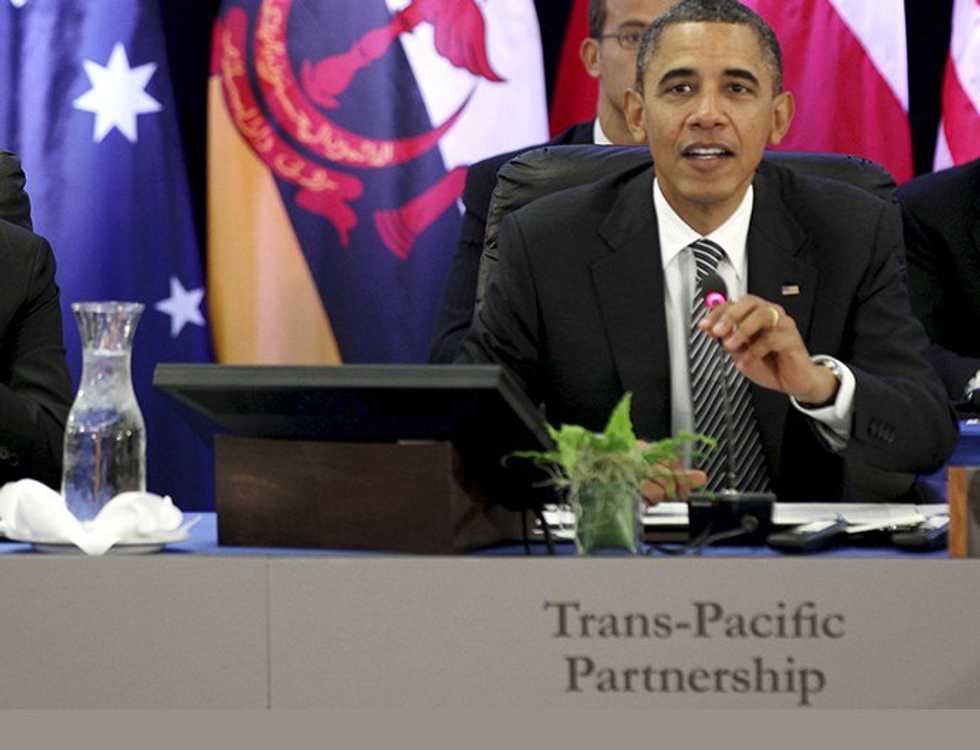
Last Monday, 12 Pacific Rim nations agreed to the Trans Pacific Partnership, better known as TPP. TPP has been under negotiation for a number of years and although there are a few details to be ironed out, the deal is expected to be finalized and voted on within the next few months. Although this is an international agreement, this deal has significant consequences for the American economy, democracy, and sovereignty.
The good portions of this deal exist only in theory. Since the deal includes about 40 percent of the world economy, according to CNBC, we will have common international standards that everyone needs to abide by law. This is also a sign that international cooperation on difficult issues is possible, and likely to take place in the future under possibly more dire circumstances. In principle, free trade is mutually beneficial for those involved, if a comparative advantage is present and if it is in fact free trade.
Sadly, this deal is not only free trade solely in name, but cronyism at its worst. Many see this as an amazing achievement for President Obama’s legacy, arguing that opening the American economy to a developing Asia will power us for decades to come. TPP, though, will likely be a stain on his legacy.
On the deal itself, the most contentious issue dealt with pharmaceutical companies negotiating how long they can have a monopoly on their drugs. Historical precedent gives these firms five years, which many of the foreign governments argued for, Vox reported that our government, lead by Obama, lobbied for an excruciatingly long 12 years. Many reports say that the precedent has been broken and pharmaceutical companies will have an eight year monopoly on drugs they create.
Although lowering the accessibility of life-saving drugs is bad enough, an even worse aspect of the deal is the manner in which it was negotiated. US Senators and Representatives must go alone to a locked room under surveillance and take no notes to view the actual text of the deal. In addition, government officials are prohibited from launching specific attacks on aspects of the deal. The public will not be able to see specifics in the deal until Nov. 7.
No one can claim we the people are having enough, if any, input on this trade agreement. Vox and NPR explain that even our elected representatives are not allowed to take notes, not allowed to have lawyers in the room to decipher language within the deal, and are not allowed to discuss specifics with their constituents. Once the deal is brought to the floor of the House and the Senate it will be an up or down vote, with no debate and no possible amendments since the Obama Administration was given Fast-Track authority back in May. This vote will essentially be whether or not you are for "free trade" in principle, not on what is actually in the deal. Rather than respect our democracy and values of debate and public discourse, our government is treating the TPP like the iTunes terms and conditions.
Senator Elizabeth Warren exposed an even worse aspect of this deal, the possibility of our regulations being thrown out in an international tribunal. The fact a court can throw out a state or American law because it hurts a firm’s profits diminishes the sovereignty of the United States. If we are truly an independent nation, we should be able to govern ourselves in any way we see fit without having to answer to international entities. This deal hurts the very basis of what a nation is suppose to be.
Overall, this deal is a win for big Pharma, a win for the establishment and their control over our system of government, and a win for those who want to butt into American affairs. Of course, TPP hurts the American worker, but more importantly, it shakes the foundation of American ideals like democracy, discourse and independence.