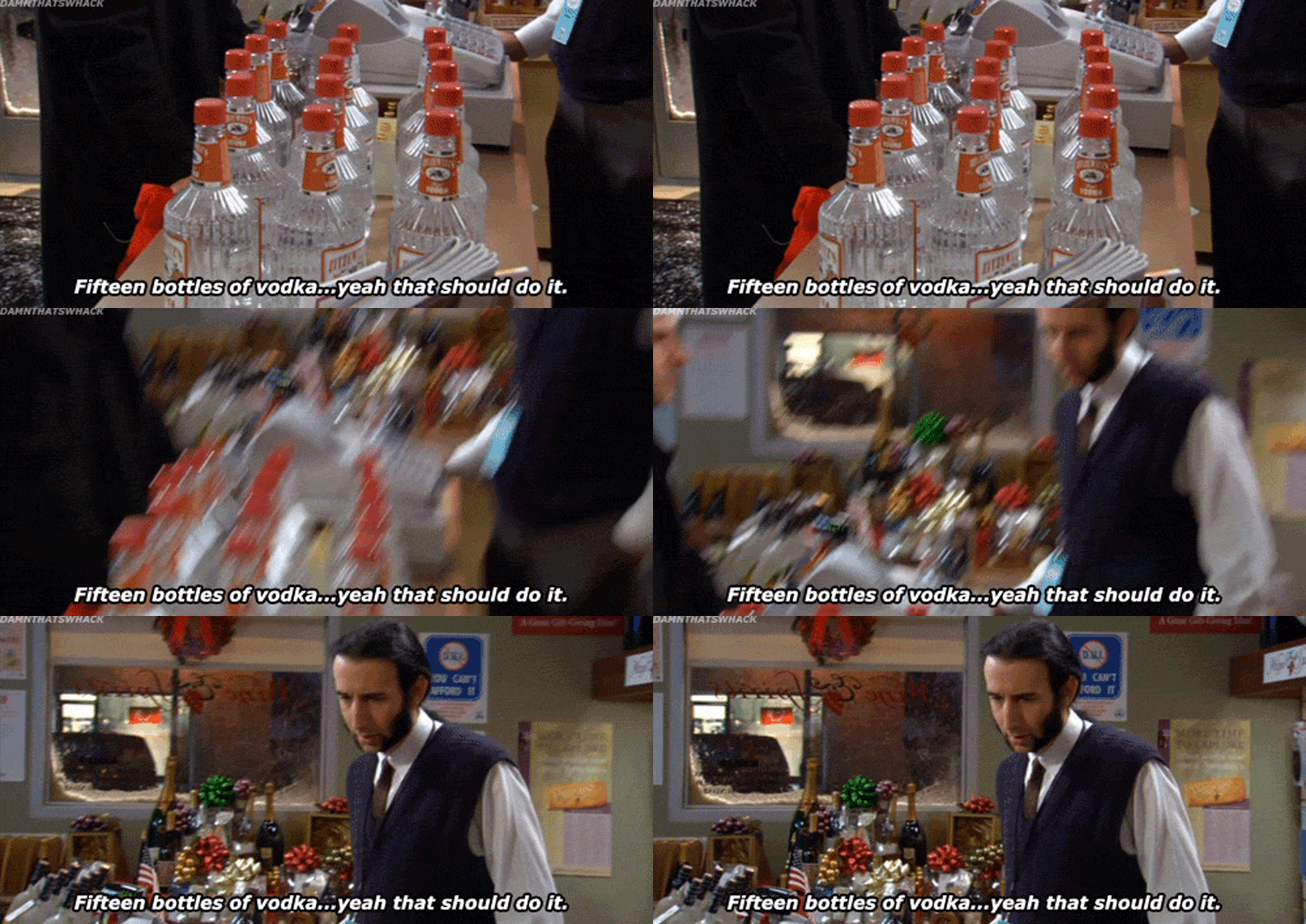
An estimated 1,400 college students die of alcohol poisoning each year. In a culture that teaches teenagers drinking is a morally weak decision, an urge to rebel pushes teens to binge drink and put themselves in danger.
You are standing, arms crossed, brow furrowed, in front
of the cashier at the liquor store trying to decide what to get for this
weekend, scanning over fifth after fifth, weighing percent of alcohol, flavor,
and calorie per shot. What you are really doing is deciding what's going to
get you drunk faster without feeling like you're downing a tank of jet fuel.
Then, it is Friday night, and you are piling onto your twin sized bed with seven of your best friends exclaiming, "Wow, this week was horrible, I can't wait to go out," and
"Dear God, do I need a drink." You are not buying an $8.99 fifth of
vodka because man, do you love the way it tastes and you love the way that you feel the morning after you drink half of it. Binge drinking is defined as consuming
more than four drinks, for women, and more than five for men. College students
don't strap on their Jeffrey Campbell's and Vineyard Vines to go out for a
night of good old fashioned sober fun. It might be wrong, but it's reality. Why is it our reality?
It could be cultural. Only six
countries in the entire world have a minimum drinking age of 21, and
the United States is one of them. American teenagers grow up surrounded by the
message that drinking alcohol is a forbidden act, a lesson that
continuously sparks curiosity and promotes the urge to binge drink. It is my friends whose parents hovered over them and forbade them from taking a sip of alcohol, who began drinking vodka from water bottles, and when they arrived at college, they got reckless. My friends who were consistently and realistically exposed to alcohol, were the ones who have found a balance of academic and social experiences.
It could be our insecurity. We look at alcohol as a
social lubricant. We don't admit it, but we think it's the necessary
piece to having the conversations we are too uncomfortable to have, and
actually be held accountable for. The excuse, "I was drunk," is
not really an excuse.
It could be that our generation is just more exposed. Thirty
years ago, social media wasn't even a thought -- and neither were the consequences
that have come with it. Our parents could go out, make their mistakes, and leave it at
that. Now, if you get too drunk, chances are that I know about it because
of your 150 second Snapchat story or your 11 a.m. Instagram the morning after. Maybe
it only looks like we are drinking a lot more because people are looking harder
than ever before.
The problem in our culture is that most of us were not taught how to drink; we are simply told not to, and left with that as our guidance. We are a generation of fearless artists, leaders and free-thinkers who are going to be left with a lot of the aftermath of the generations that have come before us. We don't want to be remembered as the generation who ran away from their problems and into a bottle of vodka. No more, blackout generation.