
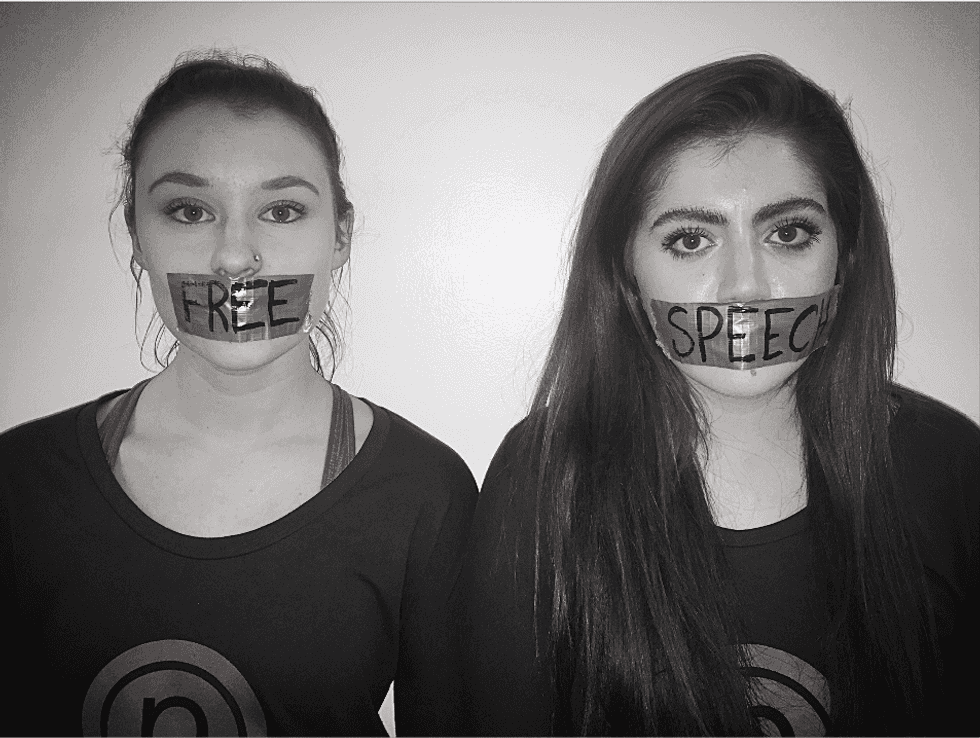
This story is about us: Roxana Kazemi and Suzy Hewitt. We are the hosts of a podcast called "Dictation.” Every week, we talk politics, popular culture, relationships, and sex. Until mid-December, “Dictation” was a popular radio show at our college radio station, recognized as one of the “Best of” the station, and the only women-led radio popular culture talk show. Until March 2, "Dictation" was also the most-watched television show on our college television station.
Before we explain the details, we would like to make some important points:
- All names, with the exception of ours, Jordan Beauregard, and Dawn Serra, have been changed for the protection of the privacy of others.
- The college radio station staff and television station staff have been not contacted for comment. This story is not about them. It is about our experience.
- All quotations and screenshots of electronic communications are legally obtained and used pertaining to the one-party consent statute outlined in the Code of Virginia § 19.2-62. Interception, disclosure, etc., of wire, electronic or oral communications unlawful; penalties; exceptions.
If anyone has any questions or concerns regarding the legality or ethics of this article, please contact the editor.
Let’s begin.
The Radio Show
Before Thanksgiving, the college radio station asked us to interview Dawn Serra, a sex and sexual relationships expert. Serra said that she "reached out to a number of local universities, offering to come on their radio programs to talk about sex and consent," and that our college station was one of them. Serra reports that, from the beginning, "the station [staff] knew that [I] wanted to have a discussion about sex," and they said Serra would be "a great fit for [Roxana and Suzy’s] show." We had Serra on Dictation and, sure enough, the show discussed sex.
The conversation included healthy ways to engage in different sexual positions, casual hook-up culture in the United States, and how to responsibly incorporate sex into relationships. We asked this sex expert for her opinions about traditionally taboo topics associated with advocating for your sexual pleasure. These topics included, but were not limited to, female and male genitalia, anal sex, oral sex, pegging, and sex instruments.
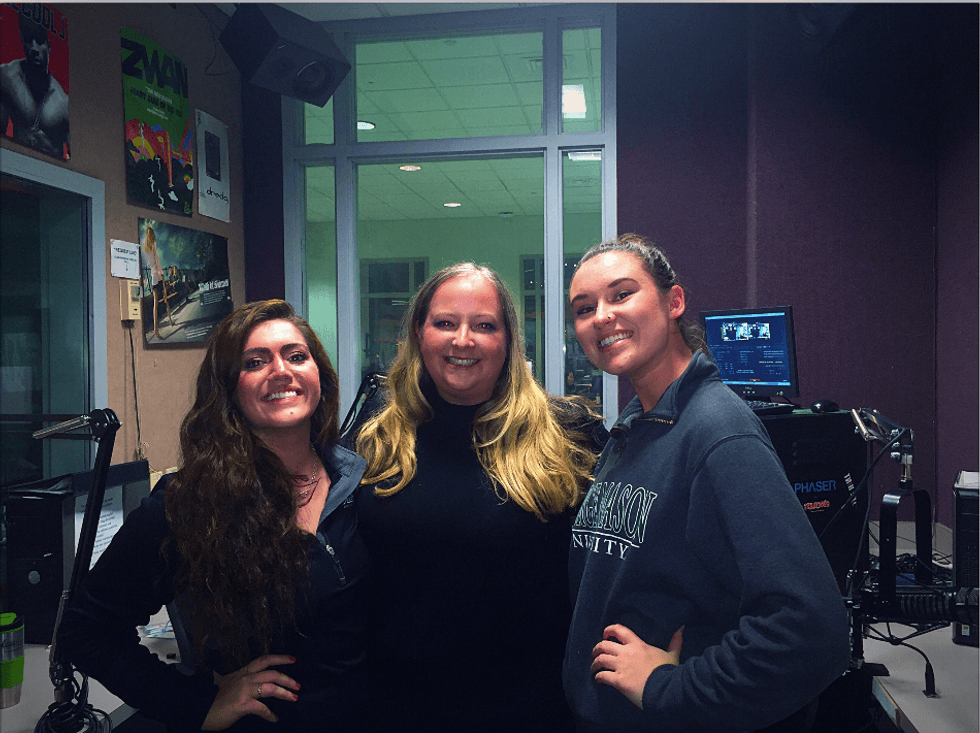
Figure 1. Picture of Kazemi, Hewitt, and Dawn Serra after the interview. From the personal collection of Roxana Kazemi
The protocol is that, after the interview takes place, the radio station staff posts it to the website. Weeks after the interview had been conducted, the radio station still had not posted the interview with Serra. We were understandably confused and concerned. We emailed the radio station to ask about the status of our interview. On Saturday, Dec. 5, 2015, we received an email from the college radio station’s staff, summoning us to a meeting. The email said:
We will be talking about the content of the episode... There were multiple violations of [radio station] policy during this broadcast.
We were troubled. We were told to come to a meeting for which we weren’t given ample information or context. Wanting to know more, we followed up with a member of the staff. We then received a text message from the member of staff we had contacted, which said that "Dictation" had violated the code of the Federal Communications Commission (FCC), the government body that enforces all rules concerning public communications. The radio station’s policy echoes FCC code, even though the station does not fall under the jurisdiction of the FCC, because the program streams online. Below are the screenshots of a message one of the radio staff members sent us when we further inquired as to why were being summoned to a meeting. The staffer said that we violated FCC regulations. The station is not under FCC jurisdiction.
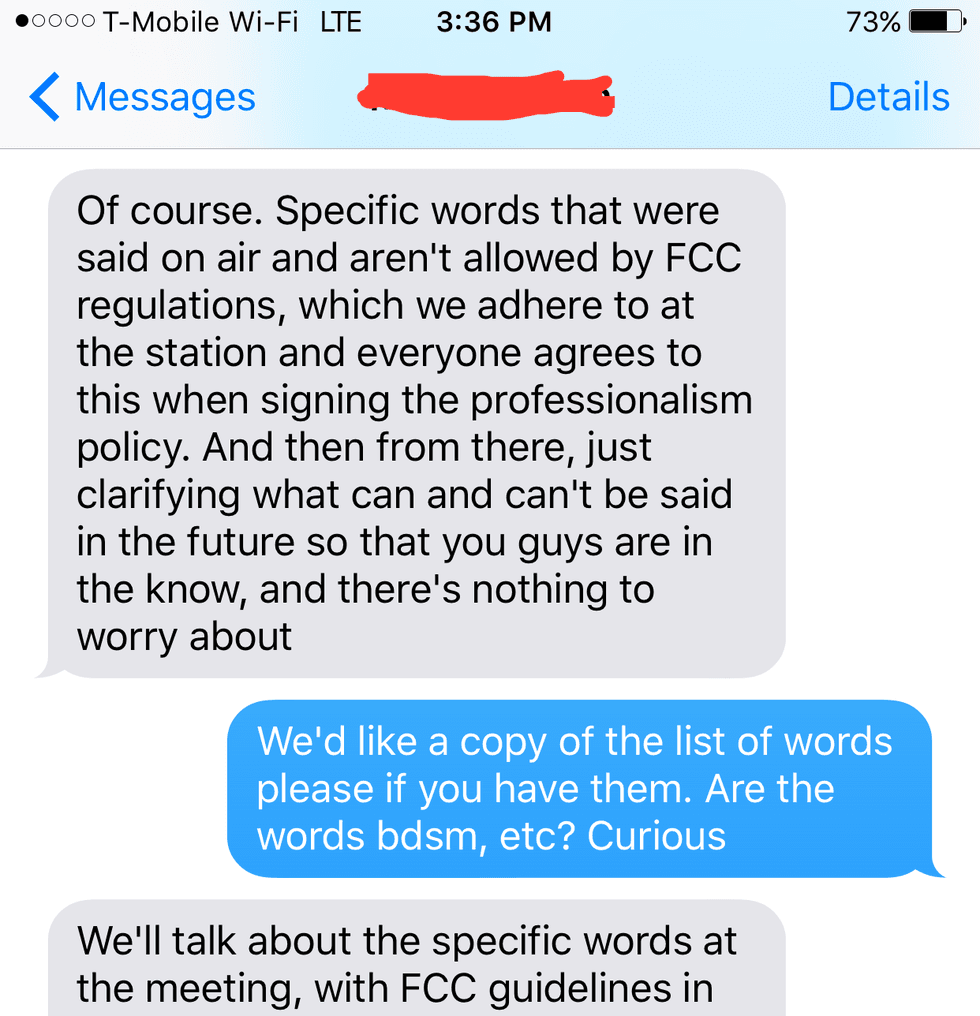
Figure 2. Screenshots of a text message. From the personal collection of Roxana Kazemi.
Later, another staff member told us that, the station was in fact, not under FCC jurisdiction, in the email below.
[The station], although not regulated, holds the standards that echo the FCC as far as appropriate content is concerned.
While working to schedule the meeting, we searched for the stations professionalism policy, which we expected would further explain our alleged violations. We presumed that it would have provided much-needed insight into what, specifically, the meeting was going to address. However, the only document we could find was the signature page of the professionalism policy, not the actual policy itself. It was then that we realized that we had never actually been given the full policy. All we were ever given was the signature page, which you can see below.
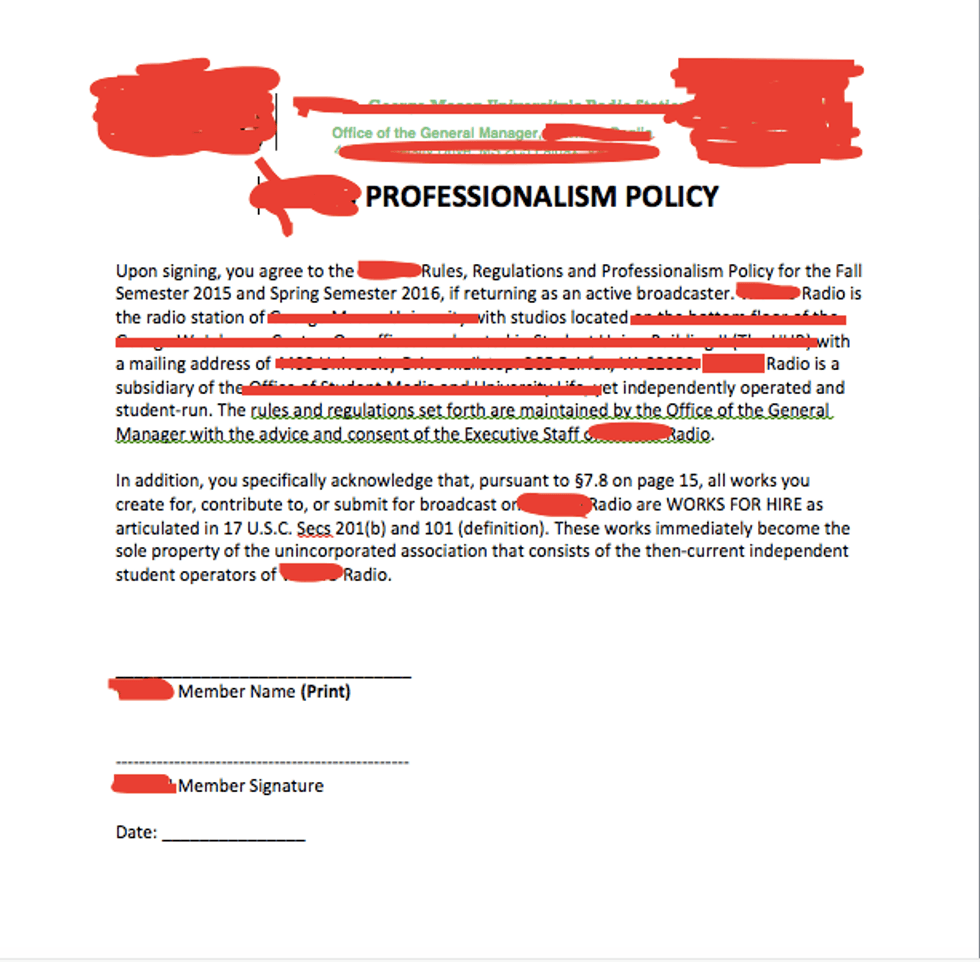
Figure 3. Signature page of the professionalism policy. From the personal collection of Roxana Kazemi
The radio station staff claimed that the FCC prohibits certain words from being broadcast, and that these words were said during "Dictation’s" interview with Serra. The FCC, however, does not have a list of words deemed obscene. Before action is taken by the FCC, someone must first complain about the obscenity of specific content. As far as we know, no complaint was made to the FCC regarding the content of our interview. Furthermore, because it had not been published, only members of the radio station had access to the interview and, thus, a complaint would have to have originated with them.
Even if the station had complained, the FCC requires context. According to the FCC's Consumer Guide for Obscene, Indecent, and Profane Broadcasts, simply complaining that there was an "indecent discussion of sex" is not sufficient reason to dismiss us.
The content of our show referred to adult sex education and featured a sex expert who provides routine sex and sexual health advice to couples in the United States. Because the nature of the interview was relevant to college students and was conducted with a professional sex expert, there was adequate context for the allegedly vulgar language. Therefore, the interview does not violate FCC code.
We met with three members of the staff on Dec. 11, 2015. In this meeting, the staff chastised us for the "vulgar" content. They had asked us if we would like a copy of the policy that would cite how exactly we violated the agreement. The staff said that words like "penis," "vagina," "oral sex," "anal sex," and other sexual language were too obscene for an interview, even with a sex expert.
We were shocked that the member of the staff who was leading this meeting was concerned about our content, considering he had been on our show before. On Sep. 14, 2015, we began our radio season by hosting this staff member and his best friend. During the program, we told a story about our vacation in Ocean City, MD, during which we saw two women having oral sex in an elevator. In the middle of the show, we also discussed how to achieve a 15-minute female orgasm. Towards the very end of the program, we discussed anal sex. This episode was not only published by the radio station, but features, as a guest, the very staff member who was now chastising us for using vulgar language.
It seemed that no matter how many times we apologized, the situation was not improving. Thus, before the situation worsened, we removed ourselves from the radio station. We decided, as a team, that leaving the station was the best decision for “Dictation.”
Despite the fact that we had parted ways with the station, the lead staff member of the college radio station continued to contact us. He wrote in an email that:
I believe you both made the right choice in deciding to step away from the station… this [is] a very easy departure.
He continued by citing a case, Miller v. California, in which the court ruled that:
Obscene material is not protected by the First Amendment… A work may be subject to state regulation where that work… portrays, in a patently offensive way, sexual conduct specifically defined by the applicable state law; and, taken as a whole, does not have serious literary, artistic, political, or scientific value.
Miller v. California was ruled in 1973. In FCC v. Pacifica Foundation, which occurred later, in 1978, the court further ruled that obscene content is not protected by the First Amendment, but that the content must first be deemed obscene. Every state has its own laws defining and protecting against obscenity. In Virginia, where "Dictation" is broadcast, the statute reads:
[Obscenity]… a shameful or morbid interest in nudity, sexual conduct, sexual excitement, excretory functions... and which goes substantially beyond customary limits of candor in description or representation of such matters and which... does not have serious literary, artistic, political or scientific value.
Dawn Serra was on the show to discuss sex and consent. On college campuses, this is politically and scientifically relevant, concurrent with Virginia state law, and, therefore, is not considered obscene. Sex and relationship health are important to college couples, and this education fosters responsible sexual decisions.
The executive staff at the college radio station considered “Dictation's” segment to be obscene, even though the staff themselves were the ones that facilitated the interview. When asked if she had a choice of which show to go on at the college radio station, Dawn Serra said:
No. The [staff] read over my email, which included links to my websites and podcast, and suggested "Dictation," saying I'd be a great fit based on their content. He cc'd [Kazemi], and [the staff] was cc'd on most of the exchanges we had, including one where we outlined my favorite topics of sex, consent, vulnerability, etc.
Serra gave the radio staff access to her website, which makes it obvious what her area of expertise is. For example, on her website, there is a "Work With Me" page, that explains some of the information and services she offers. Some of that information is about "Desire and Libido" and "Pleasure and Orgasm.' The staff was given ample time and ability to study the content before scheduling the interview for "Dictation.”
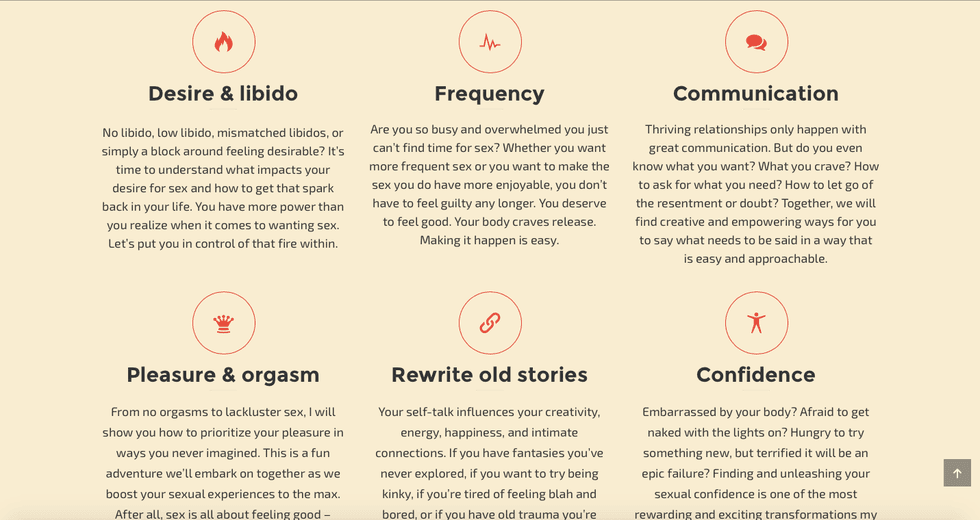
Figure 4. Screenshot of Dawn Serra's 'Work With Me' Page
After removing ourselves from the college radio station, we entered the media office’s "Free Speech Contest."
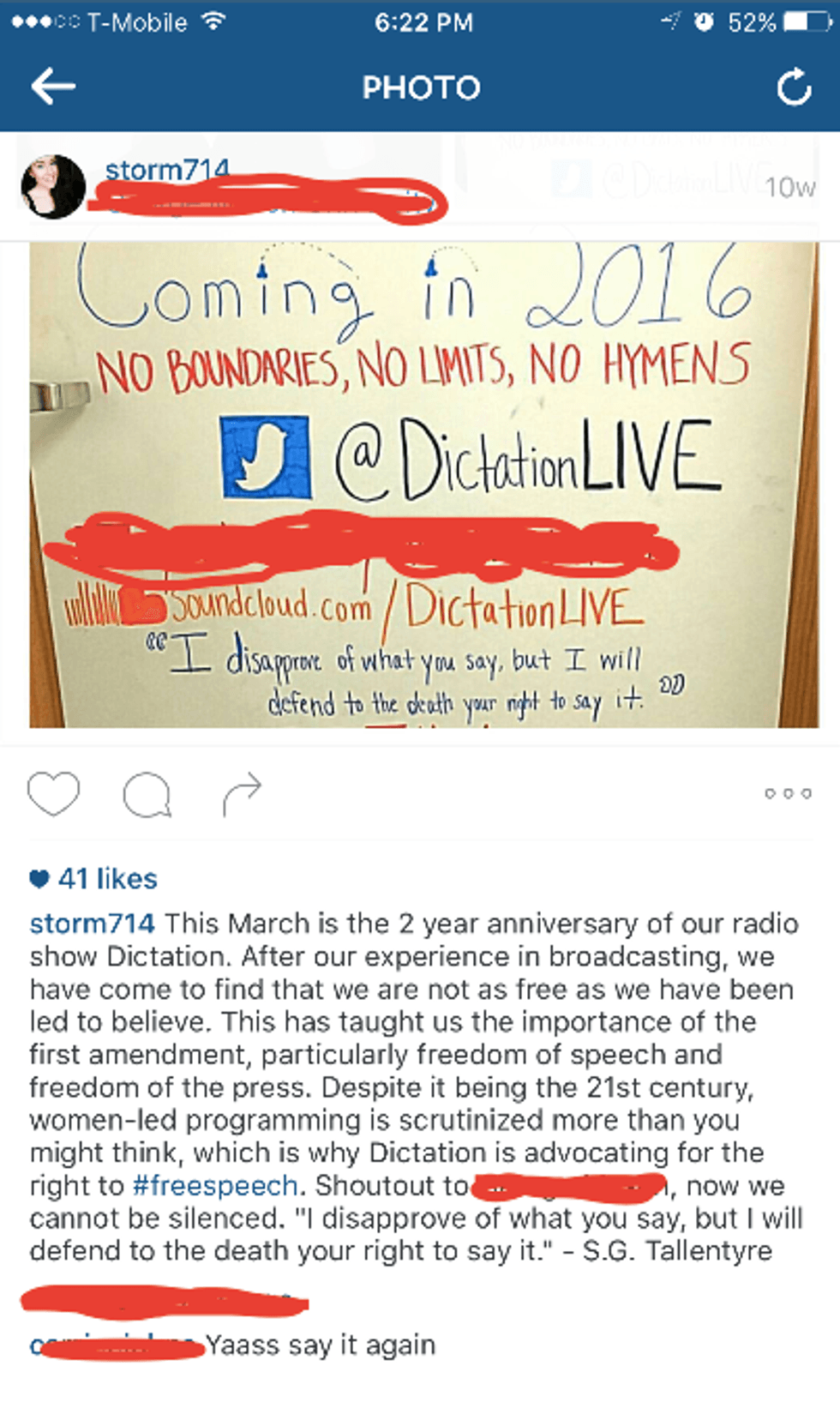
Figure 5. Picture of the Free Speech Contest post. From the personal collection of Suzy Hewitt.
We also announced a return of "Dictation" on SoundCloud as an independent podcast, and publicized our rising television series that is aired by college television station. We won a prize for our entry.
It may be relevant to note that there are two women and 10 men on the college radio station's executive staff. The staffer and his friend who talked about sex and sexual health on "Dictation" were not held accountable for perpetrating the same alleged violations. It's a disappointment when you believe you have been given a platform on which to express your values regarding relationships, sexuality, and sexual freedom without judgment, and then you are reprimanded for doing so.
It has also been disappointing to see the aggressive response we have received from the media subsidiaries. Some people have been quite outspoken about us, others silent, thus escalating our situation to this level. In a society where so many women are shamed for embracing their sexuality, we have so much more to accomplish in terms of gender equality and the media has an important role in supporting these accomplishments. We hope that, in the future, we are able to convey our opinion without fear of discrimination. The popular media, especially those based on college campuses, should aim to represent the interests of the audience around them and to support its employees in sharing these interests.
The First Article
Following our departure from the radio station, we privately shared our story with trusted friends and supporters of “Dictation,” and we were repeatedly advised to share the story of our injustice on a larger platform. A good friend of ours, Jordan Beauregard, is a writer for Odyssey and decided that he wanted to help us expose these events. A situation that was getting such a strong reaction deserved to be shared not just for our sake, but for those who might not believe such events could occur within the media at a collegiate level. Jordan wrote an article for Odyssey.
On Wednesday, March 2, we were informed that Beauregard had received several emails from the staffer who had been in contact with us, contending that he had defamed the radio station and he needed to take the article down immediately. Only a managing editor at Odyssey can do that, and Beauregard is not a managing editor. The staffer continued to send aggressive remarks via email, and even claimed that Beauregard could be suspended from the university if the article remained live. We spoke to Odyssey about our concerns regarding the aggressive nature of the emails that were sent to the author, and Odyssey decided, in the end, to take it down to avoid any further aggression. After meeting with university officials, we were informed that an article like this one, or what Beauregard wrote, are not grounds for academic suspension.
When we met with a university official about our situation, to the best of the official’s knowledge, they had not heard about a non-academic honor code violation, and believed that did not exist as a mechanism to punish a student for “wrong doing.” Because of the aggressive response Beauregard received, we were concerned about putting this article out. We are happy to know that we are, according to our school regulations, free to do so.
The Television Show
We presumed that taking the first article offline would placate the radio station and the media office. We were wrong. An email was sent to us from the college television station’s lead staff member that read as follows:
After consulting with my staff and advisor, [the television station] will no longer be airing or producing “Dictation.” The show’s content continually pushed the boundaries of what [the television station] ordinarily considers suitable for broadcast or posting online.
However, it would seem that that was not reason why it was canceled, as the email continued:
The content of the previous produced episodes of “Dictation” is not a problem. The problem is that when you had a disagreement with [the radio station], you participated in the creation of what amounts to a "hit piece" against your former station…[the television station] and [the radio station] are two of about 10 other organizations that are a part of [the media office]. Because of this, we as a staff do not feel comfortable promoting, airing, or posting a show whose hosts continue to display disrespect towards another media organization.
In addition to canceling our show, the television station also revoked public access to the two seasons of our show that were available online. If you go the YouTube channel, you can no longer view “Dictation.” We had a wonderful production staff who worked tirelessly on “Dictation.” Now, their work cannot be viewed because of the way the television station feels about us, the hosts. The production staff cannot show others work they did for our show, because the videos are no longer public. Thus, they have been punished as well, simply for being associated with a television show that featured two women who gave an interview regarding the college radio station.
Despite the article being removed, we were experiencing punitive measures from the television channel. It is one matter to cancel our program because of how they felt about the article - although we personally believe that this in itself is wrong. However, it is another matter entirely to then remove our previous episodes from the online channel. It is not just about us. We may have been the faces of “Dictation,” but by removing these videos, the television station hurt our production staff as well. This action caused us to realize that we were enveloped in a larger issue about censorship, about free expression, and one’s rights as an individual to speak up to authority in regards to injustice.
Blacklisted?
People ask us if we believe we have been blacklisted by the university’s media subsidiaries. We believe we have been targeted for speaking out about what has happened to us. This has gone beyond the original radio professionalism policy disagreement. We apologized for any mistakes we may have made, and even attempted to offer solutions to the radio executive staff so that this would not happen again to anyone else. They did not want to hear it. No one in the media office wanted to hear it. Therefore, we believe that this is about our rights. They are an organization. We do not believe that they should be able to use their status as a large entity to intimidate individuals like us.
As S.G. Tallentyre, [author of "The Friends of Voltaire"] wrote, "I disagree with what you say, but I will defend to the death your right to say it." This is how seriously “Dictation” values freedom of speech and the press. People do not have to agree, but it is enumerated in the Constitution that individuals have rights that protect our freedom of speech and the press. When someone says something that may not like, if it is true, it is not libel, slander, or defamation. That is freedom of speech. This is our story, and our perspective on what has transpired. Even if we are “blacklisted,” we cannot be silenced.
The radio station claimed that we defamed them, and that our account of the events were biased. They were biased, because we are the individuals who experienced the discrimination firsthand. We experienced what we perceived to be an injustice and felt that it that needed to be exposed and simply gave an interview that shed light on the situation. We have the recordings, pictures, and communication records to prove every claim that we have made up to this point.
In 1735, John Peter Zenger, a writer for a New York newspaper, was accused of printing libel. The Chief Justice believed that the laws were very clear about libel, and that Zenger had printed false, scandalous accusations. Zenger’s lawyer responded by saying that the truth is a defense against libel, and Zenger was found not guilty.
We told the truth. This publication told the truth. This article was meant to share “Dictation’s” story; to ensure no one would ever have to experience what we experienced. With your help, this story can become a movement, and this movement could create true change, and establish much-needed precedent. Change cannot occur if voices are silenced. Please share this story.
To see more of us, visit our podcast on SoundCloud at soundcloud.com/DictationLIVE, on Twitter @DictationLIVE, or as hosts on iTunes for Odyssey on Air. To learn more about exploring sex and sexual health, visit Dawn Serra at www.dawnserra.com or listen to her podcast "Sex Gets Real" at www.sexgetsreal.com