
It is the Saturday of the release of “Lemonade,” and I, like most people in warm weather, am thirsty. The opening images of “Pray, You Catch Me” ballad have struck me as profound and, the poetic form in which the artists uses, immerses me in a world unlike my own but, like my own. I catch myself singing it to bed, singing in the shower, singing on the toilet: in places I am most vulnerable, but alone. I question if it is safe to sing in public, but I do it anyway while walking to work from my narrowly earned parking space, carrying three-too-many bags full of reports, programming materials and emotions Beyoncé told me to have.
This puts a question mark on the statement of my “manhood?”
I am constantly confronted by valid and invalid challenges to me being a man. I constantly wonder why "boy" is the word of choice. The #carefreeblackboy movement, which I appreciate as an alternative black man, women at work who refer to me as “boy” either in just or as an identifier, older adults who call me “boy” thus invalidating my adulthood in their view and challenging my autonomy to self-identify, writings that say queer men have “Peter Pan Syndrome” and never quite grow out of an infantile need to connect with other “boys,” feminist that see using the enemy’s tactic as a form of resistance, or the long-outdated history of calling Black men “boys” as a form of directly challenging their personhood and sense of providing protection and safety for their families and communities alike. The list goes on and on.
Blend in all of the intersections of my identity: Black, queer, male as major identity markers; tall, dark-skinned, unconventionally handsome, artist, intelligent, video gaymer as minor markers and one gets the sense that my marginalization is simply key to defining me. Gay men are boys. Black men are boys. Video gamers are immature and thus, are boys. My manhood is under constant attack and I have no umbrella to protect me from this hurricane. Never mind the fact that I appreciate a good crop top with every fiber of my being.
When I find myself at my sexiest and decide that I want to share that sex with some lucky man, some of my past hook-ups and lovers have used boy as if it is an aphrodisiac in the most Ginsbergian of ways; “Yeah, come here, boy.” “That’s a good boy.” “Sexy boy.” Immediately drying up any ocean I may have possessed into a desert. As if a dog or a child can present some kind of sexual satisfaction. Dog; I am not a person. Child; I am not a man. Either way, I am equally creeped out.
The constant question lingering on my breath is “why?”
The most honest answer I have thus far is that no one expected me to become a man and because, of my decision, oh so recently, to live without the constraints of performative identity, in combination with my sexuality, I am often deemed as "boy" or less. A boy is a child human that, if survival permits, will become a man. A man in our society has incredibly harsh denotations and qualifiers that exclude men who decide not to or are unable to perform that arbitrary tasks that are assigned to manhood such as being with a woman, womanizing, providing for my family whether or not said family provided for me, performing within the cage of masculinity, having a small spectrum of emotions from anger to contentment, but not exactly happiness. As a Black man, I am expected to be angry, but not too angry or else I be considered a threat myself and those around me. An angry Black man is one of the oldest troupes. It even has its own Black caricature.
Black masculinity is often under a much more constrained lens. Black men are checked by Black men, Black women, Black children alike for not performing the tasks of masculine performance and are invalidated for anything that exists outside of the cage. Our voices must be deep and slow, our gait must be lumbered, our work must be dirty and require physical strength, we mustn’t laugh too loudly, we must drink whiskey straight, we must drink, we must not openly show love or affection to another man or else we receive the damning moniker of “fag,” or “sissy” if I am going to date myself. We must not be gay, femme, odd, intellectual, “proper,” polite, caring, kind, sad, tired, loving, or exist inside of ourselves. Our existence is to be for the comfort of others, especially of majority culture which by no means celebrates us living, but will remind us our deaths are for the better.
This is no freedom.
This is no way to live an actual life. Men, masculine or feminine, are men. By definition, a man is “an adult human male.” An adult is a human being who is fully grown or developed. I take Lauryn Hill’s stance in one of my favorite quotes from her: “Anything that isn’t growing is dead.” I am still growing. We all are. When someone tells me “I’m grown,” I immediately wonder if I am talking to a ghost. Growth happens in all of us. The only qualifier to becoming a man is to live into adulthood.
That’s it.
Anything else is the side dish to the main course (some of it is desert, as well).
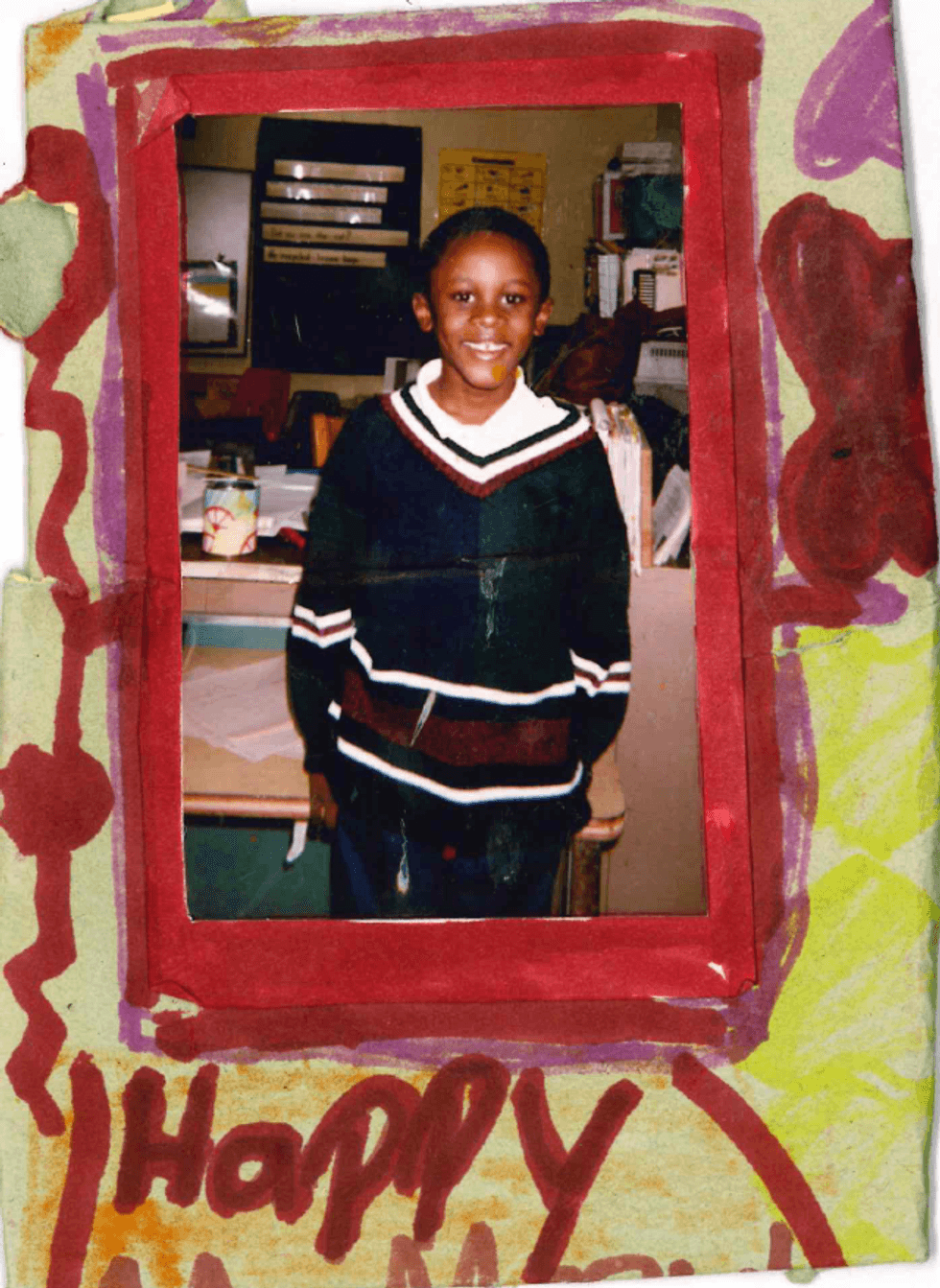
As a young boy, I often asked "what is a man? What does it mean to be a man?" And I was generally met with a harsh critique of what a man isn't; my father for starters.
I have since shed the need to know that answer and decided on what it means for ME to be a man and the requirements are quite simple:
I am one.
Period.
I am having a cigarette break at work and a two Black women in a sleek, silver sedan, are blasting “Formation” at a red light. I stand up and my hips betray my need for safety but quench my thirst for freedom. The women look at me gettin’ it as if the Queen Herself called me on stage. The look at start whooping and hollering, clapping and smiling, saying “Get it, boy!”
I let that one slide with a side eye.
This is for me.
I am still dancing in my manhood while belting Beyoncé lyrics and I don’t care who sees it or hears it. Simply put, I will not live in fear because others have lived in phobia.