

University, for me, has added lenses by which I see the world. Lenses I read with and talk with and learn with. Recently, I discovered a word that I like because it sounds utterly pretentious: hermeneutic. University has given me a hermeneutic of life. A hermeneutic of the interplay of memory and identity.
That interplay is at the core of nearly every thought, reading, relationship, joy and sorrow that I experience. It is the reason I see the same message in Anthony Doerr’s “All the Light We Cannot See” and Augustine’s “Confessions,” that is that recollection of the past is a recollection of the self, and a recollection of the self is the grounding of a life so as not to become lost. It is also how I read Alasdair McIntyre’s “After Virtue.” I now solidly believe that my identity and moral grounding exist within my narrative: my memory.
My guilty pleasure is gaming. I had heard many times that I simply must play the Bioshock series. As a fan of games with compelling narratives (such as Red Dead Redemption, Journey and the Last of Us), the Bioshock series was a massive hole in my gaming experience. So, I picked up the Bioshock Collection when it came out in September and have been ravenously playing my way through the brilliantly crafted stories of Rapture and Columbia.
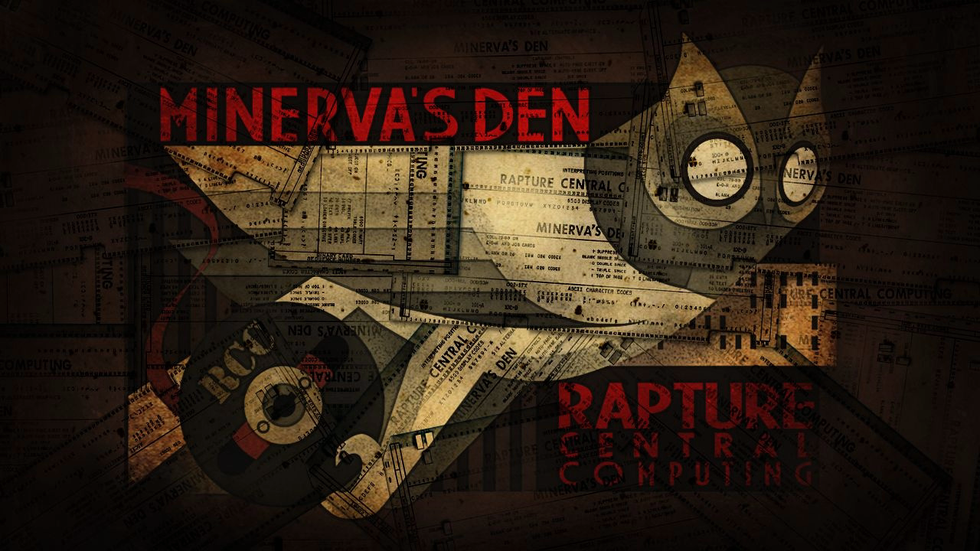
I find all three games and all the story DLC to be fantastic and compelling in every way; however, I must pick a center piece on which to hang my fandom hat. The Minerva’s Den expansion to Bioshock 2 is the most compelling of the stories in Bioshock, and it has effectively challenged my worldview regarding the near synonymous nature of memory and identity. I never thought that this new hermeneutic would be applied to gaming. Games rarely tell an engaging story of any kind, and rarely do they need to. I was shocked to find my new worldview, based on the intrinsic and unbreakable connection of memory and identity, shook by the literary prowess of a video game. But, here we are.
I will not here relate the entire story, only one piece. Unfortunately, the piece I need to relate is full of spoilers so: SPOILER WARNING if you might ever play Bioshock 2: Minerva’s Den (and please do play if you’re interested). The basic conceit of Minerva’s Den is that you are a character named “Sigma” and you are trying to escape Rapture, but with the code for a mysterious computer known only as “the Thinker.” Over the game it is made clear that Charles Porter, the man who created the Thinker, has been playing recordings of his dead wife, Pearl, to the Thinker in the hopes of the Thinker adopting Pearl’s memory and personality, and becoming a Pearl surrogate of sorts.
I, being the lover of memory and identity as I am, adored this concept. From my current worldview, the Thinker would become Pearl, only immortal. And that, ostensibly, is what happens. Only, Porter responds poorly, and finds the Pearl within the Thinker as unsatisfactory, and regrets his decision. I disliked the regret. If memory is all that encompasses identity, the Thinker in receiving Pearl’s memory would become Pearl. At the end, it is revealed that your character, Sigma, is actually Charles Porter, only he has had his memory wiped. Another character refers to you as Charles Porter, even though, by my definition, Sigma was no longer Charles Porter.
The discontent with programmed Pearl, and the existence of the Charles Porter identity without memory both went against what I had conceived as the foundation of who I am. Now, because of a video game, I find myself valuing the role of a body in identity, as well as the role of cognition and memory. No amount of philosophical banter, or high-level reading could shift me from my newfound hermeneutic. But the power of a digital character calling my digital character Charles Porter, despite the loss of memory, could.