


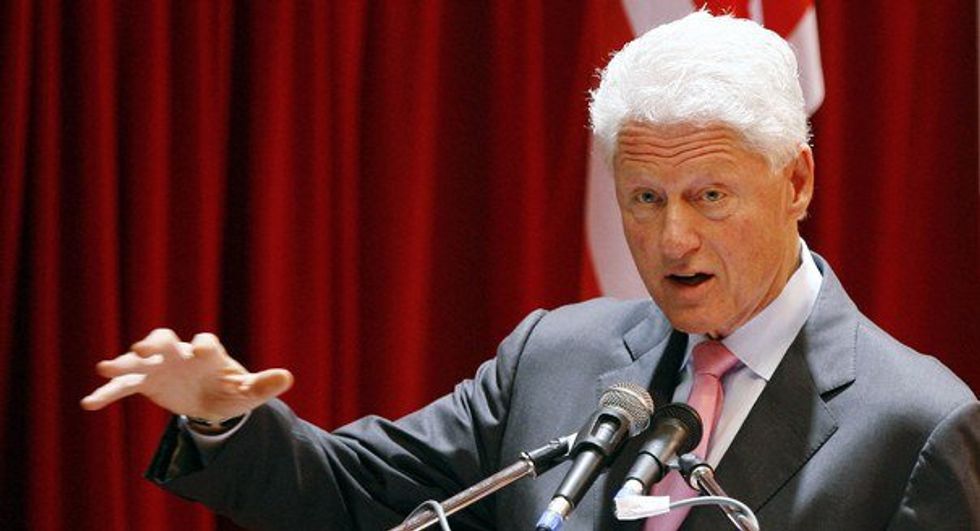
For years, Bill Clinton was considered the "first Black President". As Toni Morrison said, he was from a "single-parent household, born poor, working-class, saxophone-playing, McDonald's-and-junk-food-loving boy from Arkansas." However, in recent days he has come under enormous scrutiny from the African-American community over comments he made about Black Lives Matter.
"I don't know how you would characterize the gang leaders who got 13-year-old kids hopped on crack and sent them out on the street to murder other African-American children," Bill Clinton said on Thursday, April 7, 2016. "You are defending the people who kill the lives you say matter, tell the truth."
In the days since he made those comments, he apologized, not for his statements, but the nature of the statements he made.
"So I did something yesterday in Philadelphia. I almost want to apologize for it, but I want to use it as an example of the danger threatening our country," he said. President Clinton is apologizing for attempting to silence the protesters at the rally, not for the content of the retorts themselves.
Something that these responses reveal, however, is a very misguided thought process that exists in opposition to Black Lives Matter. The most basic tenet of Black Lives Matter is that, contrary to popular belief, black people should not be killed and imprisoned at rates disproportionate to their population. Protesters at the rally were arguing that Hillary's use of the phrase "super predator" in comments issued in 1996 was wrong, and Bill Clinton responded by doubling down on the super predator myth. Rather than "telling the truth" as he purported to espouse, he instead sought to double down on his support for the failed idea that higher incarceration rates for African Americans means less super predators on the streets.
While it's widely understood that mass incarceration and mandatory sentencing minimums were a mistake, there is still an insistence that black people being drug dealers and criminals is the reason they are treated differently.
Black Lives Matter are not the ones "inventing a race problem." They aren't "defending the people who kill the lives you say matter." They are addressing a very real problem in this country that finds its roots in President Clinton's policies. This country has had a race problem, and protesters today are finally bringing it to public knowledge.

















