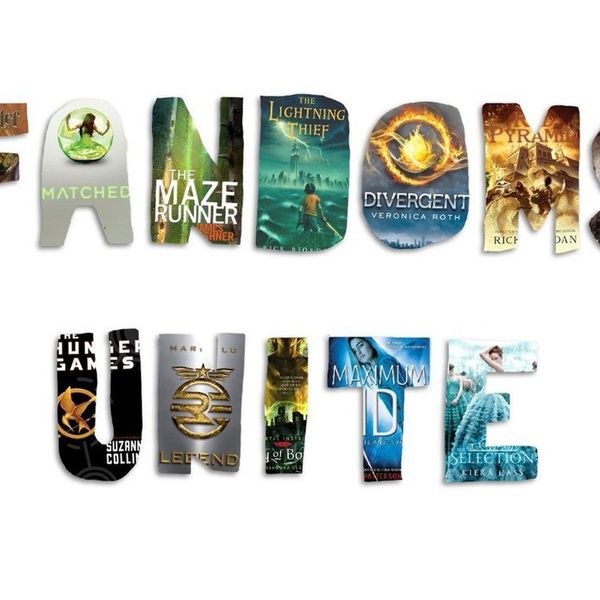
The advent of the Internet changed a lot of things, and one of those things was the way a fan approaches his or her favorite work, whether it be book, movie, or game. Although fanfiction and fanart have deep reservoirs of history (I’m looking at you, Jesus fandom, sports fandom), it wasn’t until the World Wide Web broke into all our houses and raided our fridges that fandoms themselves, not solely the affecting work, became real, influential things both to cultural climate and the individual experience.
Along the bumpy ride of too-many-fandoms, I’ve noticed trends and developed a small theory behind which works we choose to rally behind, and which are simply nice to have experienced and put away. The key seems to be the characters, not only integrity of the characters, their lifelikeness, the amount of characters, but also the fluidity of world in which they exist. This may seem like a no-brainer, but hear me out.
Many of the biggest fandoms--"Star Wars," "Harry Potter," "Naruto," etc.--have huge casts, with each character being a developed and self-identifying entity, influential to the story but not tied down by it. The characters and worlds/settings in these instances exist on their own, not solely to further the plot. There’s freedom. Freedom in a story separates fan and fandom, separates “that was a nice book” and “everyone in that book is my friend and I love them.” This can be applied to sports too: tons of teams and players (“characters”) to go absolutely crazy over and buy all their merchandise and sit in a blistering-hot stadium for day after day, which exist in a fluid world where anything could happen--injury, retirement, trading, etc.
On the opposite end, there’s single narrative, single-use stories which do have fans, lots of dedicated fans, but the difference I feel is in what the fans are attached to and how exactly they express their attachment. An example is the John Green fandom, which encompasses all his books and is mostly made of reacting to the books/movies, typographed quotes and some fanart. I love these fandoms; they’re nice and easy to get into, but they have a very different feeling to, say, drowning in "Sherlock" fanfiction and not knowing where to start on the list of "Pokemon" Special ships. There’s no fighting over ships or headcanons or AUs because all the relationships and characters are packaged up nice and neat, without any freedom.
And that’s what I think fandom mentality is comprised of, expressing freedom using characters with which you identify in a world that you think is hecka rad. So the more tools you have to work with, the more characters, the crazier and bigger and better your fandom can be!