

We want to be our own person. We prefer not to fall into familiar traps, familiar fashions, familiar ideas. We strive to be unique, ourselves, one of a kind, fearless, the type of person we read about, tell our kids about, and spend our latter years thinking about.
Paradoxically, we also are totally comfortable placing ourselves in familiar boxes, classified by familiar labels, usually without much thought. Democrat, Republican. Conservative, Liberal. Black, White. Rich, Poor. As if these are just words, just convenience, just another bumper sticker.
We are in the midst of a showdown over two of these labels. Another infamous pair that deserve equal place among those already mentioned. “Pro-Life” and “Pro-Choice.” Their resurgence over the past few months can be observed in the questions lobbed on debate stages, the accusations hurled in representative chambers, and the epithets thrown at sidewalk demonstrations.
Pro-Life and Pro-Choice seem artless enough, the kind of words that one passes over in the course of a sentence with hardly a second thought. Their popular meanings have been engrained in our popular-oriented minds. Everyone knows what they mean.
But is this really true? Or, are these phrases, and many of the phrases that go along with culture today, a way to conveniently orient ourselves without having to think too much about our thoughts? A way for us to escape scrutiny of our personal beliefs and habits?
To be Pro-Life is to mean that one is against abortion. It derives from the idea that life begins at conception, that to meddle with it after this point is nothing short of murder, that murder is illegal in the United States, and therefore should not be tolerated. This makes sense in concept. My only question is, why limit our humanity and benevolence to the first nine months?
We take a child’s life as sacred, proclaiming that all children have a right to live. The life of the unborn is portrayed as something that must be protected from the evils of our modern society without equivocation. The devotion to this cause is swayed neither by the perils of a foster care system, the potential destructiveness of a self-described unfit parent, nor even the harsh and brutal environment that may become home. None of these surmount that unwavering belief that nothing could be worse than taking a life.
Yet, it seems this dedication and commitment to life runs out of steam rather quickly, and that those who once were warriors become naysayers, cynics, and individualists.
Why, for instance, should the life of an unborn baby or a baby of only a few months be any more sacred than the life of a 204 month old baby, fighting for racial equality on the streets of America’s biggest cities?
Should importance or significance of a 240 month old be determined by what country she is born in? If we find this baby on our streets, should we send her back to where she came from? Or should we accept that she is merely trying to replicate the journey of many of our ancestors, a journey made more difficult as we forget our identity as a nation?
If, at 264 months, a baby is working two jobs to make his way through college, should we look the other way as he sinks deeper and deeper into debt, all while trying to do what society has told him he should in order to succeed? Should we ignore that babies even younger than this are unable to even fathom attending college, that their zip codes determined their future even before they were a thought?
If a baby can’t find work at 300 months after doing nearly everything right, is she just lazy? Are the structural unfairness she faces her own problem or is she a victim of a rigged system?
360 months can be a tough time for any baby. If he gets sick but can’t afford the medical treatment he needs on his own, should he be left to his own devices? Does it make any sort of difference that he is a citizen of the wealthiest country that has ever graced the earth?
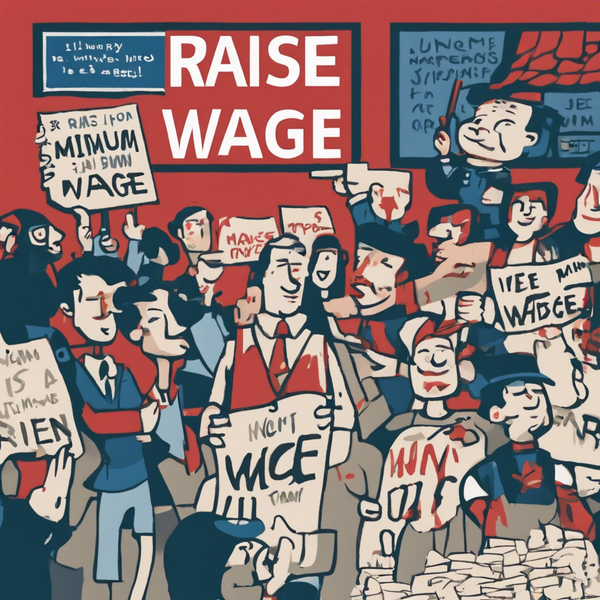
Is there a problem with the fact that in the 1950’s and 1960’s, the minimum wage was enough to support a baby of 432 months and her family, but now leaves that same baby with a gap in her budget every month?
Should two babies, both 552 months young, have their pay distinguished not by their experience, qualifications, or ability, but by their gender?
Is it fair that a baby is finally allowed to marry at 624 months after being treated as a second class citizen for decades? Regardless of legality, is it moral that this child should continue to go through discrimination for who he happens to love?
There is a reason that one calls himself “Pro-Life” and not “Anti-Abortion.” For some, it may just be a political moniker, an adoption of a term that never really required much thought or reflection. But, for those that are serious in their commitment to life in all forms, there is a certain responsibility to the phrase. It involves recognizing that life is more than just a birth, more than just an existence, more than age, gender, race, ethnicity, sexual orientation, or class. A commitment to upholding a life should include a commitment to making it one worth living. While this may never be assured, regardless of all the policies, programs, and attitude changes we embrace, at the very least, we all deserve a fighting chance.