Here is the second part of my picks for the best films of 2015. For the 20 to 11 go here. (Note to editors, is there a way to embed that link over here please) Once again, this list feels as arbitrary as any other list. Tomorrow could bring a whole new slew of films. Here are some of the films that were close to making the list for the Best Films of 2015:
"Mommy", "Eden", "Spotlight", "When Marnie Was There", "Magic Mike XXL", "Slow West", "Theeb", "Anomalisa".
On a different day, those films could have made it. But, here are the rest of the best films of 2015 starting with:
10. "Brooklyn"
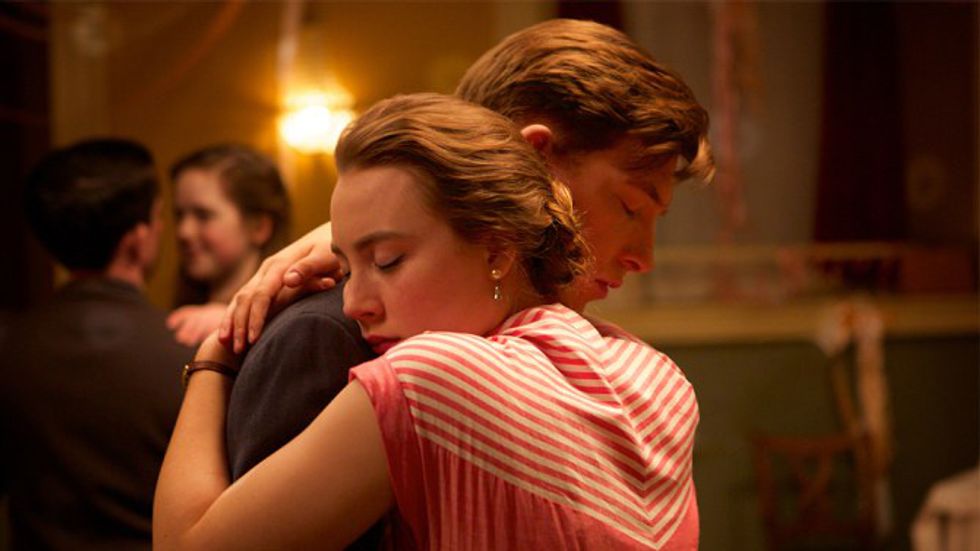
With all the talk about immigration and migrants in 2015, it's nice for a film to look back on immigration in the past. “Brooklyn” is old-fashioned filmmaking at its best. Breezy in style and incredibly watchable, yet wrought with emotions in a way that never panders to the audience. What the movie does best is really show the shortcomings of most Hollywood films nowadays. The main character, played by Saoirse Ronan, struggles with a series of little choices which culminate into big decisions, and the movie actively makes you aware of the difficulty of the decisions. But, she is never dumb or irrational or rash. She is deliberate in making said choices, and it is surprising how refreshing that character felt in the current state of cinema.
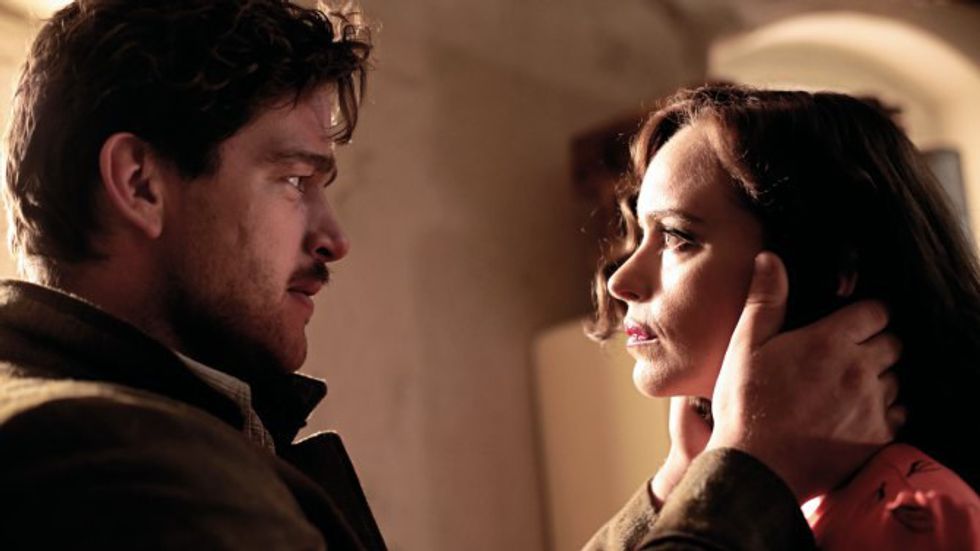
9. "Phoenix"
8. "Amy"
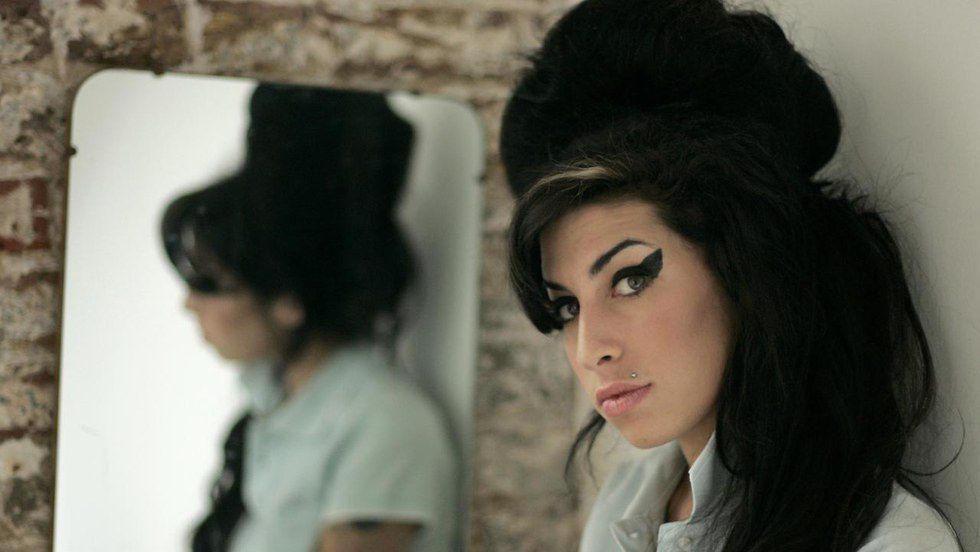
“If only that event happened a little differently." That will the common phrase that one will utter to oneself as the documentary “Amy” progresses. This film, by Asif Kapadia, is an intimate portrait of the young singer-songwriter, Amy Winehouse, whose life was cut tragically short because of her battles with her demons. Told through archival and home footage, there are never any talking heads shown in this film; they are only depicted through voice. The juxtaposition of the immediacy of the footage that is shown and the hindsight of the voices retelling her story elicits a feeling of sadness and melancholy. Things could have, at any point, been done differently and maybe she would have lived. That sentiment reverberates in the timber of the interviewees' voices. Yet, although death haunts the film, Amy Winehouse's liveliness comes through in her performance. The music forces you to feel alive, serving as a testament to the talent that Amy embodied.
7. "James White"
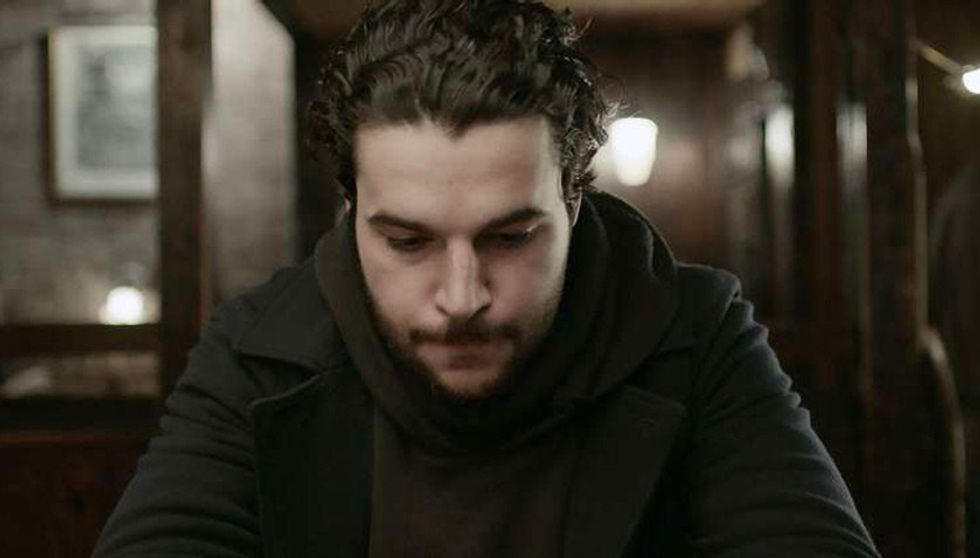
Movies about cancer are hard to watch, but a lot of the time, it isn't because of its subject matter. There is a deep level of emotional exploitation that is connected to the cancer narrative, and it's often beaten to death by a film in order to induce a cathartic cry. Although many times, it just feels forced. The most impressive part about Jason Mond’s debut feature, “James White,” is how he is able to escape that aggressive feeling of exploitation in this film heavily influenced by his own relationship with his mother. The camera is always focused on the eponymous James White, who is an aspiring writer in his 20s but is lost in life, filled with anger and self-pity. His self-absorption forces the camera to remain only on his face for the majority of the film, as his narcissism becomes another word for destruction. The only time the camera focuses on anyone else is when he cares for his mother suffering from Stage IV lung cancer. This carefully crafted detail is discomforting at first, but beautifully explores the complexity of tragedy.
6. "The End of the Tour"
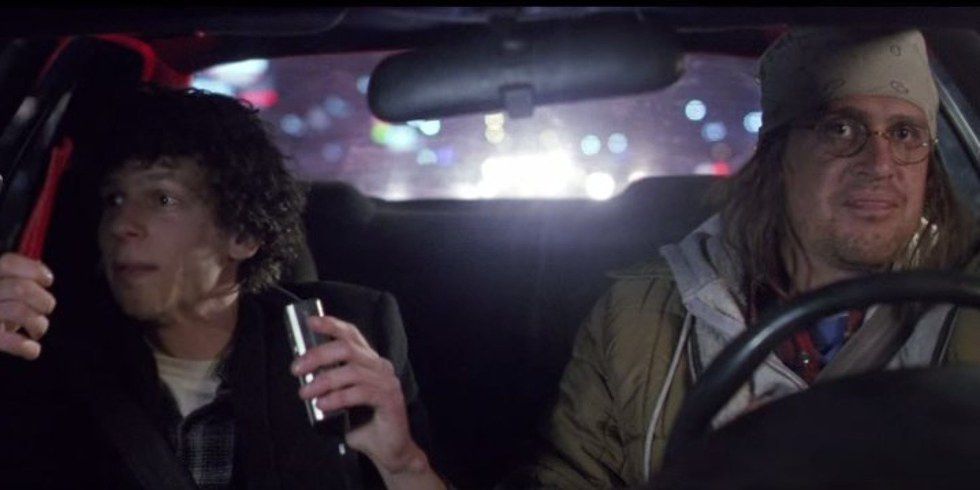
I personally love movies in which the crux is two people talking and musing about their positions in life. Thus, it was no doubt that “End of the Tour” was right up my alley. Based on transcripts of an interview between famed, and now mythologized, novelist David Foster Wallace and Rolling Stones journalist, David Lipsky, “The End of the Tour” is a poignant observation on human behavior. In order to achieve this, director James Ponsoldt needs the film to be anchored by two strong performances. Luckily, Jesse Eisenberg as Lipsky and Jason Segal as Wallace are both able to provide the truth in the undertones behind every word and gestures within their characters. Some have criticized Ponsoldt for canonizing the genius of Wallace as a misunderstood genius who did not fit his time, but this portrait is much more nuanced than that. He's a real asshole in this movie, though it's never explicitly said, only conveyed through simple looks and actions. By the end of the film, all I wanted was for the conversation to continue.
5. "A Pigeon Sat on a Park Bench Reflecting on Existence"
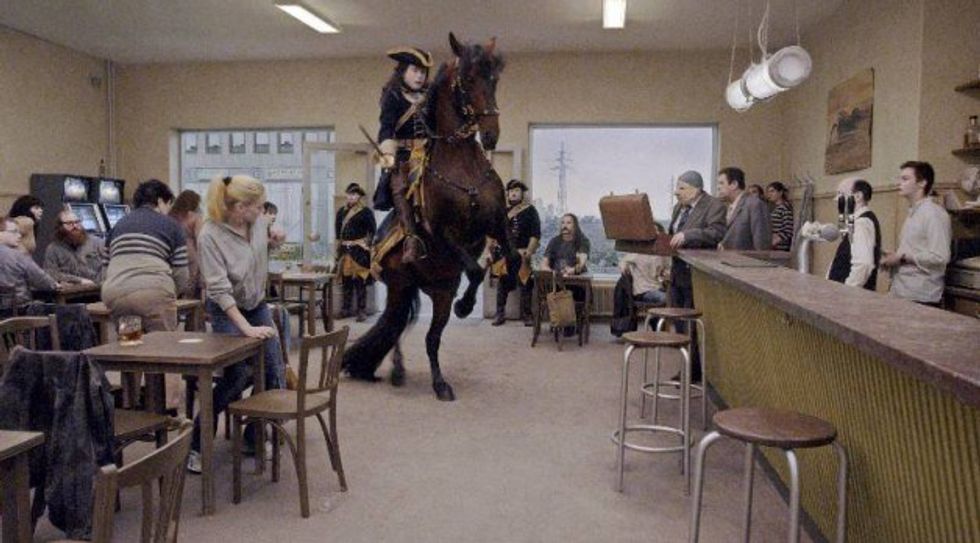
Swedish film director, Roy Andersson is an idiosyncratic filmmaker. His trilogy of films, which he has dubbed, “The Living Trilogy," is a testament to that. But, his particular brand of humor and filmmaking is an exciting one, despite how static his films actually are. The final film of "The Living Trilogy," “A Pigeon Sat on a Park Bench Reflecting on Existence” is a series of vignettes surrounding a particular theme — this one being death. Each vignette is a static shot, almost as if Andersson is constructing a painting, forcing the viewer to be attuned to what he has allowed onto the frame. The deliberate nature of action also allows for the viewer to navigate around the frame in order to notice little peculiarities within each scene. Each framing contains so much information that is waiting to be drawn out and with each discovery, the film becomes more enthralling and funny. One highlight involves a prince, his soldiers and an anachronistic bar. I’ll leave it at that.
4. "Mistress America"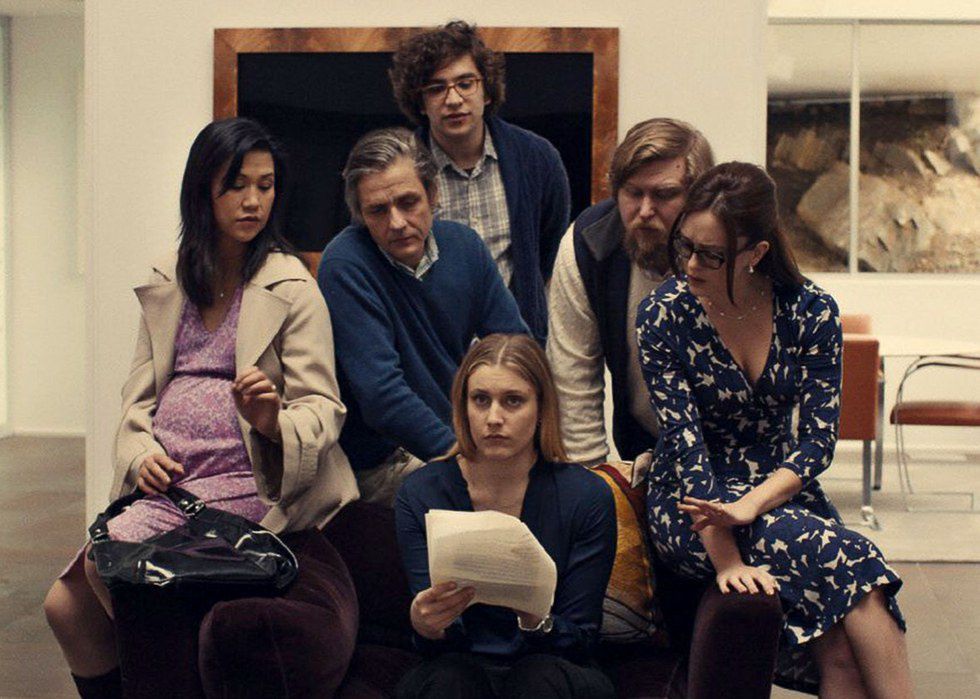
Quentin Tarantino has called Noah Baumbach, “The Paul Mazursky of our generation.” There is some merit to that point, as Baumbach has consistently made quietly comedic films dealing with the navigation of life in a modern age. His muse in recent years has been Greta Gerwig, whose flair and spontaneity has given Baumbach’s film a slight jolt in energy. “Mistress America” is their second collaboration as writers, their first being the 2013 film, “Frances Ha," and is the best comedy in a long time. One sequence in particular is a perfect blend of Luis Bunuel’s comedy of manners and pure screwball comedy. The choreography required in perfecting the timing of dialogue and movement is the most exciting thing I saw in film all year, even surpassing big budgeted action scenes.
3. "Junun"
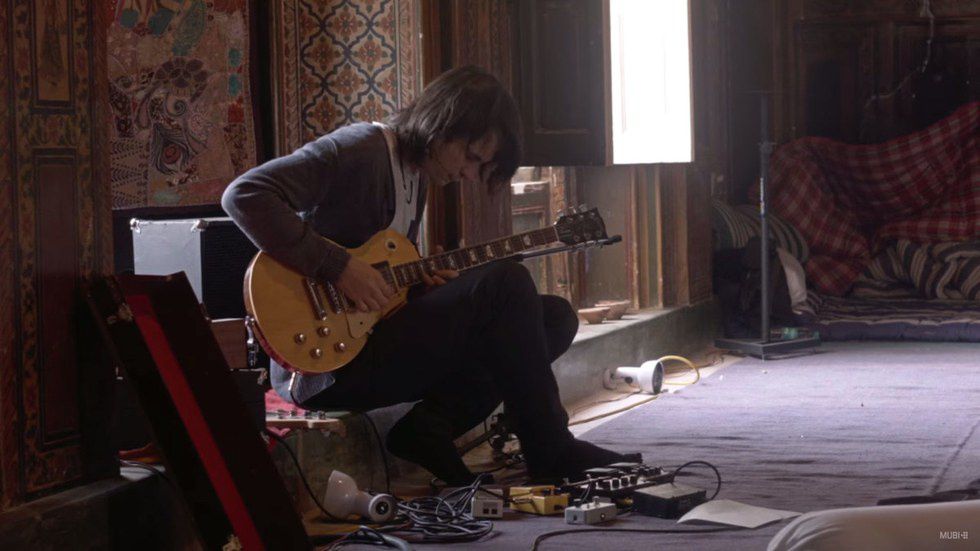
On Oct. 8, 2015, film lovers were given a surprise treat as a Paul Thomas Anderson film suddenly appeared on the online streaming service “Mubi,” coinciding with the film’s premiere at the New York Film Festival. “Junun” showcases Anderson’s virtuosic filmmaking, spending its 54 minutes of running time documenting the making of an album between Israeli composer Shye Ben Tzur, Jonny Greenwood of Radiohead and the Indian ensemble, the Rajasthan Express. The film is pure joy of making music with no greater aspiration than to show how the collaboration of art washes away any cultural differences people have with one another. Anderson employs a method in which the camera constantly moves and swooshes between the musicians, creating a sense of total immersion of the senses, both auditory and visual. On top of that, the music created is absolutely wonderful.
2. "The Look of Silence"
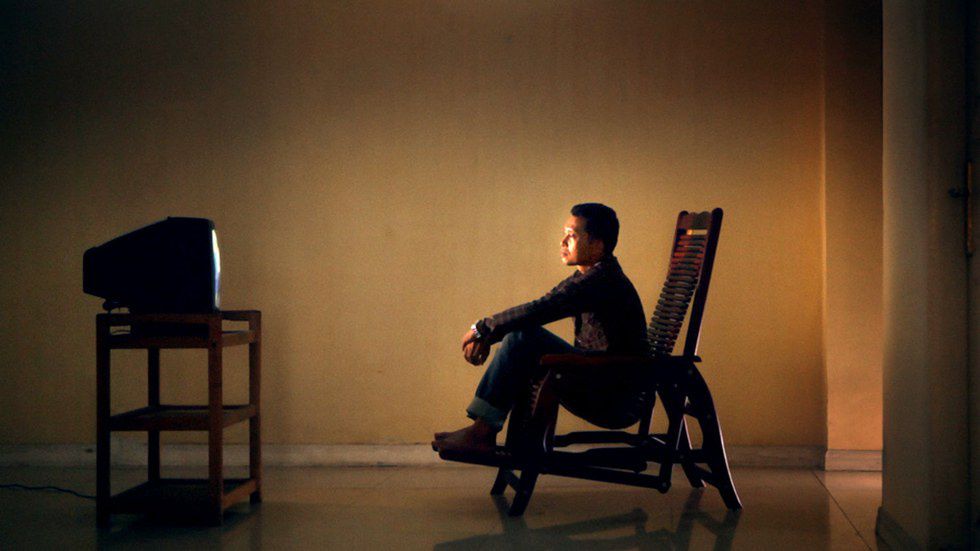
From 1965-66, the Indonesian government committed mass genocide against their own people who were suspected communists. The government that committed such atrocities still holds power. “The Look of Silence” is Joshua Oppenheimer’s companion documentary to his 2013 film, “The Act of Killing," and it is just as harrowing and thought-provoking. While the first film took the perspective of the killers, this one follows the brother of a victim who confronts the very people who killed his brother. These two films are a documentation of evil, of how humans are able to live so indifferently to atrocities committed against other human beings. In that are two of the best documentaries of all time.
1. "World of Tomorrow"
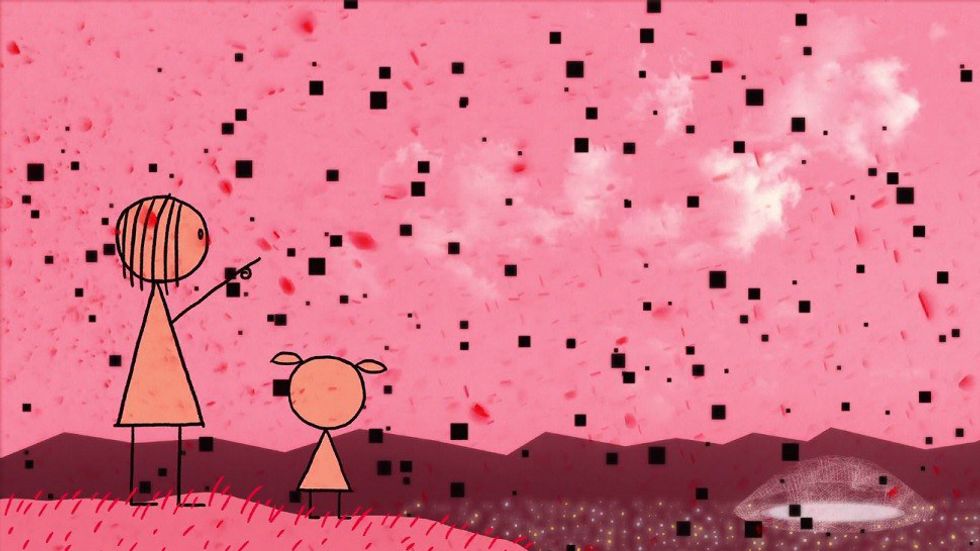
At a sparse 17 minutes, Don Hertzfeldt packs more emotional punches, existential musings and flat out comedy, in his animated film “World of Tomorrow" than a film six times its length. Hertzfeldt uses the simplicity of his animation in order to emphasize the themes of modern technology, love, and human mortality. And all this coming from an interaction between a little girl named Emily and her clone from 200 years in the future. “World of Tomorrow” represents the possibilities offered by the film medium, and layered visual storytelling that warrants repeat viewing. It is the perfect film to represent films for 2015.
You can also read my take on the worst films of 2015. (Note to Editors: please embed the link here, thanks)