
When summer started, I set a goal to read one book every two weeks just to keep my mind active even while relaxing. In total, it mostly worked out. The first month went right along and I finished three books and was ahead of my self-imposed schedule. I thought since I was ahead of schedule that I could take a week or so to not stick so closely to my goal. That week turned into two, then three, before I realized I was now behind.
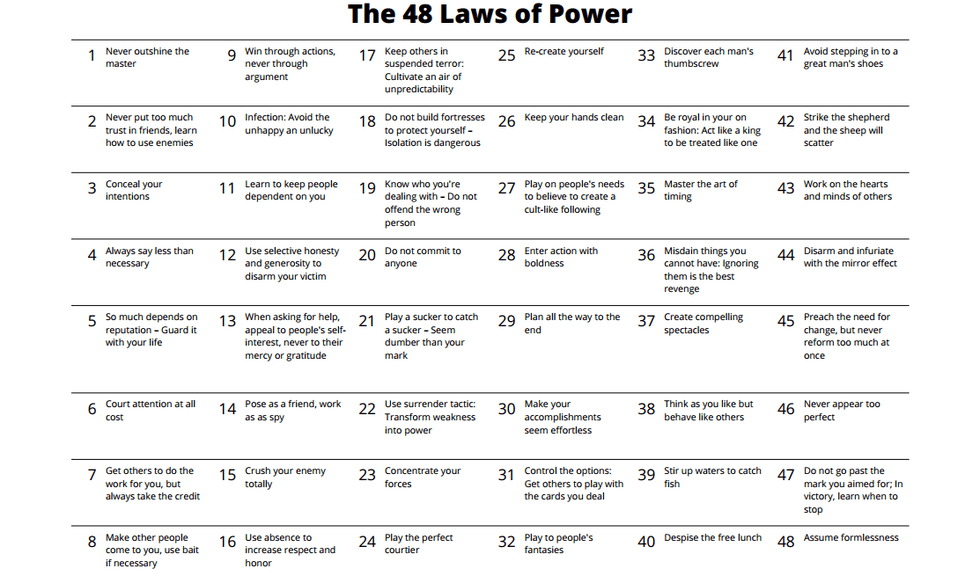
The last month had me finish a couple more books, including one that I had started and then not kept up with. That book was the best book I read this summer. It’s called "The 48 Laws of Power." I was drawn to this book because I was on a kick of reading some "conventional wisdom" distilled through history lessons since I enjoy reading history. I had picked up Marcus Aurelius' "Meditations" before I started on "Laws" but only got about halfway through that before concluding it was quite dense in the lessons it was teaching. I wouldn’t be able to blow through the contents like I preferred with other books. I decided to put "Meditations" down but still stay in the same realm of what I was reading. "The 48 Laws of Power" was a book I received for Christmas, and with "Meditations" on hold, it was the perfect book to fill my reading void.
The book taught lessons of how to gain, protect and watch power as it framed each law in a different historical context. I was able to read little slices of history from Napoleon to various kings and queens of England, to Machiavelli and beyond. It didn’t talk much about modern power struggles and how our leaders navigate them, but I found the trip through the ancient lessons intriguing. Even after reading through all of the Laws, I want to go back through my favorite stories and read more on them.
People tend to overlook history when in fact we should pay more attention to it. It was amazing to see how one ruler used one Law to his or her success and how another misused the Law or even applied it to the wrong situation and received a much different outcome.
This book also put a lot of social interactions into a new perspective for me. I can observe the people we consider powerful and think about how they rose to their positions. Maybe they are naturally adept at playing power games and gaining subtle advantages over others, or maybe it’s something they have worked to perfection. Regardless, there are plenty of interactions to observe in the context of power games and think on what they mean.
The book is recommended for those who want to achieve, watch or guard against power, but I would go a step further and make an additional recommendation: to people who appreciate history and want a new way of thinking about social dynamics.