
The 2016 Presidential race is in full swing, and it has already proven to be an eventful one. If you watched the GOP debate last Thursday, you know that internal conflict and rivalries between certain candidates (I’m looking at you, Rand Paul and Chris Christie) as well as Donald Trump’s determination to create scandal has left the right wing without a clear front-runner. The Democrats, on the other hand, will almost undoubtedly vote for Hillary Clinton to win the nomination in the primary, that is if the “E-Mail Gate” scandal doesn’t destroy her before we even get there.
All emails aside, the problem with Hillary Clinton is that she is as much a slave to corporate donors and big money as any Republican candidate. Although unlimited campaign donations are a form of free speech protected by the United States Constitution in the Citizens United v. Federal Elections Commission decision, many people have a problem with the involvement of “big money” in elections. Historically, the candidates who spent the most money on their campaigns win the majority of presidential or congressional races. This proposes a problem for low-income or middle-class individuals and people who are unable to donate thousands of dollars at a time to the candidates they support - and it also creates a problem for those candidates, since the bulk of their support comes from the average- or below average-income individual. How can this pattern, which attacks the principles of democracy, be combated? The answer lies in Senator and Presidential Candidate Bernie Sanders’s (I-VT) campaign to get big money out of politics and reclaim the democratic process from the oligarchy it has become.
Sanders, the self-proclaimed independent socialist, entered the race quietly in April, but has since fought his way to the front of the headlines with his new-wave ideas. His entire campaign is based on the idea that politics should be run by those with the best ideas, rather than the richest, and not only does he talk the talk, he’s proven that he can walk the walk. Sanders has refused to fundraise through the establishment of a Super PAC, which is the traditional form of fundraising for presidential candidates, and a shocking 99 percent of his donations have been under $250. Furthermore, he has raised over $15 million so far, more than any Republican candidate.
Will Bernie Sanders’s appeal to the average citizen be enough to win him the DNC nomination? Sadly, probably not. Despite the fact that he has been able to raise an impressive amount of money and stay true to his message of letting the public reclaim elections, Hillary Clinton has still been able to raise over three times as much money in her first quarter of the campaign, which indicates a high probability of her winning the nomination. In the latest polls, she also has a 36% higher support rate than Sanders. This does not diminish, however, the fact that Sanders has introduced a new conversation around presidential elections that inspires and engages the average United States citizen.
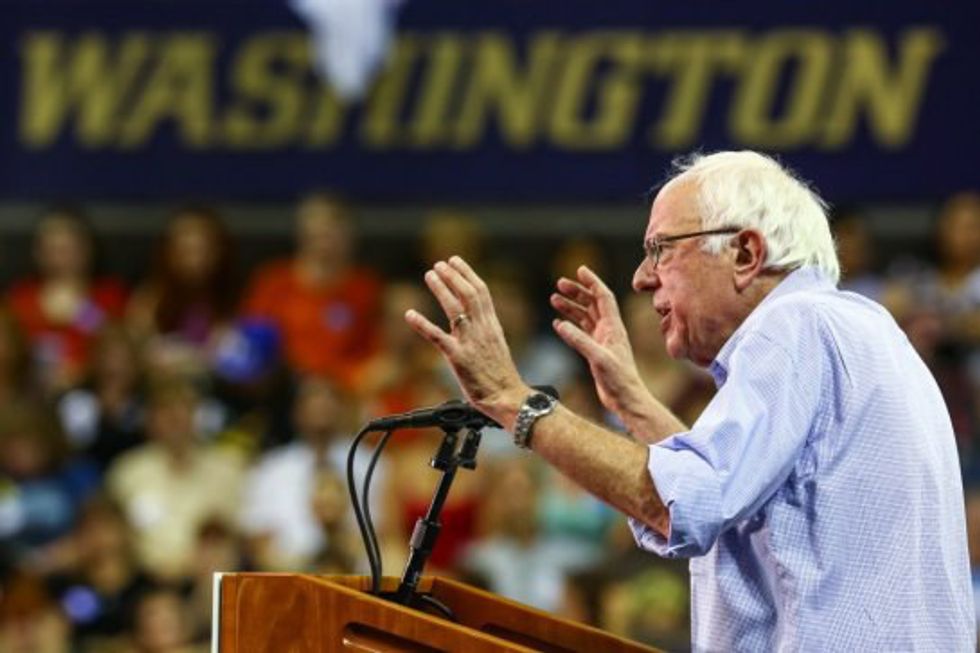
At his rally at the University of Washington on the eighth of August, Sanders said that he would like to see more candidates run “because they have good ideas, not because they have a lot of money.” My hope is that in the future, potential candidates are inspired to run honest races, inspired by this man who has truly invigorated the public and reclaimed the meaning of democracy.