


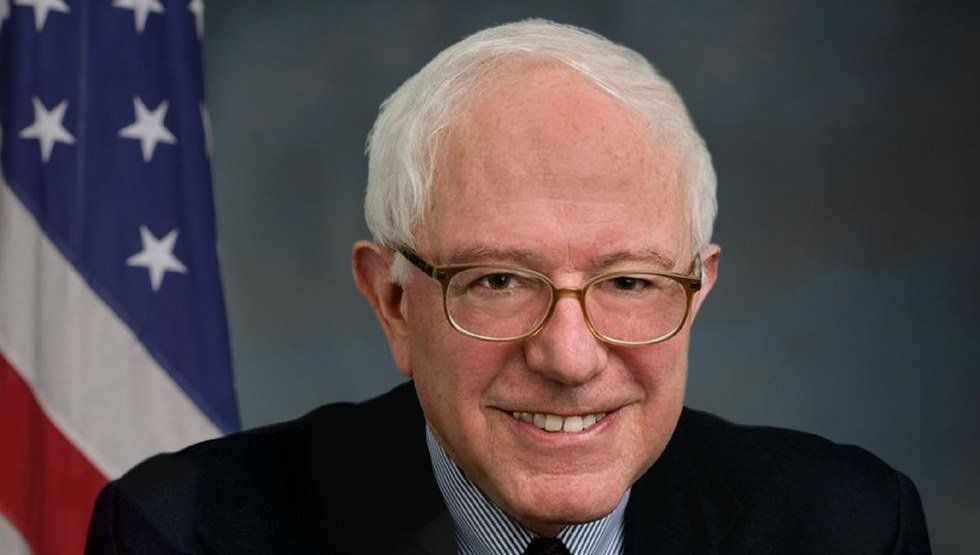
There's a new sensation sweeping the country. Many people are starting to feel it. Maybe you are too. It's...Bernie Sanders! #FEELTHEBERN
The 73-year-old Vermont senator is running for President and is making great strides. While front - runner Hillary Clinton’s poll numbers continue to plummet, Sanders is rising fast and gaining by appealing to millennials, college students, and the far left base of the Democratic Party. By attacking the rich and powerful and promising a utopia of basic rights fulfilled, Sanders is portraying himself as a man of the people and a champion for a common man. His beliefs would be funny if they weren’t so pathetic and inaccurate.
Sander’s is spreading his message of democratic socialism, the less radical version of Marxism. According to economist Karl Polanyi, socialism is “the tendency inherent in an industrial civilization to transcend the self-regulating market by consciously subordinating it to a democratic society.” At the heart of this ideology, the market would be subject to the whims of the people. In exchange for certain rights and necessities of society, such as free healthcare, we lose other rights, such as absolute properties rights.
But, what is a “right”? According to the Stanford Encyclopedia of Philosophy, rights are “the fundamental normative rules about what is allowed of people or owed to people, according to some legal system, social convention, or ethical theory.” Rights come in many forms, but two distinction are positive rights and negative rights. Positive rights are entitlements and rights to do something, such as the right to vote. Negative rights are protections from certain actions, such as the right to not self-incriminate yourself in a court of law.
There are people who believe that certain commodities, such as health care and education, are rights and should be free. The problem with that is, health care and education don’t happen naturally. In order to provide said right, you must compel someone, possibly by force, to be able to provide a right. You must force a professor to teach you or a doctor to heal you. They may not want to or be able to take care of you. But by not taking care of you, your positive “rights” have just been violated. This is where the paradox lies: how can you guarantee a positive right while infringing on a person’s negative right?
Now, theoretically, socialism would be wonderful. In reality, however, this could never work. We would constantly be violating people’s rights in order to fulfill others. Now, education and health care may be a minor thing, but as time goes on, we may develop other ideas of what is a “right”. Will people have the “right” to a car? Would we have a right to “access to internet”? Where do we draw the line to what is and isn’t a right?
After that, a new problem arises: Who will pay for all of these rights? How much money would it take to satisfy all of these new rights? We can try and raise taxes to meet these rights. But how long could that possibly last before people take their money somewhere else? Then we may not have the money to continue on that path.
It’s cute to see this little old man pander to the masses with free stuff. But in an imperfect world, a “utopia” like this can never last.

















