
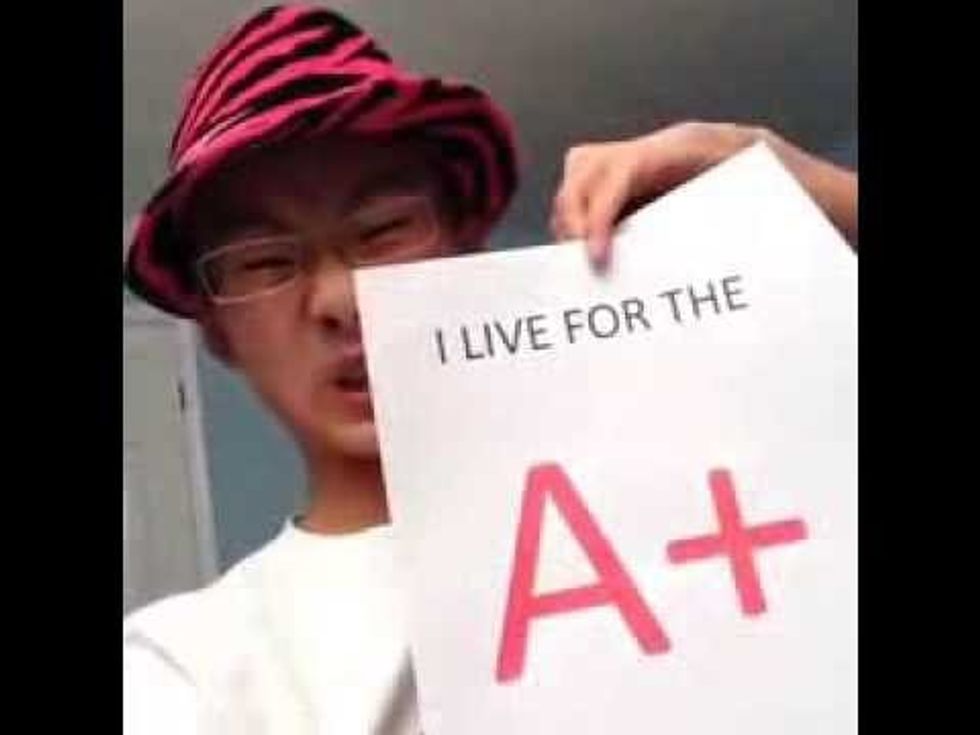
Think back to your elementary school days. Recess, holiday parties, bringing cupcakes in on your birthday, and math that didn’t have any letters in it. You know, the good old days. Remember the “smart” kids? No, not the kid whose dad did his entire science fair project about using a potato to light up a light bulb (back when they were actually bulbs and not the swirly things of today). I’m talking about the kids who picked up long division and order of operations the fastest or could read at a 7th grade level in 3rd grade. Remember those kids? I was one of them and it ruined my life.
There’s so many stories scattering the internet of child prodigies with inflated egos who spend their whole childhood being amazing at something then they max out as a teen and everyone else catches up and suddenly they’re just average. Piano playing kindergarteners who, by the time they get to college, aren’t any better than the kids who practiced day in and day out for their whole lives. Child scientists who extract DNA from a strawberry in grade school but max out at 16 and go to state universities with us “average” students. The elementary “smart” kids who excel up to junior year then get smashed by AP exams, extracurriculars, and their first job and turn out to not be any smarter than the rest of the “honors kids” by high school graduation. In case you couldn’t guess, that last kid was me.
For my whole education career I was praised for how smart I was because I memorized things quickly and could spit it back out “in my own words” even though I was saying the exact same thing. And then one day I wasn’t so smart anymore. College started and I realized that I was on the same level as everyone around me. I wasn’t “the smart one” like I’d been in my friend group back home. I was just another college student trying to stay awake through my 9AM and write my papers more than eight hours before they were due. My first semester at college I realized I was *gasp* average. Cue total identity crisis.
I’m not saying there’s anything wrong with being average. In fact, I’ve actually learned to enjoy it. Being on par with the people around me takes a lot of the pressure off. It doesn’t mean I stopped trying to succeed. The problem was that for 13 years I was “the smart kid.” That become my identity. I was the smart friend, the smart sibling, the person in class that other people asked for help. When I wasn’t that person anymore I didn’t know who I was. I think that’s the problem with how kids are raised these days. I was the smart kid. Some of my friends were art kids. Others were sports kids. I had one friend who was never anything but the pretty girl. Another who didn’t know how to be anything but funny. Why are we raising kids to think they can only be one thing? What happens when the art kid breaks his hand or the sports kid faces a career ending injury at 19? Who are they?
Walt Whitman once said, “Do I contradict myself? Very well, then I contradict myself, I am large, I contain multitudes.” Don’t be one thing. Be everything. If you’re smart then by all means study and read and learn everything you can. But also find music you love and understand the basics of football and practice painting, just for fun on a rainy day. Maybe being the smart kid didn’t actually ruin my life, but it did make me learn to be more than just one aspect of myself. Nobody is just one thing. You contain multitudes.