Let’s be honest, what girl in the on the face of this great green earth actually enjoys having their period every single month from the time they’re around ten to the ripe old age of 50? Not a single one. In fact, the only time I’ve seen a woman rejoice at the arrival of their period is when it only comes as a confirmation that they aren’t pregnant. All in all, periods aren’t fun. Finally, something we can all agree on! Unfortunately, the same can’t be said for the United States and their policy on the tampon tax.
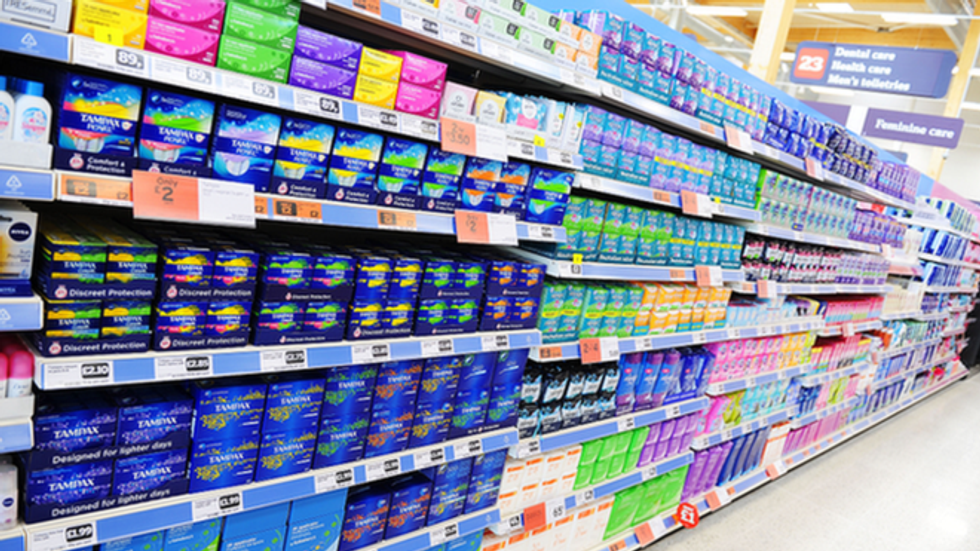
So what exactly is the tampon tax? It’s not what you might think. What the tampon tax refers to is the existing sales tax that feminine products, like tampons, pads and panty-liners, come with, that gets added on when you purchase any product. The tampon tax is not an added tax on feminine products, for the sake that they are feminine products. In fact, in the eyes of the government, feminine products fall under the category of paper-based toiletries, like toilet paper. Sales tax varies by state, and as of 2014 the lowest rates exist in states like Minnesota and Oregon where there is a zero percent tax, and the highest being 9.45 percent in Tennessee. However, most states exempt some items from being taxed because they are “necessities” and the lists vary state to state.
As of right now there are five states who have policies that exempt feminine products from sales tax and they are Minnesota, Pennsylvania, Maryland, Massachusetts, and New Jersey. These states think of feminine hygiene products as “necessities”. There are three states will proposals in place to eliminate the sales tax on these products and they are Ohio, New York, and California.
In California, Assembly Woman and Democrat Cristina Garcia has proposed a bill to end the sales tax on feminine hygiene products, and if the bill passes it would add these products to the list of necessities in place for California. Garcia reported that California makes about twenty million in tax collection from feminine hygiene products alone. Garcia proposed the bill on the first day of California’s legislative season, saying that the tax that remains on feminine hygiene products is just another “gender injustice”.
So if this is a gender injustice against females who are fertile, what could possibly be the male equivalent? Could it be condoms? Most say no way, considering condoms are used for protection for both men and women and center solely around an act that can be controlled, much unlike a woman’s menstrual cycle, which is something no woman can completely control, especially without access to hormonal birth control.
At this point, many people are asking, “if states consider things like food stamps and certain groceries ‘necessities’, and also consider them exempt from taxation, how can something so important to carrying on the everyday life of a woman be taxed, and in some cases depending on the state, taxed heavily?” The same people that find themselves wondering this might be the same people that have signed the petition on Change.org to eradicate taxation on feminine hygiene products. The petition has over 10,000 signatures and you can find it here.