Have We All Become Prey to the Simulation?
I mean would you believe it; Selena Gomez and Scarlett Johansson both fawning over me. Of course they have to do it on my Facebook page where everyone else can see it. But that is okay, after all, they are celebrities! And who would be ashamed of their connection with the rich and famous? No me, that for sure. In fact, I relish the fact that everyone on my Facebook page can witness how popular and desirable I am. The best way for me to feel good about myself is to know that others like me too, and who better to hear it from than those living it up in the lime light?
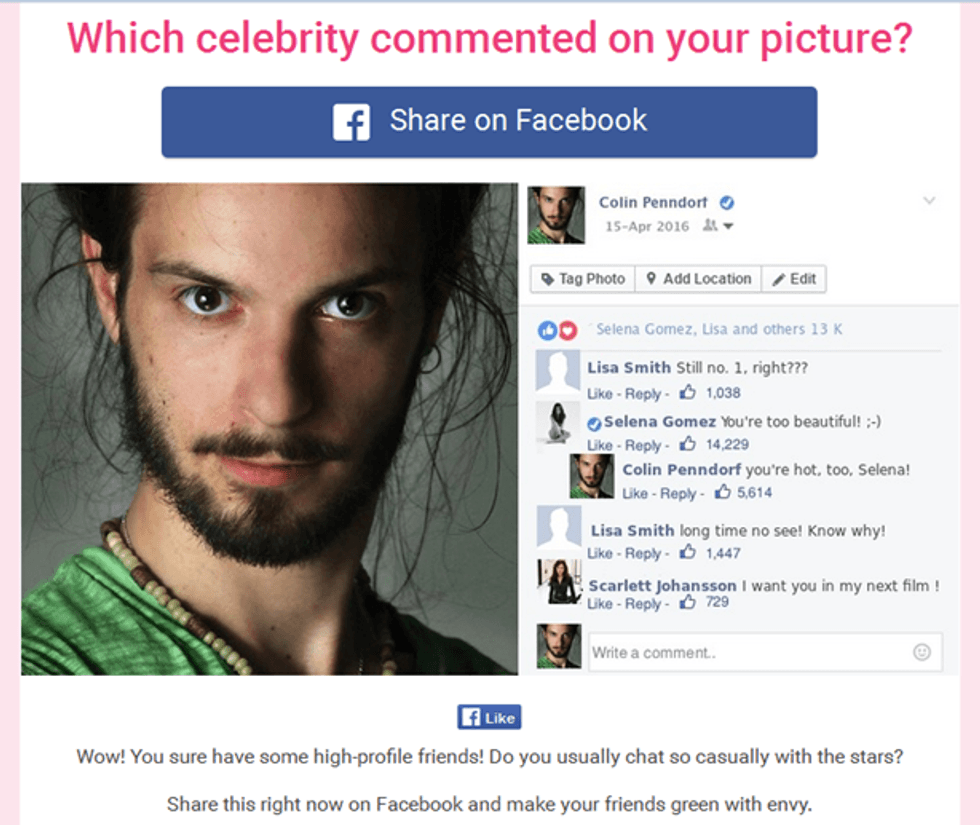
Alright, so I am sure you have guessed (and probably seen it floating around your own Facebook stream) that these “celebrity comments” are computer generated and not real. Through some algorithm, web-content distributor, Pandacat, is able to take your profile picture and inset ‘convincing’ comments from celebrities who say wonderful, ego-building things such as, “You’re too beautiful!” and “I want you in my next film!”
These comments are designed to emit the impression that you are entrenched with greatness and obviously a more important person than anyone originally thought. They represent a desire to be known by simulating friendly and supportive remarks from well-known and respected individuals.
But is this not a strange concept? To post to your own real Facebook page a fake, computer generated imitation of what it would be like if your friends were all famous celebrities. Is this designed to build your ego? To somehow prove that you really are more interesting and popular than everyone thinks because of some falsified comments? Looking at this trend through semiotics and as a postmodern cultural phenomenon, these posts depict a simulation of popularity leading to some unspecified effect for those who consume and repost the quizzes content.
Ferdinand de Saussure, the father of semiotics, reinterpreted language as a collection of elements: The sign (or the referent) the signifier and the signified. In the modern interpretation of language, he finds that these elements are relational, that is, they work alongside other signs found within the symbolic system, yet are constructed by subjective and arbitrary means. Society says that this symbol represents a particular idea, and as the culture progresses, those initial attributions are lost within the deeper character of the word. Because of this, we have taken signs that we have used for years and attribute new significations to them, leading to second-degree order semiotics.
This is important for how a society interprets the constructs of “reality” and fathom any sort of meaning from it. Because signs form the basis of our communications, especially linguistic ones, we attribute meaning to terms, words, and phrases as a social construct designed to help us understand the importance of particular symbolic meanings within linguistic elements. These signs, however, have also been attached to our reality as language remains our basic means of communicating. Because of this, we have layered on signification after signification, and in the realm of the postmodern, this has created a new cultural implication.
Cultural theorist, John Baudrillard, takes us beyond the sole notion of the sign by introducing the Simulacrum, or the Hyperreal. In an attempt to come to a conclusion on the ideas of what constructs ‘reality’, Baudrillard formulates an anecdote based on the idea of a map of the Kingdom. When the kingdom was at its pinnacle, this drawn map perfectly resembled the domain, representing its topography, geography and census materials so perfectly that the map itself becomes the standard reference in envisioning the kingdom. The map has now become a simulation for the physical realm of the perceived kingdom, as the mapped kingdom remains the dominate reference in society to discuss the idea of the realm, while the physical attributes of the real kingdom have changed—leading to a perceived reality but one that is not necessarily based in reality.
His idea of the simulation is simple, “… to simulate is to feign to have what one hasn’t.” However, it is not just the faking that is important, but the fact that one truly experiences the simulation. One example that we all deal with on a regular basis is that of the dream; it feels real, and in reality it is what your mind is experiencing, however the dream is only a simulation of reality, not the ‘real’ itself. The placebo effect is another daily occurrence of simulation, you believe that it is real, and it becomes reality with the belief of the illusion, but the results were only real because the user believed they were, not because the placebo administered actually treated anything. Even any sort of virtual reality is a form of simulation designed to feed you information that becomes real even though it is not happening in ‘reality’.
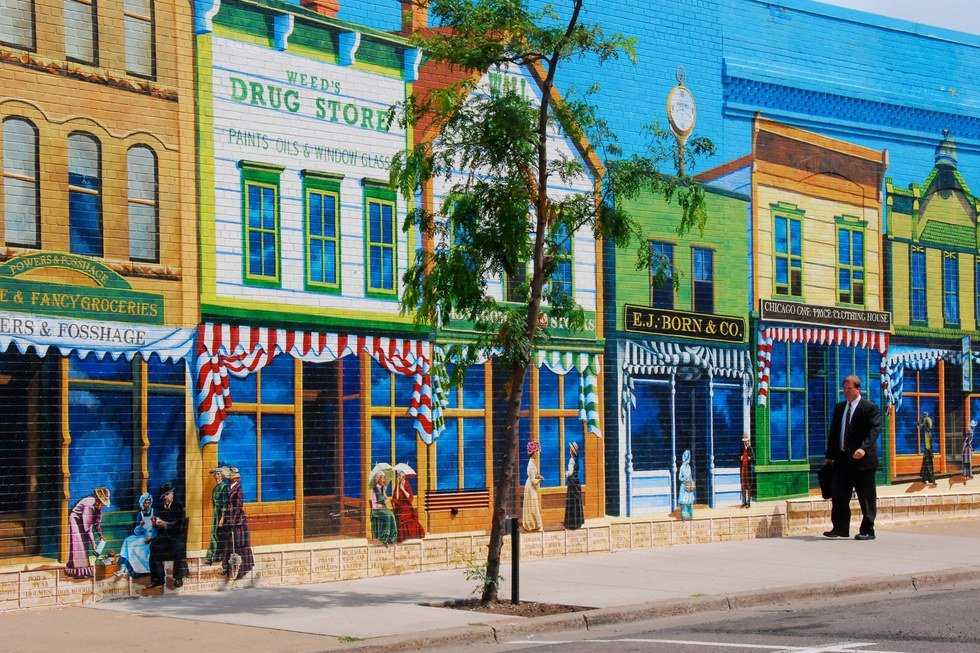
Baudrillard’s concepts are utilized by postmodern cultural theorist, John Storey, to further examine the hyperreal found within acts of simulation. In one work, he talks about the City Arts Workshop in New York City in the 1980s. In order to liven up the perception of the run down town, the council decided that they would commission murals to be painted on the abandoned buildings. The finding was that, “…local residents [ ] agreed to depict images of what the community lacked: grocery store, newsstand, laundromat and record shop,” and as later postmodern cultural theorist, John Story, discovers, this demonstrates the simulation perfectly, for it is “…the substitution of an image for the real thing;” also understood by Saussure as a sign. The murals now gave the appearance that the town had exactly what it did not—a simulation—with a perception designed to give the illusion that it was not a rundown area because the ‘sign’ created by the murals was socially positive.
To bring this all back to my contemporary analogy, this idea of “celebrity comments” posting on one Facebook picture reminds me of the simulation and the hyperreal. By posting this falsely generated image on your Facebook page, what we wish was true, extends the illusion that what one presents could be just as good as the real thing. I am sure that most users take these Facebook quiz sites as a joke, but one cannot help but see the parallels between the Pandacat “celebrity comments” and the idea that if you paint the town with the things it lacks that it will make it a better town. The main point, in the end, is that perception is reality, and as this kind of generated content become more widespread, the simulate aspects found within these posts can only further the expansion of the hyperreal, as we mix signs and further obscure what reality really is.