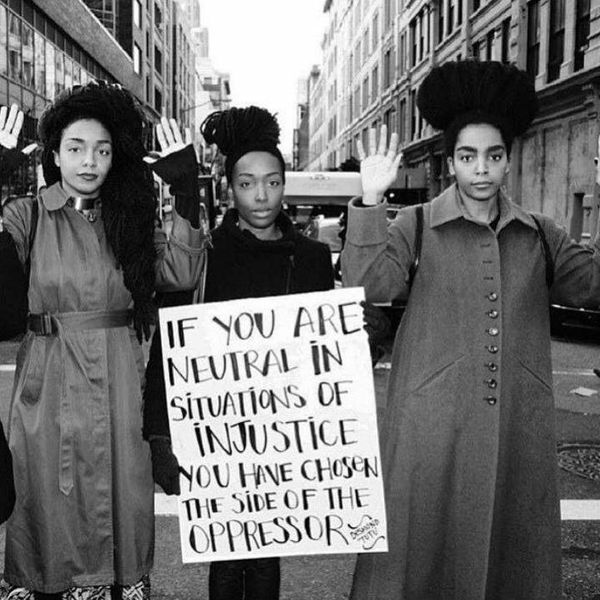


No, I didn’t say, “I think, therefore I am.” I said, “I am, because you are.” The African phrase is a translation of the word “ubuntu,” its elongated version goes along the lines of: My humanity is bound up in yours, for we can only be human together (as summarized by Desmond Tutu). It’s a pretty revolutionary concept to our Americanized, individualistic mind. The idea of diversity being necessary to recognizing that we need one another’s diversity to be funneled into a collaborative method of living in order to achieve optimal livelihood and community isn’t necessarily preached in our society. But perhaps it should be. At any rate, an organization named Ubuntu is achieving great success in having their message be told, and I think it pertinent we all take a listen.
Based in Port Elizabeth, South Africa, the Ubuntu Education Fund (Ubuntu for short) is a non-profit organization that has developed since its commencement in 1999 to provide household, health, educational, and career services to approximately 400,000 individuals of the Port Elizabeth community. The main aim of the organization is to create pathways to direct those born into poverty out of it, such pathways are importantly long-term, and sustainable.
What do we mean when we say sustainable? In sum, Ubuntu strives to make an organization bigger than those who found it in 1999. It wants to enable a community of born and raised South Africans capable of providing the pathway out of poverty without the help of foreign aid. It wants to one day see these mechanisms for pathway building (health, education, resources) as basic human rights, not rewards of privilege. For Ubuntu, diversity does not act as an isolating force, it acts as a community builder. This is what got me, and this is what I think many communities—especially college campuses—can use as a learning model.
So in the wake of a recent scandal related to racial and ethnic diversity on my campus, we have looked to the model of Ubuntu. We want to not only recognize diversity, learn of its implications, and celebrate it, but we also want to embrace it—use it to our advantage. The Ubuntu campus club at Bucknell is hosting a Spotlight on Human Rights event this Tuesday, October 6 in which several school clubs—Gay Straight Alliance, Active Minds, ATHENA Women’s Group, Black Student Union, and Students for a Free Tibet—are putting forth presentations or performances dedicated to diversity in some way. The event follows our collaborating event—the Solidarity March—that is a walk of remembrance for individuals that have had their lives taken or negatively impacted by discrimination associated to diversity.
The event has received mixed reviews. Claims stating that highlighting diversity at a school that has a privileged student body is hypocritical, that it only further divides the divisions already present, and is merely a way in which privileged students can justify their status. I beg to differ. It has also been argued, and I agree, that though we may be a majority of privileged students, that is not a shared quality to every person partaking passionately in the planning efforts and production of the event. In addition, it has been argued that, and I agree, the event shows the worst way to attempt to bridge division in a community is to ignore the division in full. Why not look diversity in the face and say, “I see you, I accept your existence, let’s work from here?”
To those students that reject the event, I feel as though they are a product living in the shadow of the American ideology of individualism, of class structure, of only having witnessed diversity to be necessary for the way in which our society functions. Our society functionality is clearly grounded on the basis of success being achieved in social mobility or maintenance, which requires the existence of a class structure. But in attempts to rid our lives of striving for privilege that inevitably only perpetuates it, I think it necessary to start linking arms instead of stepping on shoulders. It takes embracing diversity to begin that process—a process of which can only be done collectively.
Yes, I am American, and yes, I am privileged. I am also a part of a larger movement to change the typical consequences of these conditions. It’s worth noting that the Ubuntu Education Fund started off in the same exact place. And now look at it; it’s on its way to being a diverse, self-functioning organization, in large part due to its non-American, founding philosophy of Ubuntu. I may be bound to an American stereotype, but I, along with many peers, recognize I can be bound to something larger than that. So I am not because I think, I am because you are. Amongst what, or whom, do you find yourself bounded to?