All life is precious.
Fans of "The Walking Dead" know Morgan Jones as a fearless, skilled yet merciful fighter. Morgan is an embodiment of peace and humanity that we should strive to be. In the apocalypse, Morgan displays compassion and kindness that we should exhibit in our everyday life. Believing that all life is sacred, Morgan does not judge or attack others.
Most people would not be like Morgan in the apocalypse. Some people would be like Rick's group while others would be like the Wolves or the Saviors. This does not necessarily make one group good and another bad. The lines between good and bad are blurred even more in the last season when we see Rick's group start to lose some of its humanity (e.g., killing the Saviors in attempt to prevent an attack by the Saviors). Inhumane actions are often justified by the dehumanization of opponents accompanied by a "kill or be killed" mindset. Killing, even of apparently corrupt people, causes the killer to lose his or her humanity.
Morgan was not always the peaceful warrior we know him as now, but Morgan's struggles make him all the better model for peace. Morgan has witnessed some of the darkest parts of humanity in his mind. He lost his wife, his son, and his sanity. "CLEAR" was his motto for a while, and he killed everything in his path--walker or human. On the other hand, Morgan has also witnessed some of the kindest parts of humanity. During his upheaval, Morgan met a guy named Eastman who gave him "The Art of Peace" book.
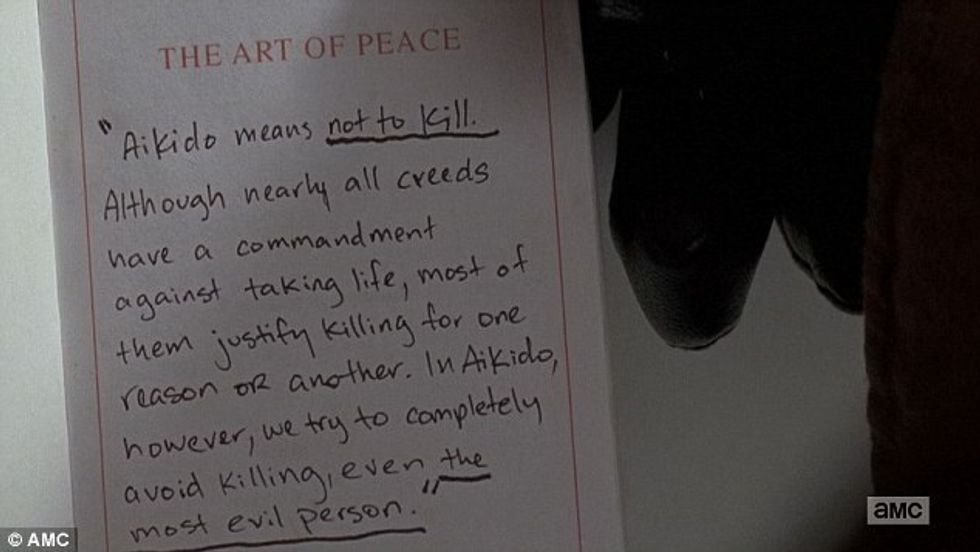
Morgan not only resisted Eastman's compassionate approach but attempted to kill him. Both having lost everything and struggled with malevolence within their minds, Eastman and Morgan bonded. Then, Eastman saved Morgan's life at the cost of his own life. Morgan was responsible for the creation of the walker that killed Eastman, therefore indirectly responsible for Eastman's death. Eastman displayed so much kindness and compassion to Morgan when he felt he did not deserve it, and it was this kindness and compassion that brought Morgan back. Eastman's character lives on, reflected in Morgan.
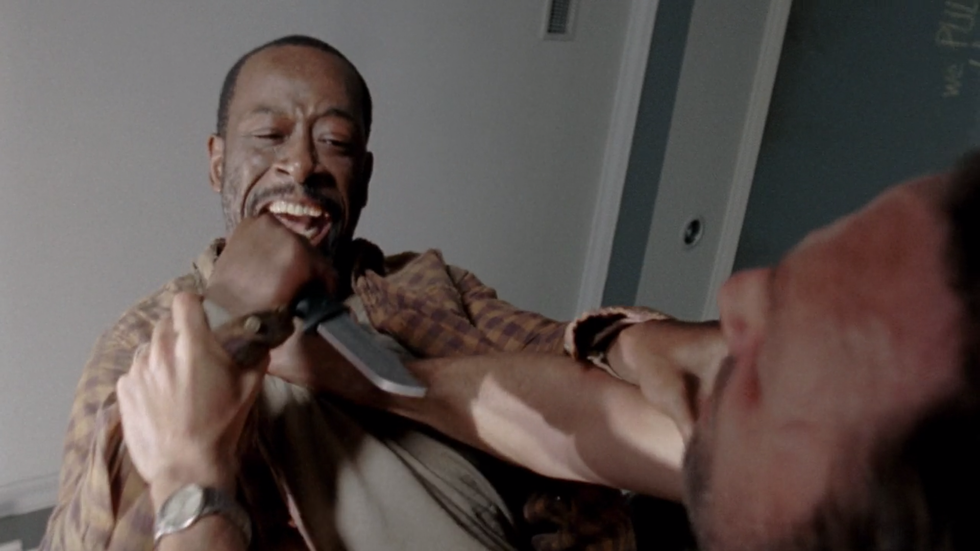
"The Walking Dead: Heads Up (#6.7)" (2015)
Morgan Jones: Why didn't you kill me, Rick, back in King County? Pulled a knife on you. I stabbed you. So why didn't you kill me? Was it 'cause I saved you after the hospital?
Rick Grimes: Cause I knew who you were.
Morgan Jones: Back there I would have killed you as soon as look at you. And I tried. But you, you let me live and then I was there to help Aaron and Daryl. See, if I... If I wasn't there, if they died... maybe those Wolves wouldn't have been able to come back here. I don't know what's right anymore. 'Cause I did want to kill those men. I seen what they did, what they would keep doing. I knew I could end it. But I also know that people can change. 'Cause everyone's sitting here has. All life is precious. And that idea- that idea changed me. It brought me back and keeps my living.
If Morgan had not had a preexisting relationship with Rick, Rick would have killed him in King's County. This idea speaks directly to the essence of Morgan's character. Morgan sees everyone for "who they were" or who they could be. He knows the apocalypse has damaged people, but he still chooses to see the best in people.
Because Morgan came back himself, he believes others can come back as well. Morgan locked up a Wolf who had been part of an attack on the group, and this man ended up saving the doctor who saved Carl. Morgan tells Rick, "It's all a circle. Everything gets a return." It's all a circle. Everything gets a return. If Morgan had not killed the people he encountered before arriving at Eastman's place, Eastman would not have been bitten by the walker. If Rick had killed Carol back at the prison, Carol would not have been able to save the group from Terminus. If Rick's group had not attacked the Saviors, Negan may not have killed part of the group. Everything gets a return.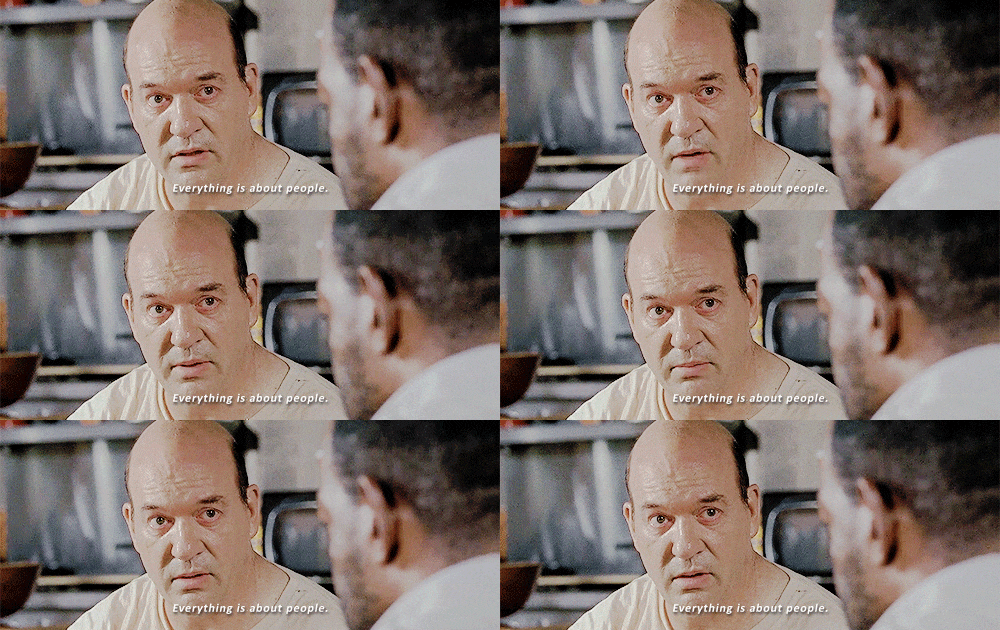
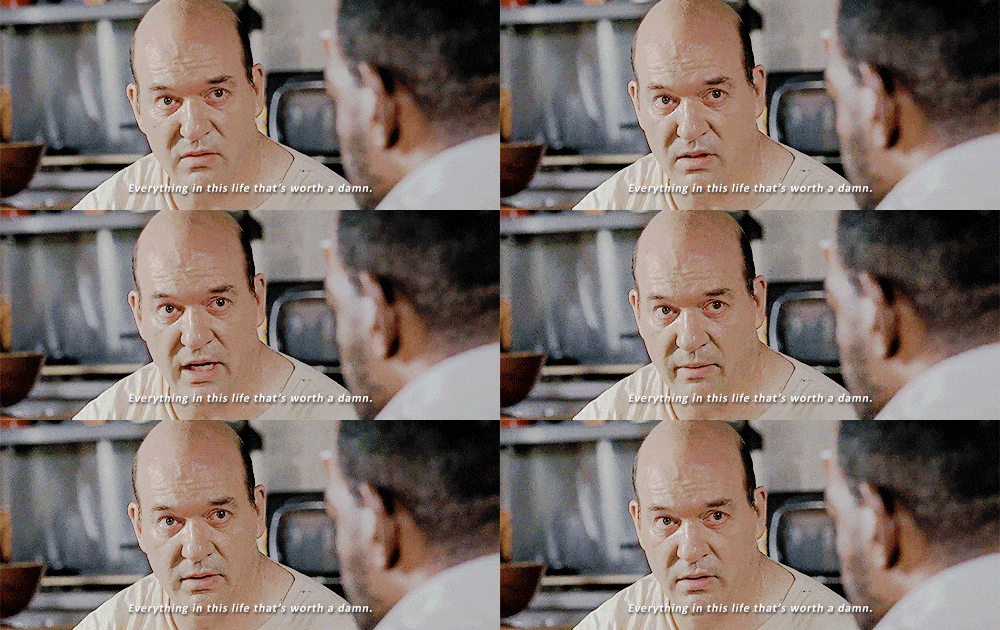
In the last episode of season six, Morgan echoes Eastman's words to Carol, "Everything's about people. Everything in this life that is worth a damn." In the same episode, Morgan killed a man who was going to kill Carol. Morgan gave the man a chance to live, but the man refused. Morgan killed for Carol but surely not without anguish. Will Morgan be able to bring Carol back?
Morgan does not concern himself with good and bad or right and wrong; instead, he sees the vestige of humanity in everyone he meets. In the apocalypse, Morgan displays more kindness and compassion than most people do in everyday life. Like the people in the apocalypse, everyone has gone through something that has changed him or her. Everyone has been hurt, and sometimes inner pain is shielded with outer vice. People go to dark places, but they can be brought back.
Perhaps we should not label people as good or bad but instead give everyone the benefit of the doubt. Do not reinforce the bad traits of others; see the good in them instead and treat them as if that is all you see. See people for who they could be, not who they appear to be. As Morgan portrays, the art of peace is not easy, but it is a worthwhile endeavor.
As soon as you concern yourself with the "good" and "bad" of your fellows, you create an opening in your heart for maliciousness to enter. Testing, competing with, and criticizing others weaken and defeat you. – The Art of Peace