


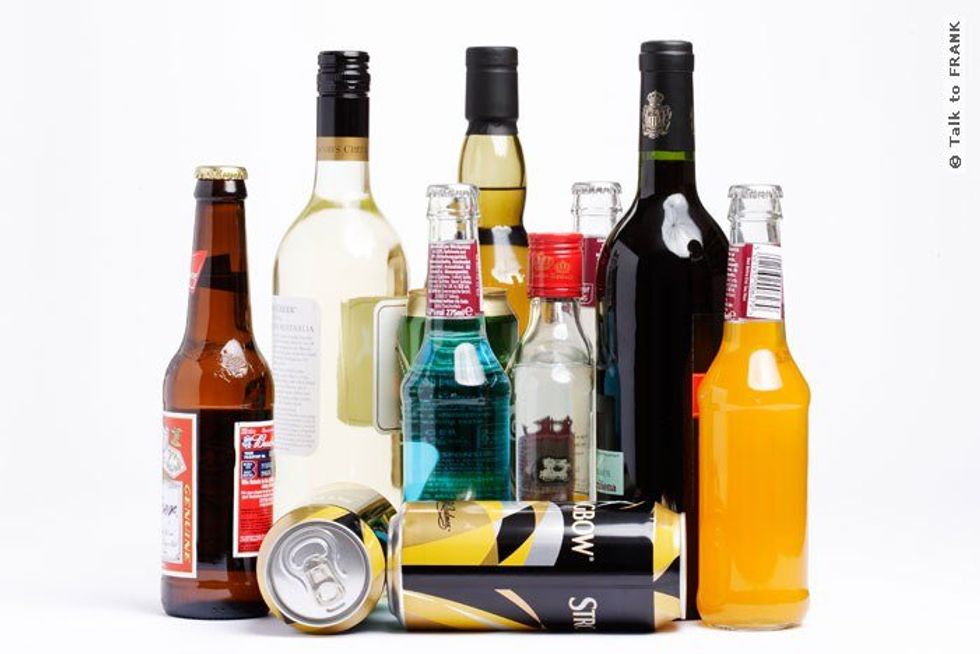
After suggestions from the Harvard Task Force on the Prevention of Sexual Assault, Harvard College administrators are considering more restrictions on alcohol use by students, including banning all hard alcohol on campus.
But the link between alcohol and sexual assault -- though present -- is actually not all that clear. As the final report from the task force itself says, “the precise causal relationship between alcohol use and sexual assault is debated.”
The problem is, you need to know the causation to suggest an effective solution. There’s no denying that alcohol is involved in many sexual assault cases -- one study by the National Institute on Alcohol Abuse and Alcoholism estimates it’s involved in about 50% of cases -- but that’s not enough to suggest that banning certain forms of drinking, as the report recommends, would actually stop sexual assault.
As the NIAAA reported, “Although alcohol consumption and sexual assault frequently co-occur, this phenomenon does not prove that alcohol use causes sexual assault. Thus, in some cases, the desire to commit a sexual assault may actually cause alcohol consumption (e.g., when a man drinks alcohol before committing a sexual assault in order to justify his behavior).”
The idea that alcohol causes sexual assault (which is the assumption behind the task force’s recommendation relies) suggests that were a perpetrator not drunk, he (statistically, perpetrators are almost exclusively men) would not have chosen to commit the assault; that he was somehow not responsible for his actions. This idea of the “unintended” assault, one in which the perpetrator was also drinking, and just couldn’t tell what the victim wanted, is not backed by statistics. A large international study showed that many rapists are repeat offenders, and another study showed that almost three quarters of men listed "sexual entitlement" as the reason why they raped, neither of which fits with “unintentional” assault.
So what, really, is behind the task force’s statement, “If we are to effectively decrease the incidence of sexual assault, we must address the role of alcohol?”
Consider another case. The CDC caused outrage when it released an infographic this February that listed “injuries/violence,” “sexually transmitted diseases,” and “unintended pregnancy” as consequences for women of “drinking too much,” defined as “any alcohol use by those under the age of 21.”
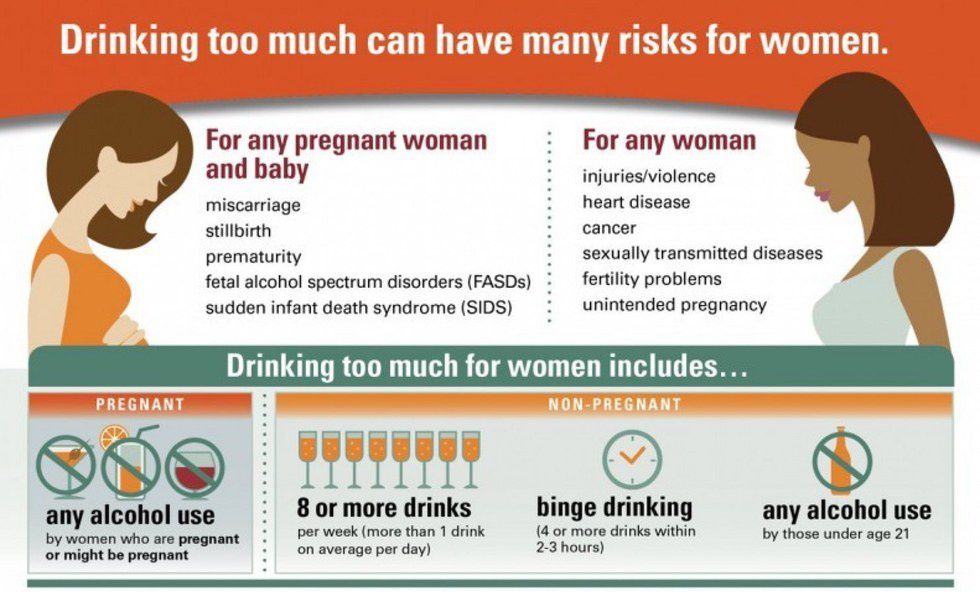
Like the Harvard task force, the CDC is missing a step here. Alcohol + women =/= sex, or violence, or violent sex. We all know that an 18-year-old girl who has a glass of wine alone in her room is not at risk for being injured, for getting a sexually transmitted disease, for getting pregnant, or for being sexually assaulted. So why is it okay to suggest that if you put that same girl, and that same glass of wine, in a space with men, that somehow the wine -- or, even worse, the girl, because she drank -- is responsible for a sexual assault that occurs?
There’s only one thing that causes sexual assault: people who sexually assault. And while educating people about risk factors for sexual assault is okay, trying to limit their actions in order to prevent sexual assault is not okay. It’s perfectly acceptable to tell teenagers not to have their cell phones out on the subway because that makes them easy to steal, but it’s not okay to ban cell phones from subway cars, or to tell a teenager whose phone was stolen that it was their fault for having it. The only person responsible for stealing phones is the thief, and the only person responsible for rape is the rapist.
But, one might ask (I am tempted to ask) isn’t it worth it? If banning hard alcohol on campus could stop sexual assault, isn’t that a freedom we’re willing to give up? I understand the temptation to control sexual assault on campus by any means necessary. Don’t get me wrong; even if I thought it would work (which, clearly, I don’t), the freedom to drink hard alcohol is not a freedom I would protect at the expense of the victims at sexual assault. It’s not the inhibition of the freedom to drink that I protest in the task force’s recommendation.
It’s the assumption of responsibility behind their suggestion. Every time alcohol is suggested as a cause of sexual assault, it takes the onus off the perpetrator, and places it onto an inanimate object and the victim who chose to drink or to put herself in a situation with people who were drinking.
Think of it this way. Possession of alcohol by those under the age of 21, which comprises the majority of undergraduate students, is already illegal and therefore not allowed by the College. And since University health surveys estimate that about 75% of students drink, this prohibition clearly is not inhibiting everyone. Nor would a hard alcohol ban do much to stem drinking on campus; though the magnitude of the effect it would have is debatable, we can all agree that a ban would not halt drinking on campus. Then, the ban becomes not so much a deterrent to drinking but a deterrent to reporting, since it’s a rule the victim may have been breaking.
Were a student to be drinking hard alcohol on campus, and be sexually assaulted, the fact that they broke a rule is something people can point to that they did wrong, despite the fact that they’re the victim and not the one at fault. Since groups that are more likely to be victims of sexual assault (female-identified and LGBTQ-identified individuals) are less likely to believe that the university will conduct a fair investigation, giving officials another thing the victim “did wrong” and can blame them for will lead to even lower rates of reporting than the current abysmally low rates, which lie somewhere between 5 and 28%.
Before listing potential policy changes, the task force said, “We must educate our community about the documented associations between drinking and the risk both of being assaulted and of committing assault.” I couldn’t agree more. Education -- about drinking, about sex, about consent -- is absolutely essential in stopping sexual assault. But what we do not need are policies based on the assumption that the responsibility for a crime can lie in an intoxicant. This is all-too connected to the all-too-common belief that the victims themselves are responsible. Victim-blaming is a fire that does not need any more fuel, and Harvard does its students -- and particularly its students who have been or will be victims of sexual assault -- no favors by buying into it.

















