
I was walking through Temple’s campus yesterday, and looking to my right I saw an all too familiar sight. A mass of people were crowded around two figures in the center, who were armed with megaphones, and both parties were loudly communicating with each other. This was a protest. A protest of what specifically I could not tell, being that I was late for class, but the concept itself got me thinking.
Protesting is the timeless way for people to communicate their ideas and influence change, but do they really accomplish what they are trying to? To answer this question, I looked back at some recent history to find some examples.
For one thing, protests can either be nonviolent or violent, and the distinctions are essential. Protests can either succeed or fail, and in my opinion most do the latter. Protests often come up short of accomplishing their real goals.
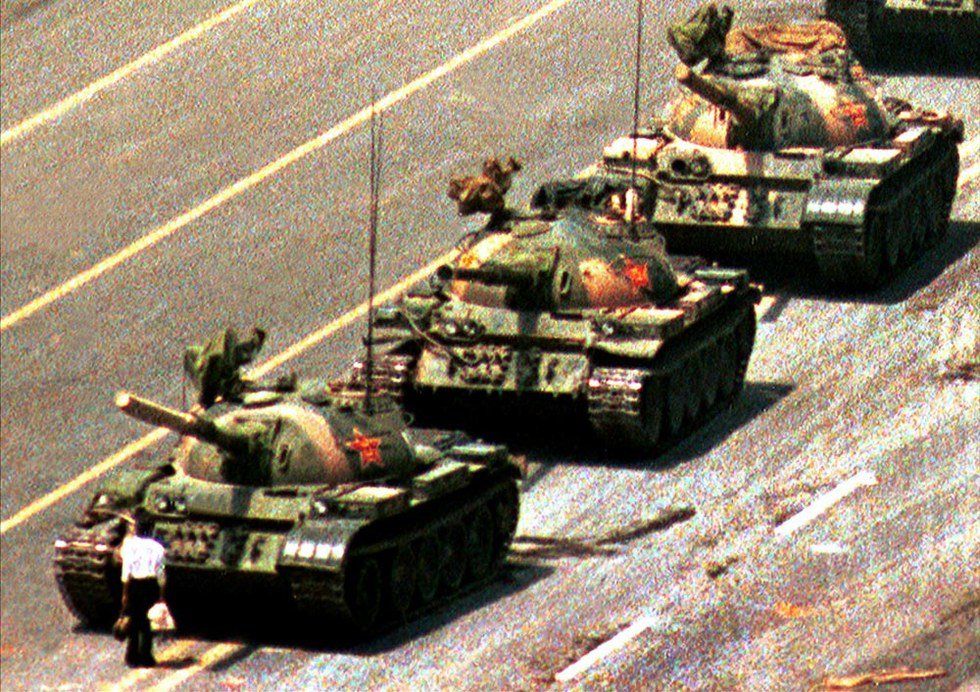
In 2003 between January and April, more than 36 million people gathered in over 3,000 separate protests to speak out against war with Iraq. As much as these gatherings brought the issue into the public eye, the United States invaded Iraq on March 20, regardless. Going back a little farther, hundreds of Chinese students were gunned down in Tienanmen Square in 1989, after months of nonviolent protests calling for Democratic reforms in China. Many people in China had been exposed to Western ideas, and decided that their system was corrupt and didn’t represent the citizens. Thousands participated, and countless more supported the cause, but eventually Martial Law was declared, and what is commonly called the Tiananmen Square Massacre occurred nonetheless. The students’ attempt at protest caused other nations to take notice, but nothing changed in China. The protests ended without results.
Describing recent examples of unsuccessful protests is almost unnecessary. We have all seen the violence that has been caused by protests in Ferguson, Baltimore, Charlotte, and other cities in the United States. People gather to speak out against racial violence and police brutality, an issue that truly needs to be addressed, but the violence that erupts from these protests does much more harm than good.
I am not saying that all protests are without purpose. The Montgomery Bus Boycott, which began with Rosa Parks and her refusal to give up her seat on a Montgomery, Alabama, Bus, sparked a Boycott that led to real change. In the 1930s, Mahatma Ghandi led a “Salt March” across India to protest British rule. India eventually gained independence in 1947, and it was partially because of Ghandi’s nonviolent movement. These are uncommon examples, however. For the most part, protests struggle to influence significant change. They are often corrupted by the mob mentality that arises and the occasional, unnecessary violence that muddles the groups’ meaning and makes it near impossible for people to understand the real reason behind the movement.
People need to speak out when they feel change is necessary, but there is a way to do so that will actually have some form of effect. Change can only occur when a clear and reasonable path to this change is presented. Gathering in a group and bellowing meaningless words to a crowd that will likely agree, even if they have no idea what the rhetoric truly means, is not going to accomplish much. Speak out and speak up people, but do not lose your civility and rationale. Be reasonable, be calm, and always keep your own thought independent. Only then is it possible for some good to come from a protest.