Buying a pair of cheap sunglasses might be light on your pocket, but do give some serious thought to how well the eye gear will fare when it comes to protection of your eyes from natural elements like sunlight, dust, insects etc. It is already an established fact that cheap, road-side sunglasses do not give you the same range of features that an expensive pair of shades would offer. However, there are a few vital aspects to consider before you go out branding a pair of sunglasses as 'cheap' or good quality.
How Much Is Considered Cheap?
The answer to this question generally depends upon the individual and his/her buying power. So, for someone who can afford to shop for $200-$500 every week, a pair of Diesel or Carrera sunglasses costing $80 or thereabouts will look like a cheaper option. However, the only aspect that these sunglasses might not offer is an innovative style. On the other hand, certain brands of shades costing $120 and above might not provide the entire range of eye protection in spite of their high cost.
Cheap vs. Knock-Offs
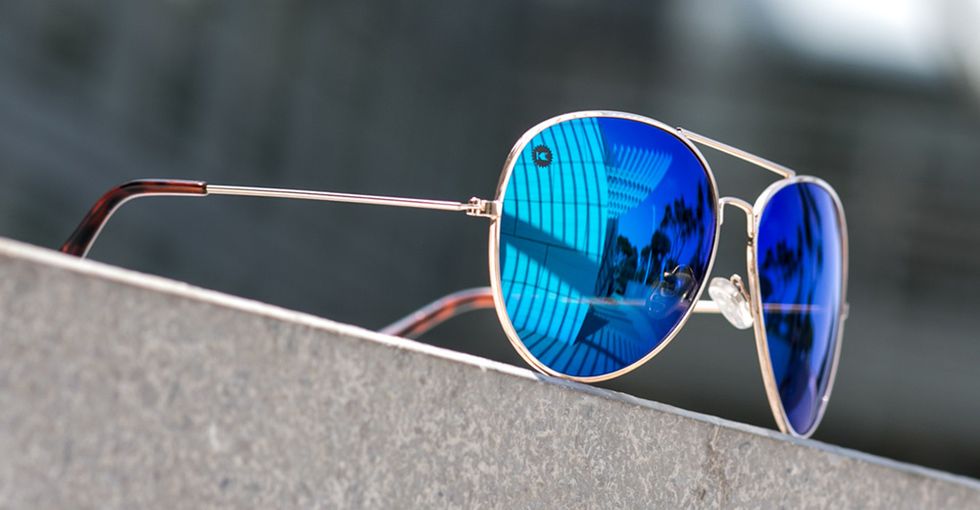 Cheap or Not Cheap?Via https://knockaround.com/pages/cheap-sunglasses
Not every inexpensive sunglass model is a plagiarized version of a well-known brand. Many eyewear manufacturers tend to sell their old or classic models at a hugely reduced price. But, that does not mean that these shades are bereft of eye protection features. Conversely, knock-offs sold on the roadside cost less because they lack in almost every health and quality based aspect. This includes frame build quality, vision protection features, and other similar factors.
Cheap Does Not Mean Low-Quality!
Given the urban vernacular, the adjective 'cheap' often tends to be associated with low quality, bottom-of-the-pile products. The mindset is such that anything that is inexpensive is generally considered low on functionality as well. However, this is not always true; especially when one talks about sunglasses. Basically, any medium quality sunglass needs to have certain features like polarization, UV protection, material rigidity, anti-abrasiveness etc.
Moreover, given the stringent pro-health laws in place, most sunglass manufacturers ensure that their products cover one or more quality aspects mentioned above.
Consumer Tips
If you want the best eye protection gear for yourself or a loved one, then make sure your chosen model of shades has the following features:
Only choose those sunglasses that have '100% UV protection' or 'UV 400' mentioned on the label. When shopping for sunglasses in Europe, look out for the 'CE' label on the side of the shades. This is a mark of its protective quality.
While polarization is not so important from a health point of view, you will need this feature if your chosen brand of sunglasses is to serve some outdoor purpose like hiking, cycling, biking, driving etc.
Look for other anti-glare designs like side tapering or wraparounds. Unlike ordinary shades, they keep the light from bouncing off the frame and shining into your eyes.
Much of the features mentioned above can be easily found in sunglasses that cost above $80. However, you as a consumer still need to take the responsibility to ensure that you are getting exactly what you are paying for.






 man running in forestPhoto by