It’s evening. In my room lives a stack of business cards I’ll never look at. My hands carry the stench of a gallon of hand sanitizer but I still feel dirty after all the handshakes and shallow new connections. A day in DC means a day of relentless self-promotion.
I want to look down on networking. I want to sneer at all the kids in suits “making professional relationships.” I want this to be a DC thing, a yuppie thing, something I can escape by staying home or looking cold when surrounded by interns. But that isn’t the case.
When I was fourteen, I tried releasing an EP online with my then-band. At the time, I exhausted every connection I had, trying to get people to listen to our music. I felt we had spent time making something that deserved to be heard. I took to social media, sent Facebook messages that would never be replied to, and sent the Bandcamp URL to every number in my contacts. I assumed anybody who liked me would listen to it. That wasn’t the case. At the time, it was disappointing. Yet, as the years pass, I notice many of my friends share their work online. I’m proud of them— but I haven’t read every article or heard every song they share. I don’t actively avoid my friends’ creations; I just rarely engage with content presented to me online. I go on social media for quick updates, not long reads.
I suspect I’m far from alone in this. Time spent on Twitter, Facebook, Snapchat and Instagram is passive. Then why do we expect complete, engagement when we post content? There’s a dissonance between the average person’s content consumption and their perception of how their own content is consumed. How often has somebody mentioned a crazy anecdote, and been shocked that you know nothing about it? “Didn’t you see my snap story?” they ask, betrayal in their eyes. Hurt and speechless, they look down at their phone, open Snapchat, and unceremoniously tap through stories, giving each friend two seconds to win their attention.
Further, consider the “like.” What does it mean? Is it a shorthand for communicating engagement? Or something more? Why do we like posts? When we see likes on our own post, do we assume it means more than when we like other posts?
Online mass-communication merges one-on-one friendships into everybody’s personal audience. Even personal relationships become grouped— consider the growing popularity of having “The Groupchat,” an endless conversation between a large group of friends. It isn’t the place for intimate talks, it’s a place to share memes. This pivots even online chatting into the content/audience interface.
The dominance of content/audience relationships online isn’t necessarily a bad thing. However, the disconnect between active content creation and passive consumption leads to untrue assumptions about the personal network. The majority of my friends on Facebook are more like the stack of business cards in my room than the people in the photos on my wall. They aren’t my friends. They aren’t even really my audience. They’re my network.
I don’t make friends on Facebook out of affection, I do it out of the perceived utility of that connection. I’m sure many who cringe at networking do the same, friending interesting people with mutual friends or people we met at a party once. We predict they will have good content to share, and will in turn like our own. With nothing to lose and a connection to gain, our audiences grow, and we forget how disengaged that audience is, even as we disengage from the content presented to us.
Facebook is growing to accommodate nuanced engagement. The Reactions provide a menu of ways to respond to content besides the “like.” Stickers in the comment section communicate subtexts as well— a <3 is different from a cactus shaped like a heart, which in turn is different from Snoopy with a heart.
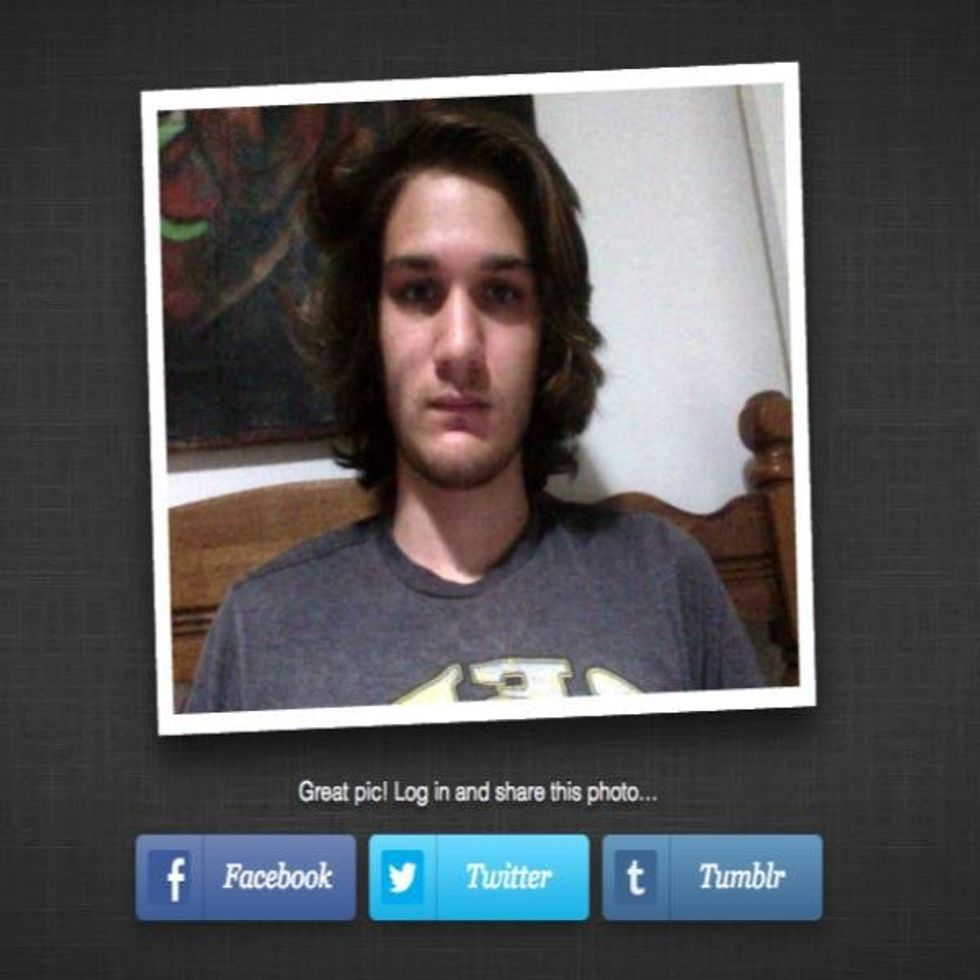
That said, user interfaces could adapt more. They could present the complexity of engagement. Did the person who “loved” my link click on it? Did the person who liked my Instagram post it within two seconds of seeing it by virtue of it being mine, or did they only like it after reading the caption? Maybe not everybody needs statistics to see who is a “connection” and who is a friend, but if these social networks want to be multi-faceted enough to handle all relationships, they should allow users the power to distinguish these relationships. I don’t like seeing a sticker on my profile picture and having to think, “What are we?”.
Maybe all it takes is consciousness on the user's end. Social-networking is networking, friends aren't friends and followers are certainly not followers.
Or I'm wrong and I have significantly more followers than I thought.