
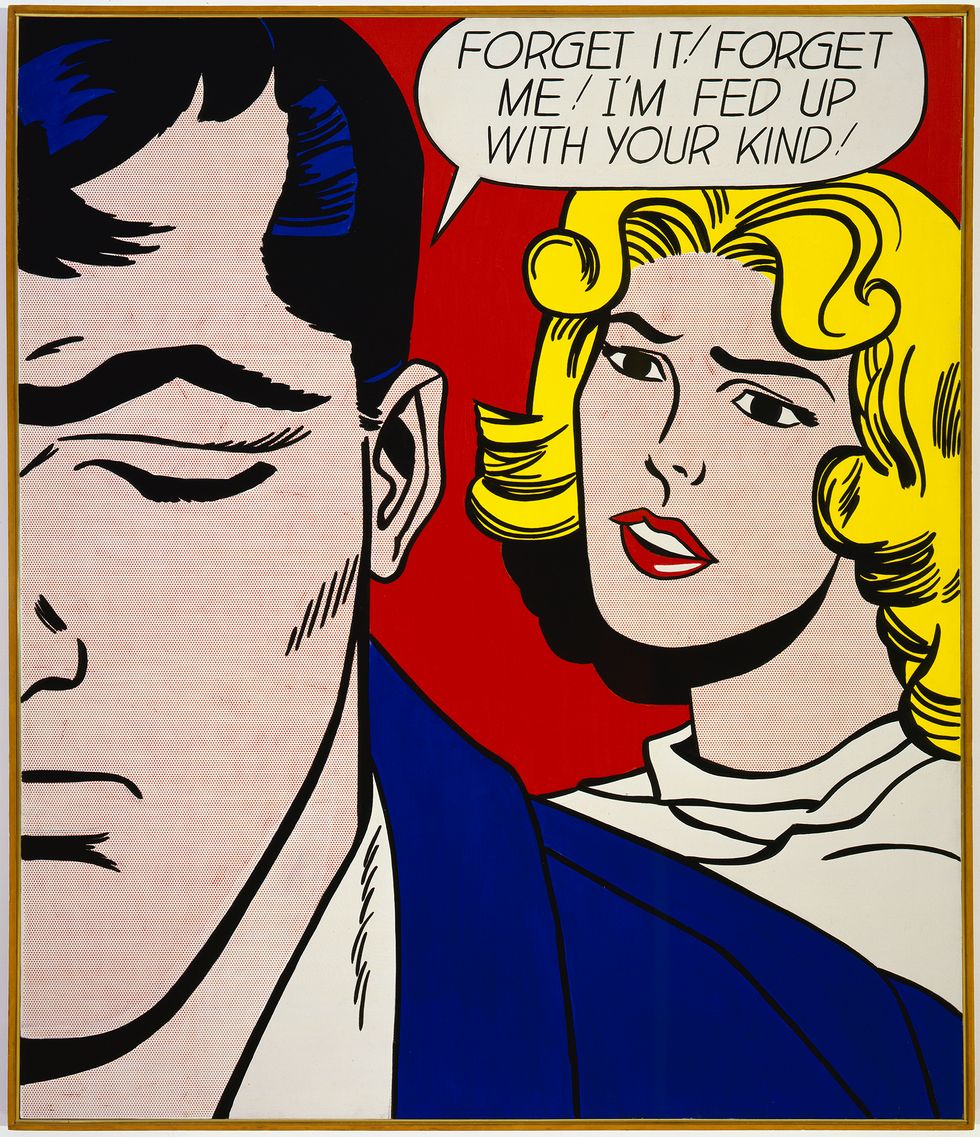
Feminists are angry.
I know this because I met a feminist, once, and she got mad at me when I pointed out that feminists were anti-men. Anti-equality.
“They say they want equality, but really they just want to kill all men,” I said. “They’re so angry all the time.”
She blanched and said something about it having nothing to do with hating men. Said it was about pedestals and standards and how men are seen as superior and in powers of position. She said that women aren’t expected to be in charge of companies or much of anything.
"Women are in charge of the home," I said. The muscles in her jaw tensed. "The way my mom stayed at home when she had me. The way she cooked and cleaned and did what Dad told her to.”
“It isn’t power if she’s being told what to do,” she pointed out. The anger—that was what I noticed.
“So women shouldn’t take care of their children?”
“No,” she insisted, “that isn’t what I said. It’s the job of both parents to take care of their kids—not just the mom’s. Besides, what if a family doesn’t have any moms?”
“I don’t see that.”
She quirked an eyebrow and explained that in families with two dads, both dads were dads and that they both worked and both cooked and cleaned and took care of the kids.
“They don’t count,” I said. “That example doesn’t make sense.”
A sigh. Heaving, dramatic, like she really felt it in her lungs. Like she breathed what she spoke about.
“All examples make sense because feminism is about the people.” She clucked her tongue, paced around the room. Eventually, she put her hands, palms-down, flat on a table in the center of the room and balanced her weight in her arms.
“Listen,” she continued. “Feminism is about equal rights for literally everyone: men, women, people who identify as both or neither or something else. Black people, Asian people. Minorities—” (air quotes) “—or so-called people of color. White people. Anyone who considers themselves LGBTQ+. All—it’s about everyone.”
“But it’s called feminism.”
“Okay,” she replied. She looked at me as if to elaborate, and I thought about it. When I offered nothing, she started again:
“But it doesn’t advocate for, like, lady superiority. It doesn’t mean that women are better than men are. It’s the same way the Black Lives Matter movement doesn’t say that only ‘Black Lives Matter.’ All it’s doing is exploiting the issues and calling forth change.”
“Why don’t they just call it humanism? Humanism is a thing. I know humanists.”
“Would humanism start a conversation?” I shrugged. “Everyone takes labels for granted until they’re provocative, which is why feminists are seen differently from self-proclaimed humanists.”
“As angrier and man-hating.” She slapped her palm against the table, hard.
“Exactly!” Pointed an index finger at me and looked as though she was genuinely excited. I got it, but—
“I still wouldn’t call myself a feminist, though.”
Her face fell, eyes downcast. She slumped. I could hear her breathing in through her nose, then out through her mouth. Four seconds at a time.
“That’s on you,” she told me. “Feminism isn’t bad.”
“Maybe, but feminists make it bad.”
“Maybe the feminists you’re hanging around aren’t really feminists.” I thought about it, about the way they hated men and spoke almost explicitly about their bodies and nothing more. Positivity campaigns and nothing else in particular—not about race or sexuality or men.
“I still don’t see how feminism could help.”
“I’m done here."
“Wait,” I said, “let me at least explain—”
“I really don’t want to hear it.”
“But you made me listen to you!” It was messed up, wasn’t it? She wanted to push her views of “equality-for-all feminism” onto me, but I couldn’t even tell her why I didn’t agree with her.
As she walked out, I called after her: “It’s an ugly word!” She paused.
Over her shoulder, she said, calmly, “You’re right, you know.”
Confused, I asked: “About what?”
“Feminists. We’re so, very angry.” Then, before I could reply, she left the room, and I was left with nothing but the image of an angry feminist who confirmed all that I had already known.

















