

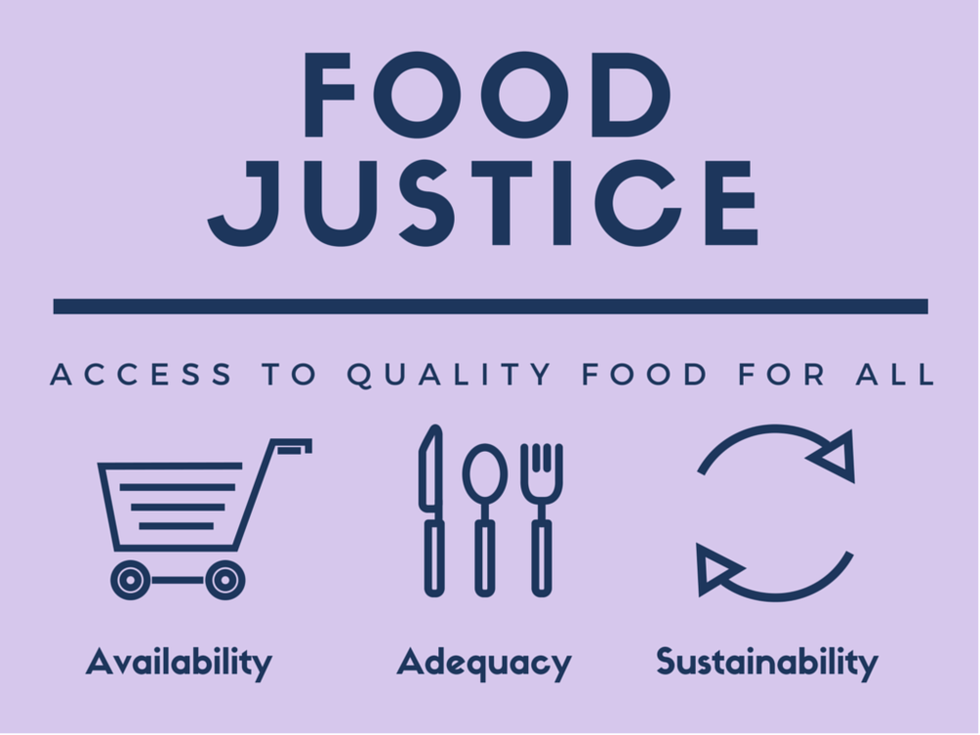
Issues of food insecurity have been an increased focus on San Diego State’s campus, with various resources being developed to aid struggling students. The newest addition to the conversation is a class on food justice and security, taught by Professor James Murren.
Political Science 440: Food Justice and Security educates students on the political and social systems prevalent in the web that is our food ecosystem.
In this course, students are introduced to the stakeholders who make a living in the food industry. By the end of the semester, students are able to contextualize and comprehend what role food industry representatives including politicians, farmers, commodity traders and local retailers have on the food that we consume.
Murren said it is important for his students to know the distinction between food insecurity and food justice.
“Terminology is important in the the course for students to grasp the context behind many of the policies that affect what people eat and where our food comes from,” Murren said.
Students in the class are exposed to specific factors which determine food policy both locally and globally. The course expands beyond concerns in the U.S. and explores the differences or similarities between other countries working toward solutions to food insecurity. Throughout the semester, students are introduced to global food markets and unique agricultural styles where they can compare the current food justice system in America and other nations.
On the global scale, there is enough food being produced to feed everyone, Murren mentions. However, compared to other nations, the U.S. is behind in providing its citizens with healthy food they can afford, he says:
“There is a question of distribution of food in the US. Do we have enough food on paper? Yes. Are there places where nutritious food is lacking.”
Yes, there places where we need to do a better job at providing a variety of nutritious food at a price people can afford, he said.
Political Science 440 is Murren’s first class at SDSU as an adjunct lecturer. He said he isn’t as aware of the resources available to students as he would like to be, but he knows food insecurity is an issue on campus.
“I have heard and have been emailed regarding other students or that professors know that students are food insecure and they are coming to school hungry,” he said. “Are there students on campus at SDSU that are food insecure, I would say yes. What number that is? I have no idea. But it is real and it is happening right now.”
However, food insecurity and discussions on economic crises on college campuses are not new. Dialogue on food insecurity on college campuses has reached a new level.
The California Higher Education Food Summit, a conference that caters to various colleges students from 4-year and community college students, gathered Jan. 22-24 at UC Irvine to talk about food insecurity and how their universities are addressing the issue as well as what can be done differently.
Political Science 440 alumni Jaqueline Hess who works for Feeding America San Diego as the and Anti-Hunger and Opportunity Corps CalFresh Capacity Coordinator said she knows food insecurity in college is a real issue and students have greater barriers to resources such as CalFresh in order to alleviate their struggle.
“I work on CalFresh a supplemental food assistance program and college students have one of the highest eligibility requirements to be accepted into the program,” Hess said. “They have to go to school more than half time, be working more than 20 hours a week and of course it would be difficult for students to meet the requirements living here in San Diego where rent is so expensive.”
She said that taking the Food Justice class allowed her to see that she could impact change in her community by working for a nonprofit whose mission is to combat food insecurity in San Diego.
She is six months into her AmeriCorps service where she works domestically for a year for a nonprofit giving back to her community.
“I actually started volunteering in 2012 in the food facility and assembly and I enjoyed the feeling I got from knowing how much food was going into the community,” Hess said.
Hess now stays actively engaged with her former professor offering volunteering opportunities for students and more.
Food justice can have a big impact on people’s lives from a former college student to a university lecturer.
Professor Murren, who comes from a farming family, has experienced first-hand how the production of food affects politics and people's daily lives. His background and knowledge of agriculture has led him around the world to work alongside people from various agricultural backgrounds as a Peace Corps Volunteer. He has also worked in agriculture in countries like East and West Africa and Ethiopia.
He said it is important to be aware and conscious on the politics of food, especially when there are still disparities between access and quality of food.
"We can look at people's interest in food and that awareness and consciousness has definitely grown and people ask questions now," he said.