
Today marks the official halfway mark during my semester abroad. And where am I? Currently, I sit in a tiny airport, outside of Rome after a week of touring Italy, waiting to fly back to Cologne in a few hours. The week before, I spent time in Berlin, and before that: various cities in Germany accompanied with a spontaneous weekend in Amsterdam. In the next two months of my stay, I plan to travel even more. Since arriving at the Pittsburgh airport at nine in the morning on August 26, 2015, I cannot even count the amount of train stations, airports, bus stops, and subway platforms I've crossed. However, the amount of waiting time allows one to think and briefly reflect. So as I sit on the floor at this tiny Roman airport, I would like to tell you all the top eleven lessons I've learned in my first two months abroad.
1. You will spend the most time traveling from place to place.
My program goes on excursions almost every weekend. One of which was a 2-hour bus ride, where I played German hangman with three other kids in my group. Another involved an hour and a half train ride to a museum, where we had a 50-minute tour of said museum, and then we hopped right back on the train to Cologne. From Cologne, it is a four-hour train ride to Berlin and from Berlin, a 16-hour bus ride to Venice. You will undoubtedly spend more time traveling than anything else you do abroad, and I can tell you that the journey is easily better than the destination as I cannot recall a time where I've gotten to know people, or myself for that matter, better than when I'm sitting at a bus station at six in the morning, waiting to transfer.
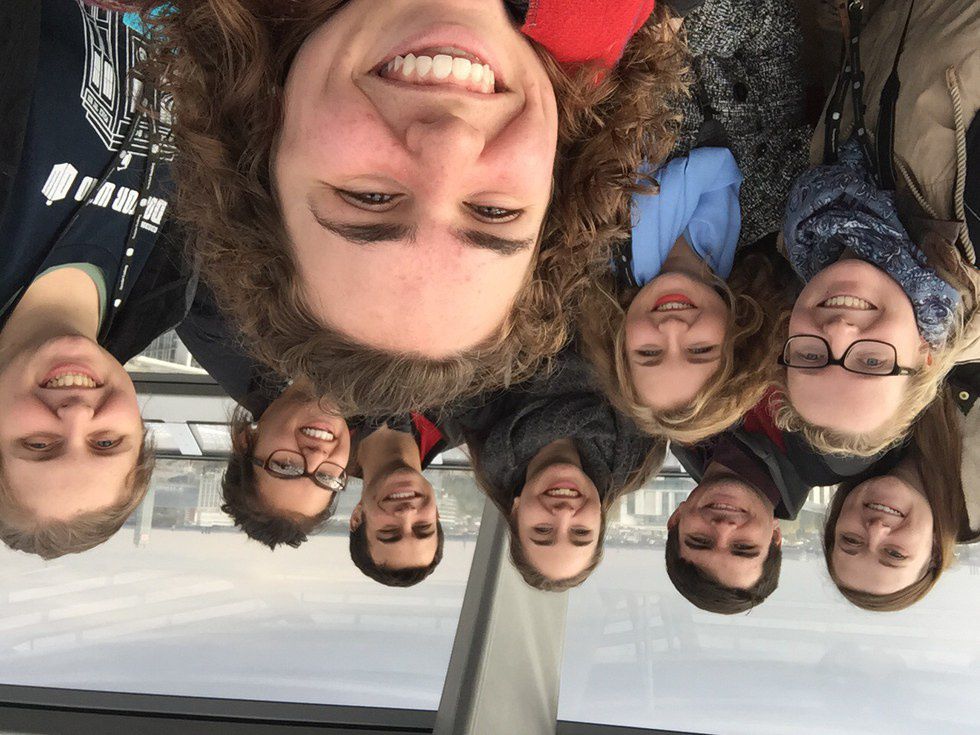
A bunch of us in Berlin.
2. It's okay to be in another country and only be able to speak English with the locals. Just don't be ignorant about it.
Being practically fluent in German, I had been preened to be able to understand another language with ease. Then I traveled to Italy and the Netherlands, where I could speak barely a lick of either language. Because of this, I became very insecure and unsure of myself as I'm also very aware of the negative connotation associated with American behavior abroad. I'm so used having the ability of navigating cultures through native tongue, but it turns out that if you're willing to try to understand a culture or break down that language barrier, the locals are very receptive to that and will either help you or speak the best English that they can if they know you're willing to try.
3. If you don't know how to say something, ask.
My first night in Amsterdam, I met a guy and his girlfriend at a small pub, and one of the first things I asked him was how to say please and thank you in Dutch. Because I'm insecure about knowing only English in most other countries, I try to get by knowing small words or phrases. Not only is it easier, but I feel like I'm being more polite, and I learn something new along the way. Chances are, if you ask how to say something to a local, they are more than happy to tell you! I have yet to meet someone who is not excited to share his/her culture with others be it as small as saying please and thank you in their native tongue. Who else can say they learned a little bit of Dutch from an adorable Hollander?
4. Disown your new comfort zones constantly.
Often times, I will myself ask whether or not I should do something, and most of the time my consensual answer is why the hell not. The fact I'm abroad means that I have no clue what a comfort zone even is, so why should I try to figure one out now? Take the opportunity to expand your horizons, however literally that may be.
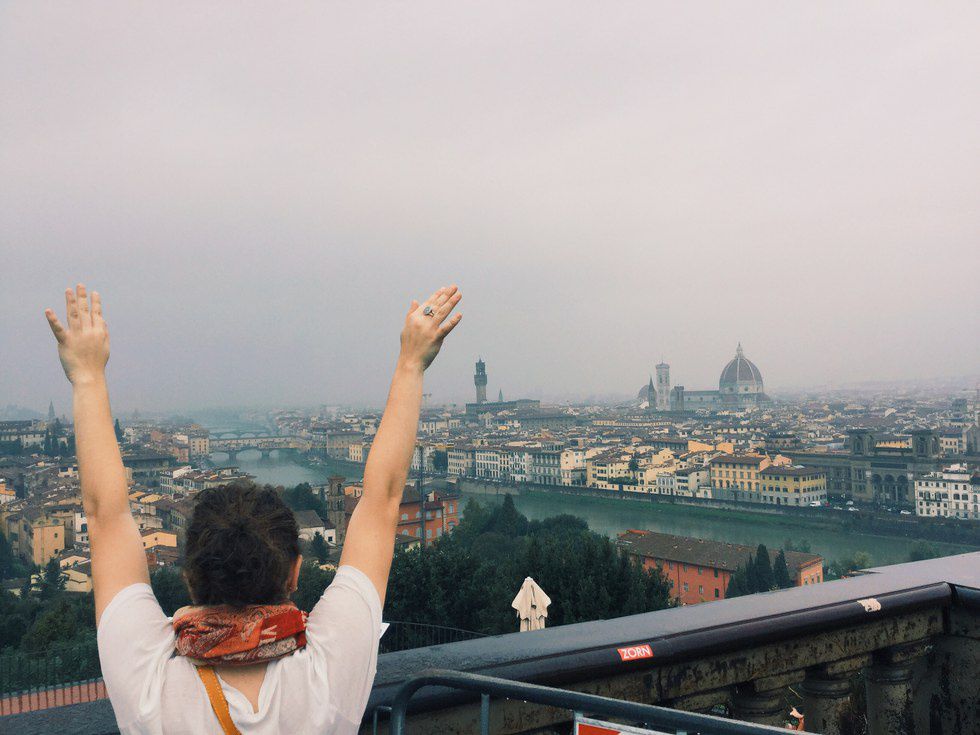
We hiked five miles to get to this view.
5. Get lost.
My favorite part of Venice was the first night. Elsie and I walked all over the city, and being as curious as I am, I wanted to find all of the side streets and weave my way over the canals. "What's around this corner? What's over that bridge?" Long story short, we ended up getting lost in the residential district of Venice in the dark. Getting lost means losing your comfort zone. It also means finding things and discovering a city in a way most people don't, but it also helps to have a map in your back pocket just in case.
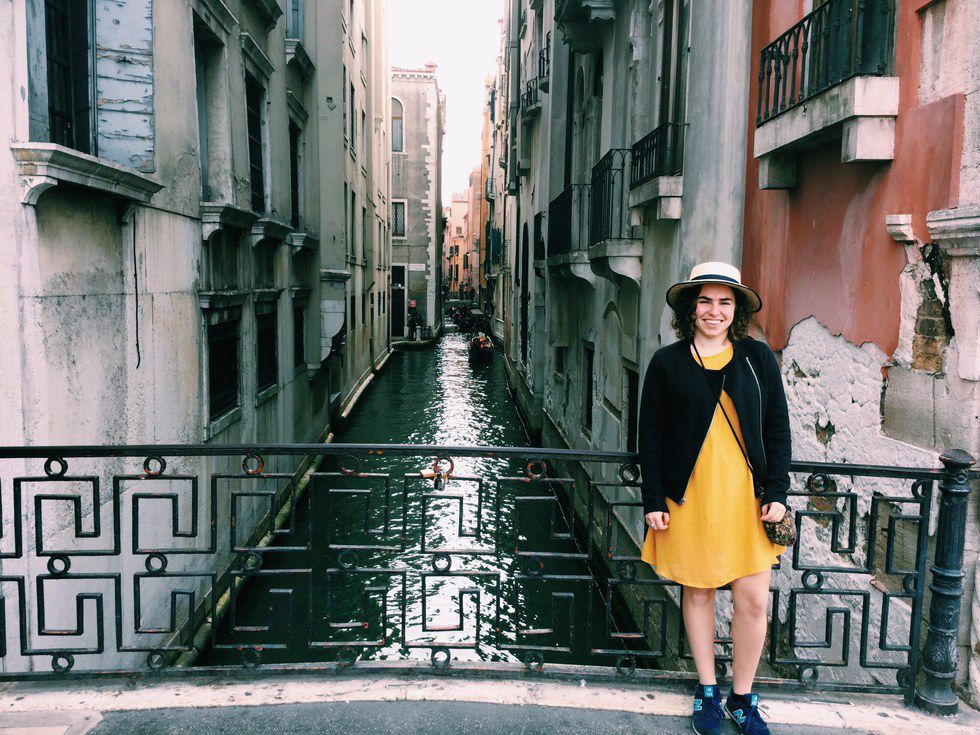
Taken the morning after we got lost in the residential district... (http://mizmags713.vsco.co)
6. Have a happy balance of regimen and spontaneity.
Typically I am a planner. Elsie and I planned our entire trip to Italy: museums, hostels, transportation, etc. (Okay, I admit, I let her pick most of the day activities, but still!) However, our last day in Florence, I turned to her over a cup of coffee and asked: "What are we doing in Rome?" Apparently, I was supposed to plan most of the trip to Rome, and all we had done so far was order our tickets to the Vatican! Thankfully, we created a route of sites to see within 20 minutes on our map, on the way to Rome. But the whole trip, I swear I didn't sleep in past 7:30 a single day and was in bed by 11 each night. Having a routine when travelling is crucial for one's own health, but don't sweat the little stuff. There's always a fix, and half the time a better opportunity arises that you wouldn't have known about beforehand.
7. Sometimes you need to take a break from the fun and be an adult.
Studying abroad, as romantic as my Instagram may seem, is actually grueling work. You have to budget and plan everything in advance as well as stay on top of your school work at your foreign school, and in my case, home as well. Despite the fact that spontaneity is key in studying abroad, you also have to know your limits. Spending an extra 50 euros here and there adds up in U.S. dollars!
8. You will hate being a tourist.
Living in another country, especially in the heart of a touristy city, makes one a fiend to tourists. I abhor being a tourist. It took me a couple of days in Italy to realize that I was, in fact, a tourist. Personally, I like to sink my teeth into a culture rather than merely gloss over it in a couple of days, but skipping from the Uffizi Gallery to the Accademia Gallery does not mean you are glossing over culture if you take away something from it. That means putting down the camera and the cell phone every now and again. The first night in every city I ventured to this past week, I locked away my iPad and took absolutely no pictures because I wanted to experience the city wholly and genuinely, not through a lense.
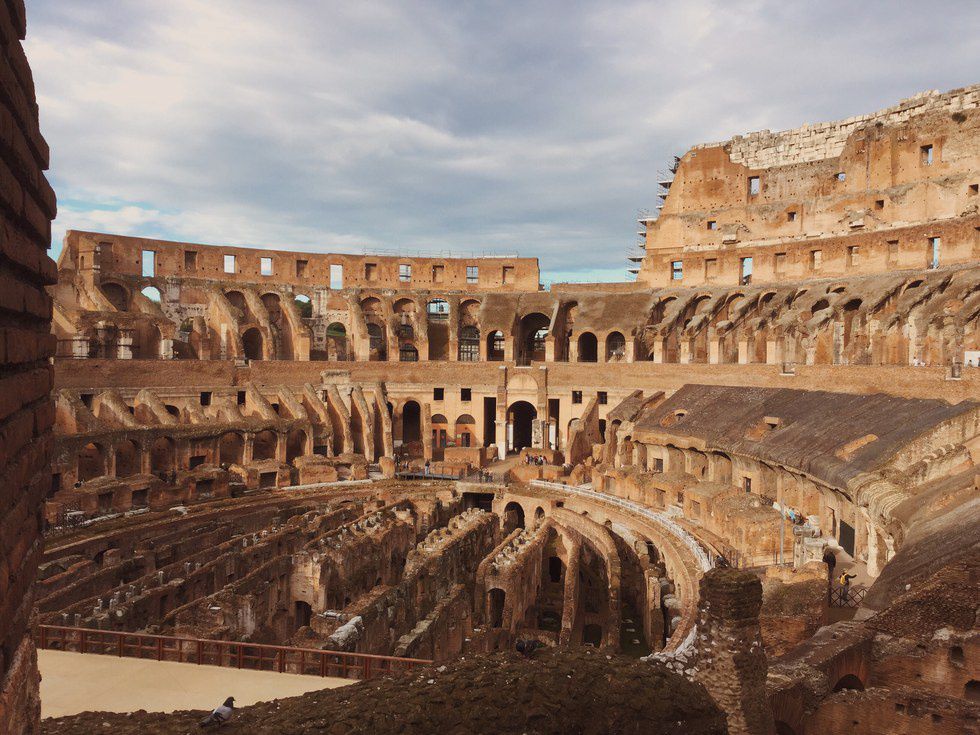
We got to the colosseum before the tour guides.
9. Your English grammar will worsen.
When you are becoming more fluent in a language, like I am, you begin to think, speak, and dream in that language. I have texted my mom countless times in German instead of English and have to translate. However, over time, my English grammar has also taken a turn to the German form as well. My sentences are slightly bulkier, and I find that I, a grammar freak, now make numerous spelling errors.
10. Take the scenic route.
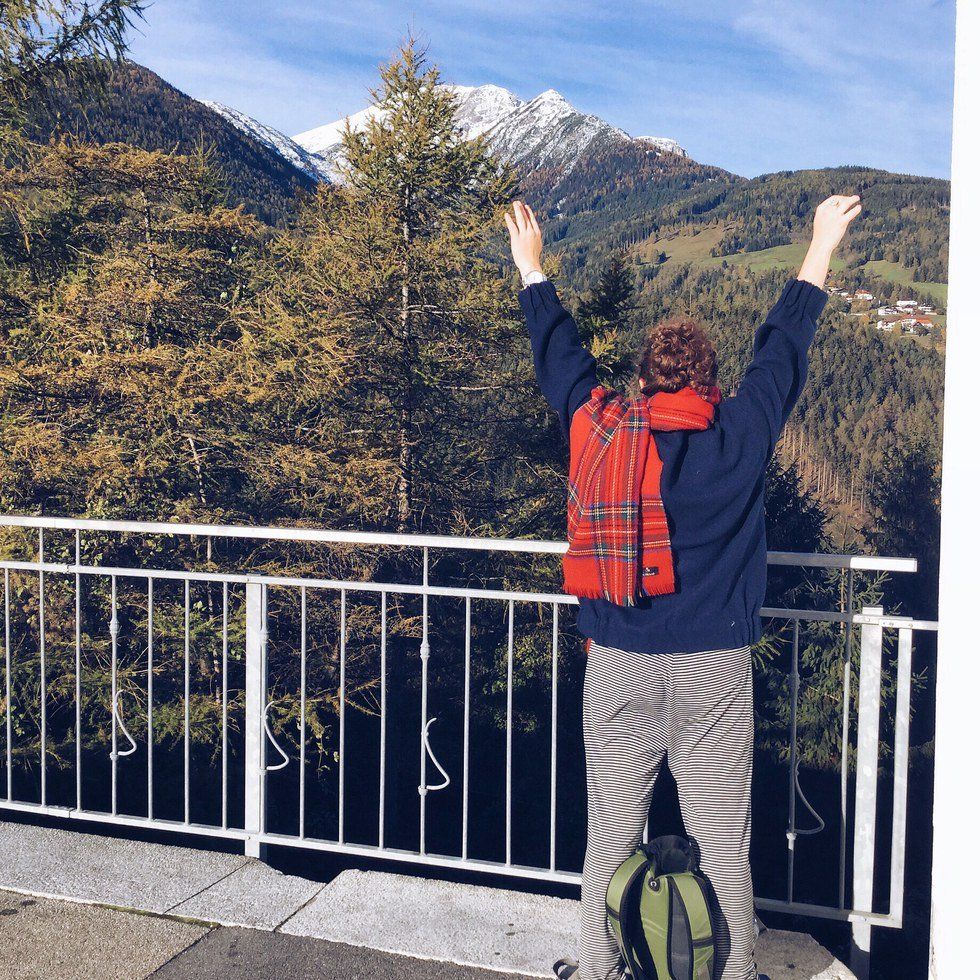
My host mother laughed at me when I told her I was riding 16 hours in a bus from Berlin to Venice, an option Elsie and I chose because it was less expensive than flying. Going into the ride, I was under the impression that it would be terrible and I would regret it, but when I woke up to this view, I knew I had been proven wrong. Taking the scenic route just adds to the experience, and I highly recommend it. Who else can say they woke up to the Alps outside of their window?
 11. Treat every time like the first time.
Elsie and I flew back to Cologne from Rome, and I had the window seat on the plane. It was the first time I ever had a window seat, and I had my face pressed against the glass the whole two hour flight home. Flying over Cologne, it was as though I had never before seen the city. Being excited, even about the simplicities make a trip that much more exciting, be it the way the sun lights up the island of Venice early in the morning, or the terracotta roofs of Florence, or even the way the trees line the streets of Cologne in Autumn. You may only experience it once, so enjoy it by soaking it all in.