America was shaken this past Saturday, February 13 when news broke of the sudden passing of Antonin Scalia, the Supreme Court justice of 30 years, at age 79. Scalia was found dead at a resort in Texas, presumably from natural causes. Scalia’s strong personality, firm beliefs, and impactful writing have left a significant effect on the Court. As Chief Justice John Roberts said in a statement shortly after Scalia’s death, “he was an extraordinary individual and jurist, admired, and treasured by his colleagues.” No matter personal opinions on him, it cannot be denied that he has left a lasting mark on the Supreme Court and on our country.
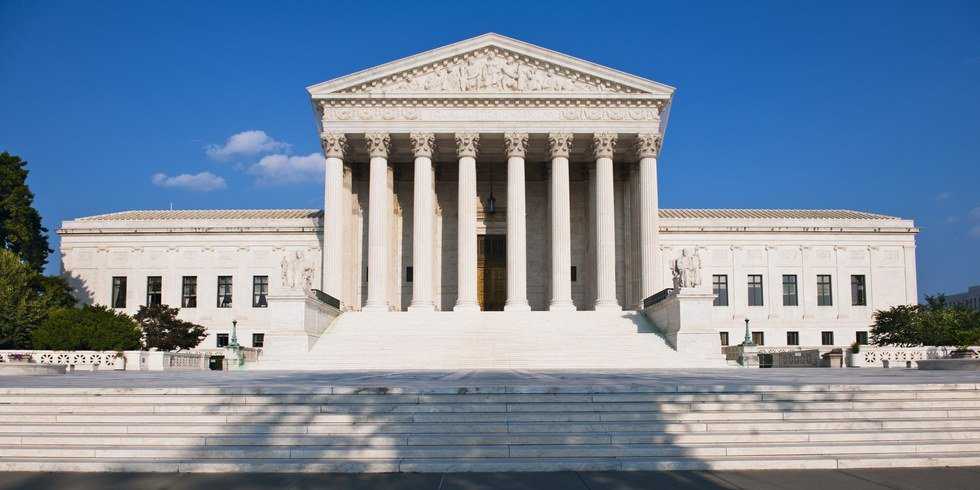
With only eight justices now sitting on the bench, one has to wonder who will be taking Scalia’s place. In recent years, many important decisions—often reflecting the broad spectrum of cultural beliefs represented in our government—have been decided five to four, so this one justice can and will make a huge difference. While this open seat would cause controversy at any time, the fact that it is an election year exacerbates the situation as President Obama and his advisors have limited time to decide on the best person to name to the position. However, the Republicans in the Senate are likely to block whomever the Obama administration chooses. Almost immediately following the announcement of Scalia’s passing, the issue of his successor became a “political football” and one of the most discussed issues of this wild presidential primary season.
While there are a number of names being thrown around by the media and government watchers—everyone from current Attorney General Loretta Lynch to former Newark mayor and freshman U.S. Senator Corey Booker—there is one in particular who appears to be the frontrunner: Judge Srikanth Srinivasan of the U.S. Court of Appeals for the District of Columbia Circuit. He was unanimously voted to the Court of Appeals in 2013, so therefore clearly has the support of both parties. While the 48-year-old Indian-American Stanford Law graduate would certainly add diversity to the bench (as the first ever Indian-American justice), he has had an interesting past that makes one question how he will vote as a Supreme Court justice.
According to former politician and current academic Robert Reich (via Facebook), Srinivasan was Obama’s principal Deputy Solicitor General, worked in George W. Bush’s Justice Department for five years, and defended high-profile corporate clients when working in the private firm of O’Melveny & Myers. However, he also clerked for two moderates, Judge J. Harvie Wilkinson III and Supreme Court Justice Sandra Day O’Connor, in addition to working on Al Gore’s legal team in “Bush v. Gore.” So what does this all mean? It means that it is hard to tell exactly where Srinivasan stands on many issues, and how he will vote. But, as Reich says, “My suspicion is Obama couldn’t do better than Srinivasan. No other nominee [would] get a majority of Senate votes.”
As the election year wears on and President Obama’s term comes to a close, it will be fascinating to see who (if anyone) takes the empty seat on the bench. It will be interesting to watch whether the Republicans who approved Srinivasan’s appointment to the federal bench such a short time ago will now continue to support him or find ground to fight his elevation to the highest bench in the country. As with everything else in this increasingly bitter election cycle, no one can predict what will happen in the coming months.